Today we set out on a tour of a few sites in and around Cairo. First we started off in the Egyptian Museum to take in a few of the main artifacts on display there.
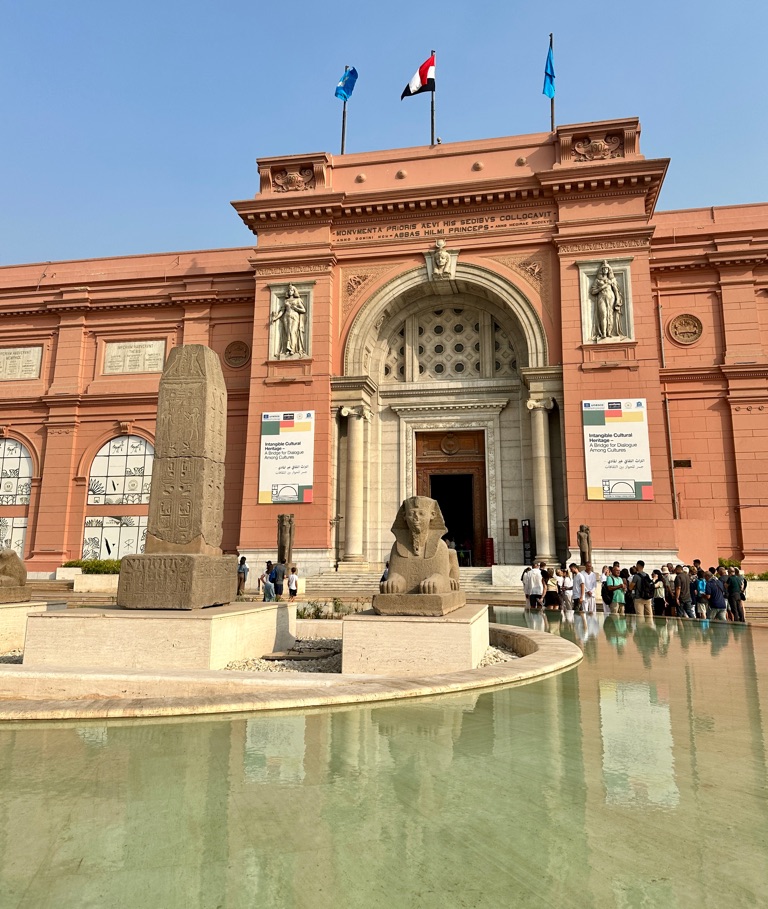
The Egyptian Museum in Cairo is situated on the northeast of the centrally located Tahrir Square. It is one of the largest museums in the world, and the first national museum in the Middle East.
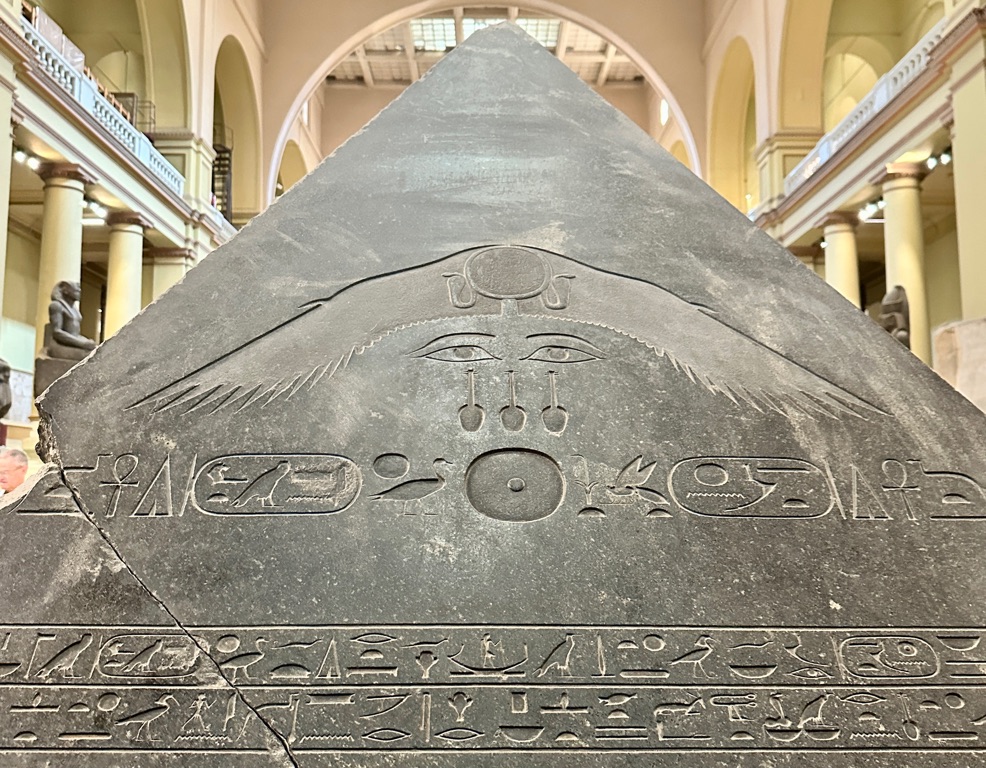
The pyramidion of Amenemhat III is the capstone that once crowned the Black Pyramid at Dashur, Egypt. Crafted around 1850 BC, towards the end of the 12th Dynasty during the Middle Kingdom, it remained mostly intact.
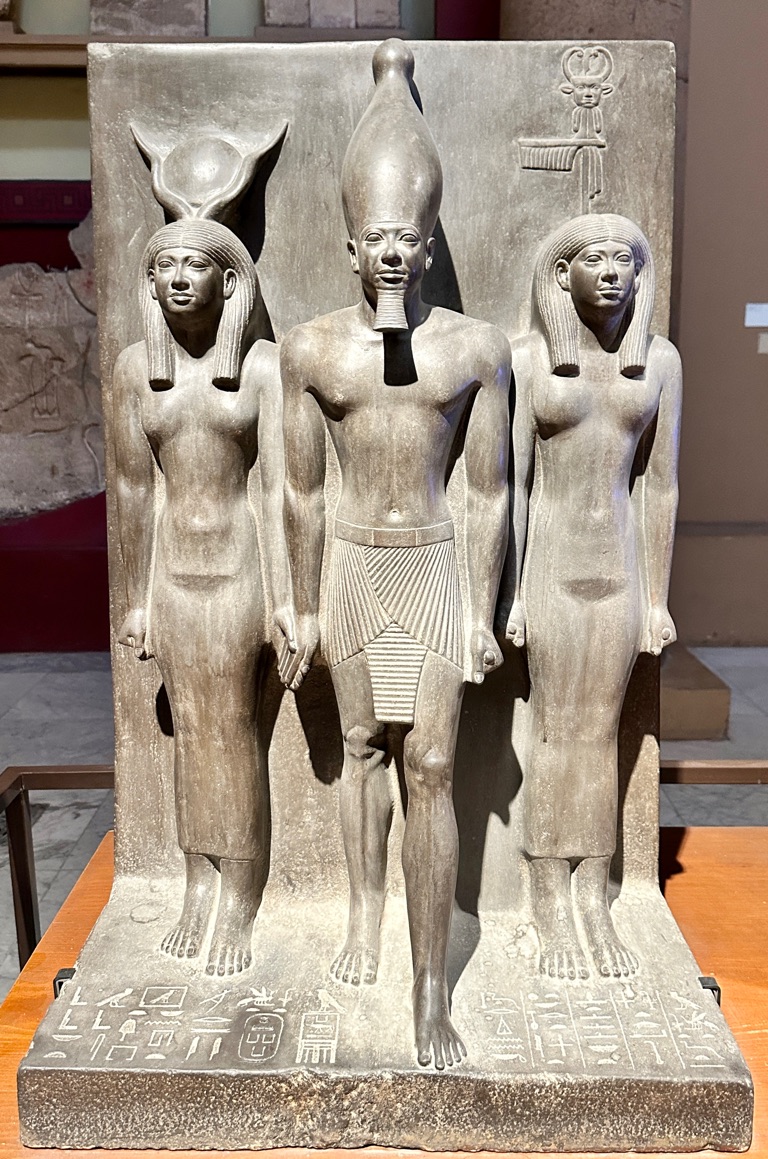
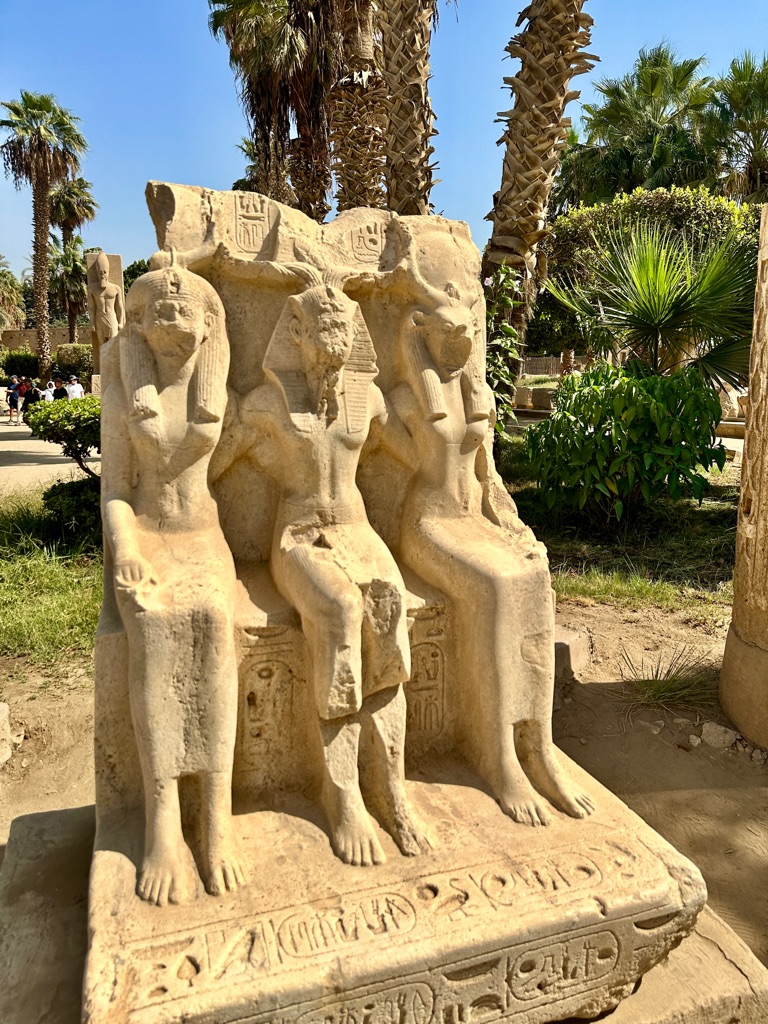
This sculpted triad, a three-person statue, shows King Menkaure between two ladies. The goddess Hathor is on his right and goddess (Bat) the personification of Cynopolis, the 17th nome of Upper Egypt, is on his left.
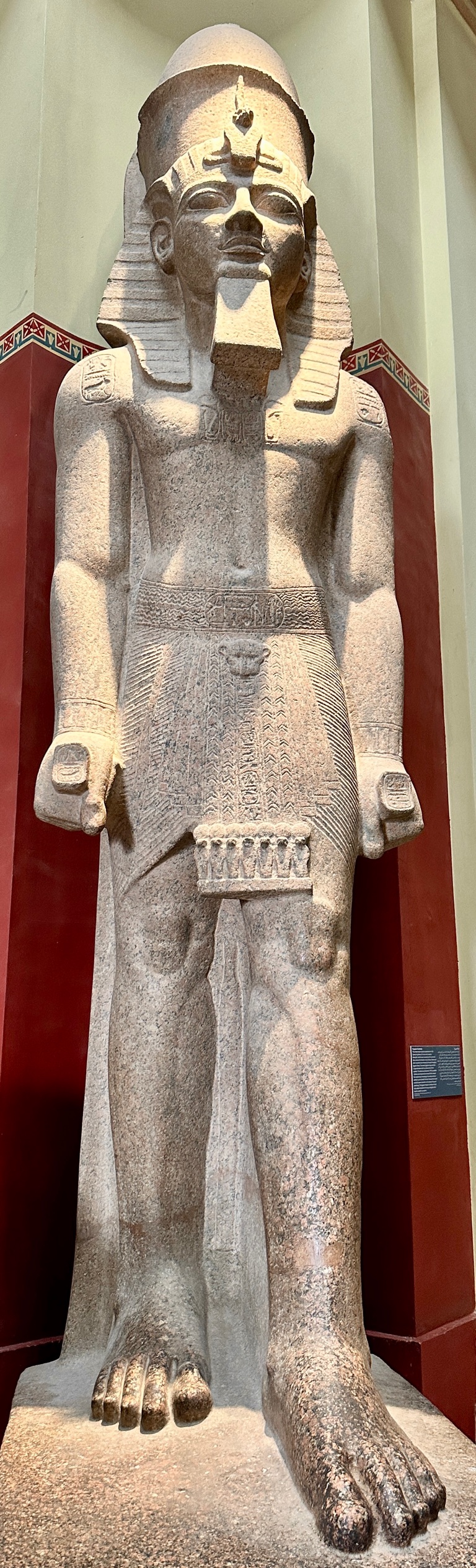
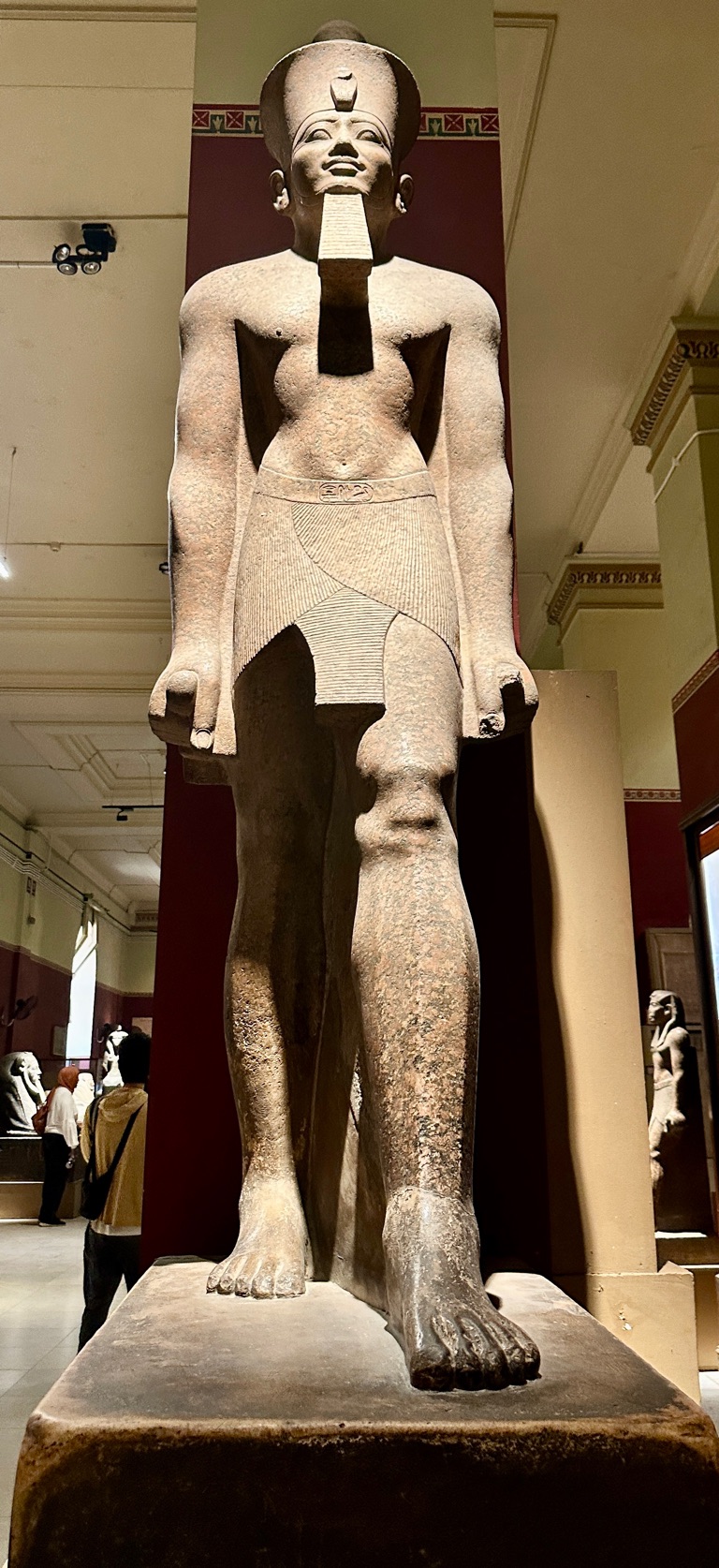
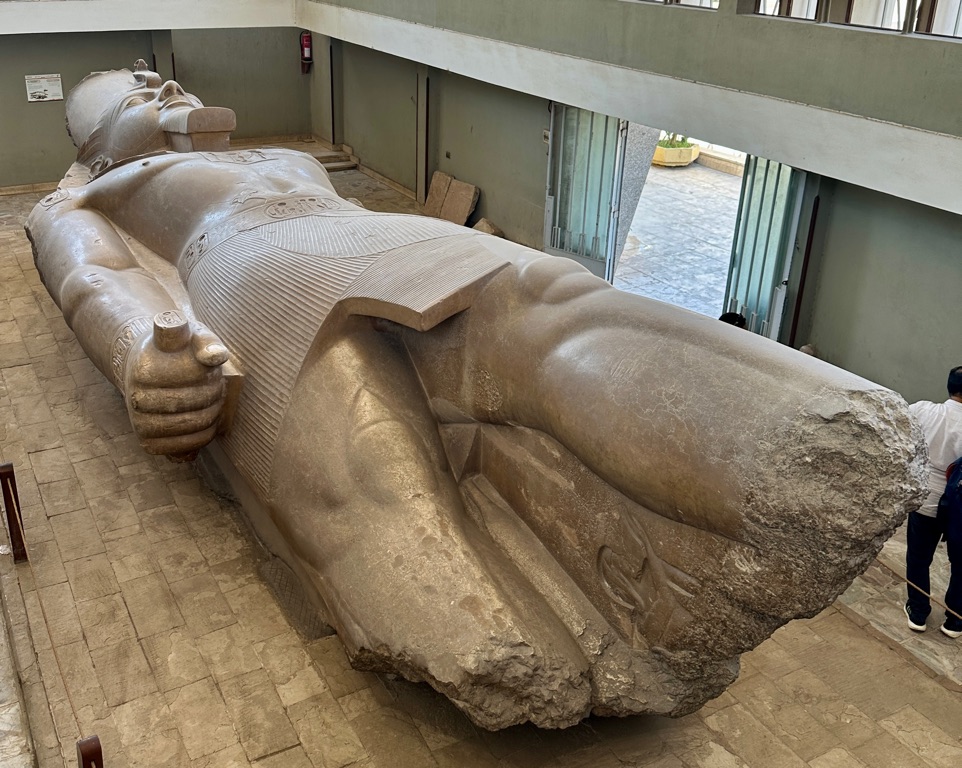
This colossal statue originally represented the 19th dynasty, King Ramses II; his son and successor, Merenptah
The pyramidion, carved out of single piece of basalt (often called black granite), is mostly intact apart from a broken corner. With a height of 1.40 metres (4.6 ft) and base length 1.85 metres (6.1 ft), it weighs around 4.5 tonnes (9,900 lb). The bottom edges are undercut to keep the block in position atop the pyramid.
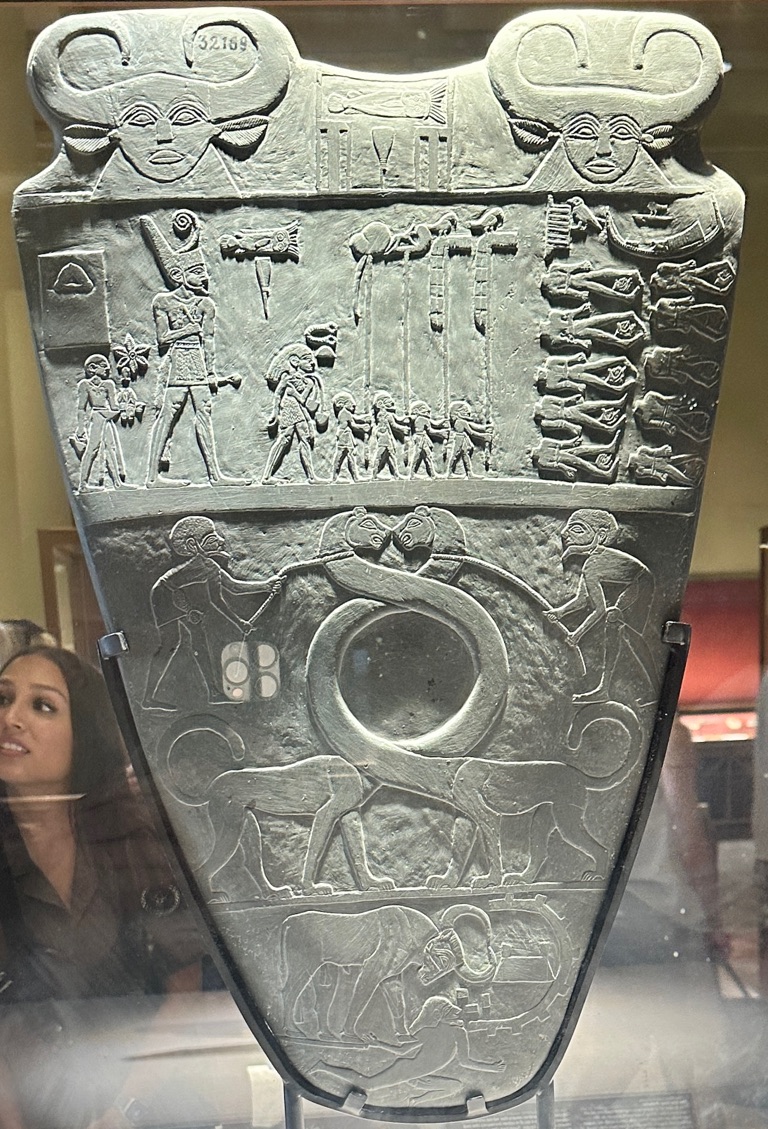
This significant palette commemorates the victories of King Narmer, who came from the south of Egypt to invade the Delta in about 3200-3000 BC. The palette was found along with the Narmer Macehead, another artifact which shows the completion of the conquest of the Lower Kingdom. It represents the most important evidence that the first political unification in the history of mankind occurred in Egypt. The two faces of the artifact are topped by the name of Narmer inscribed inside the Serekh, or rectangular frame.
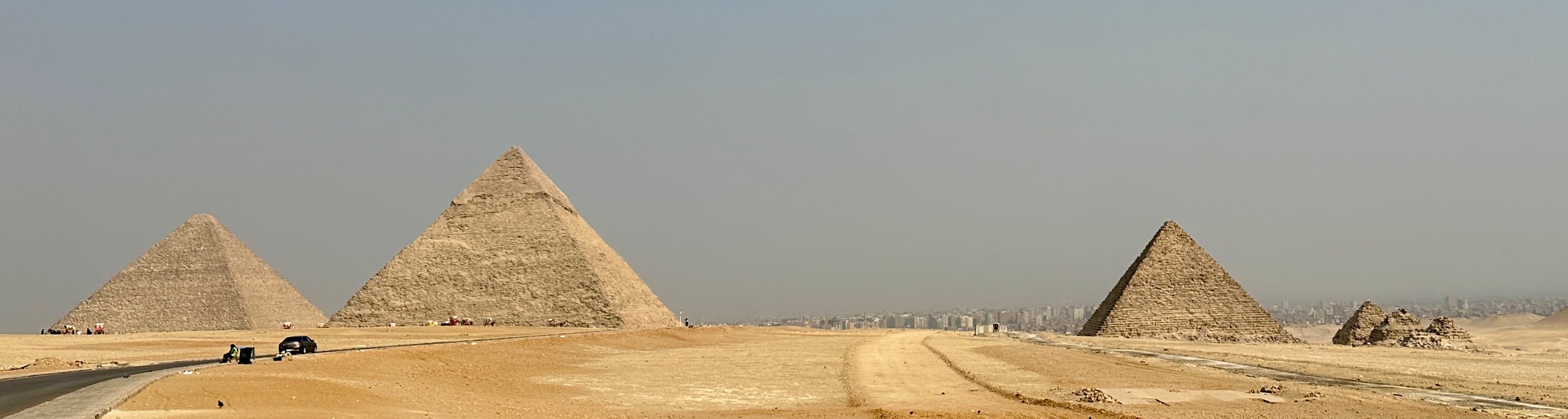
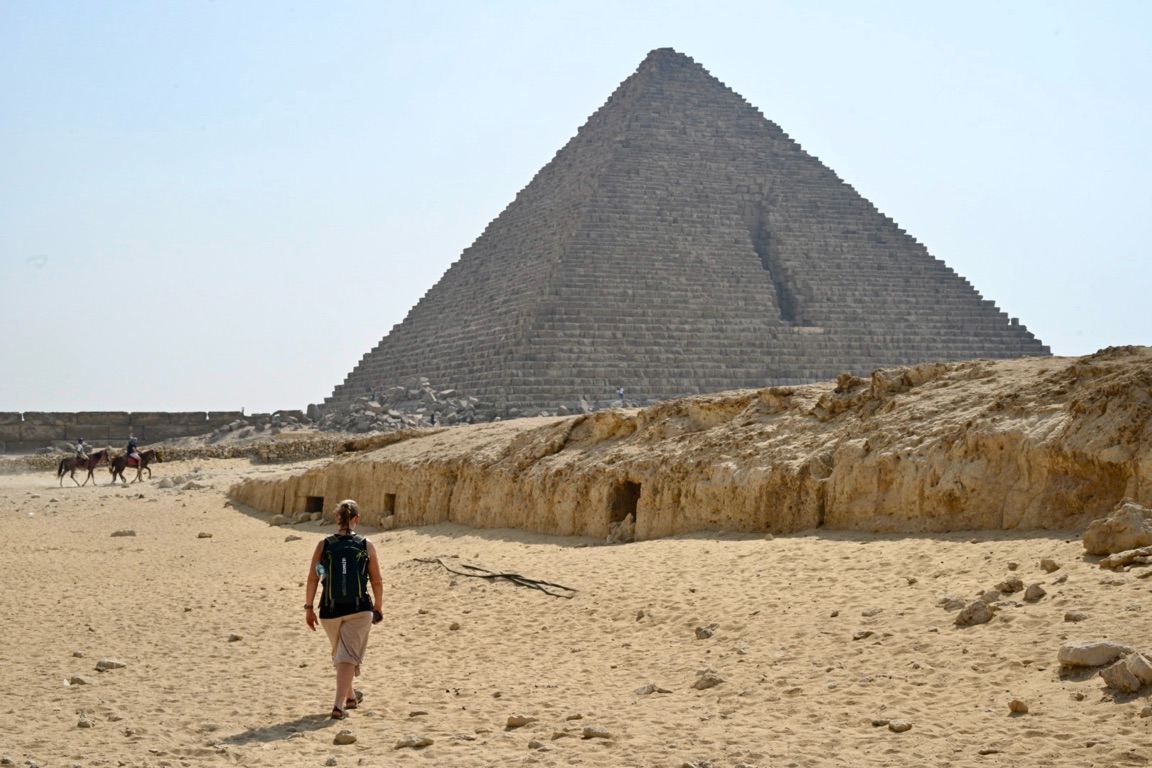
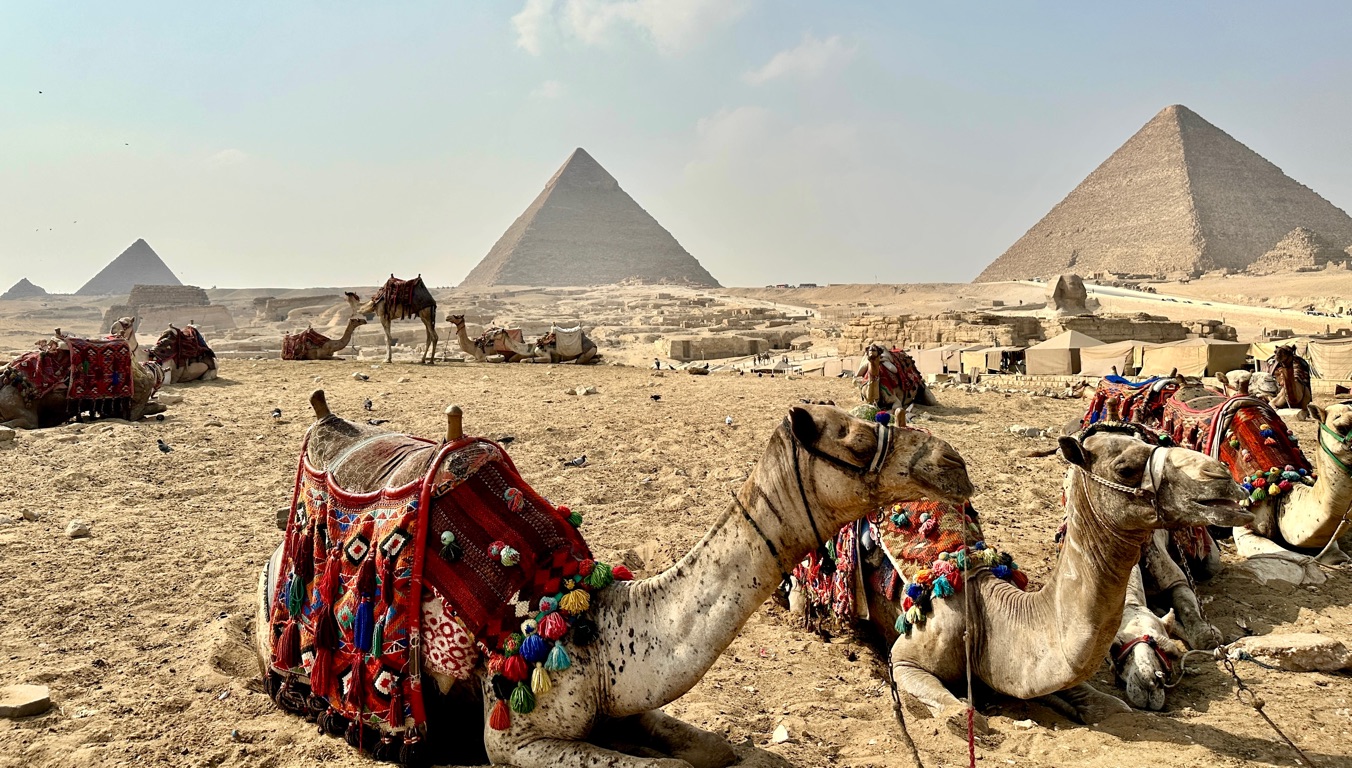
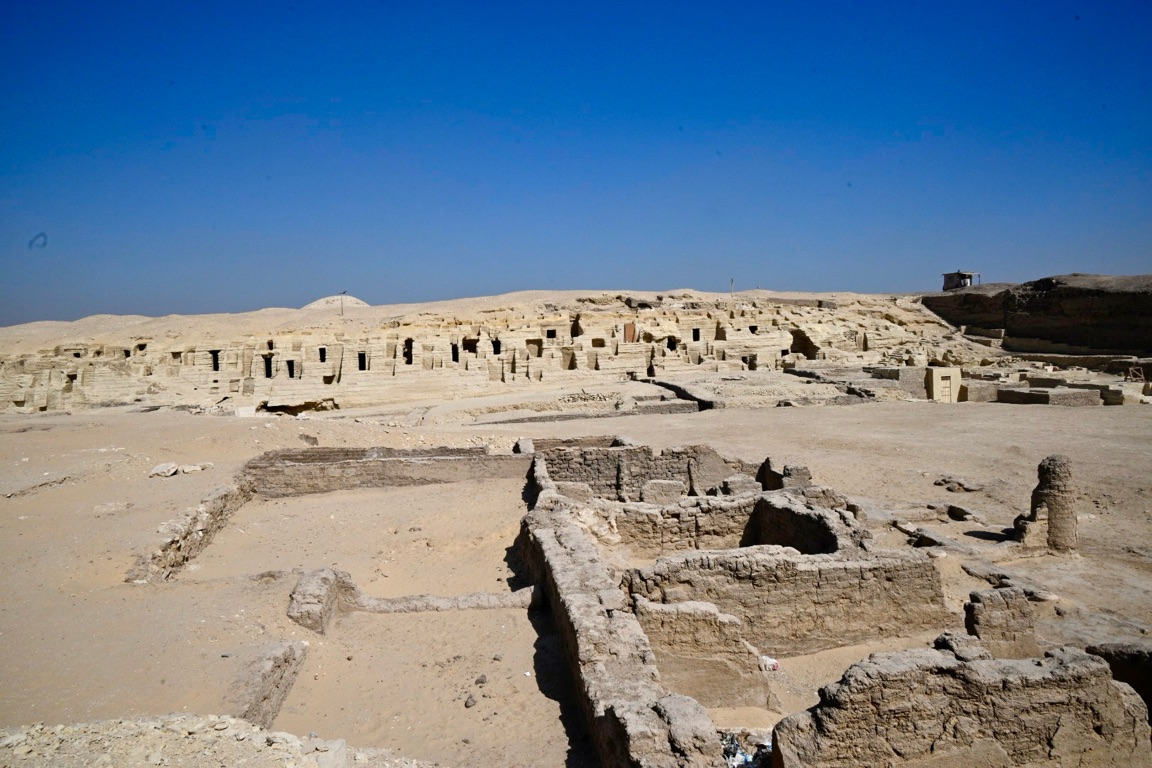
The Giza pyramid complex (also called the Giza necropolis) in Egypt is home to the Great Pyramid, the Pyramid of Khafre, and the Pyramid of Menkaure, along with their associated pyramid complexes and the Great Sphinx. All were built during the Fourth Dynasty of the Old Kingdom of ancient Egypt, between c. 2600 – c. 2500 BC. The site also includes several temples, cemeteries, and the remains of a workers' village.
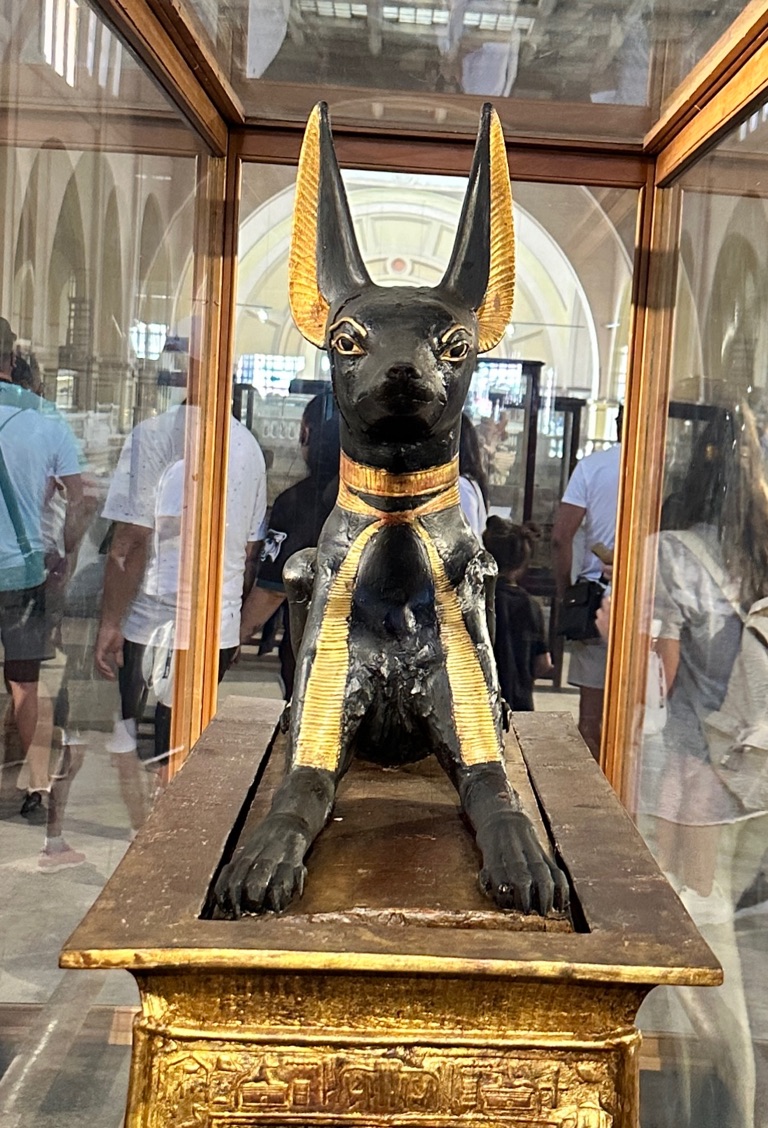
Anubis is the god of funerary rites, protector of graves, and guide to the underworld, in ancient Egyptian religion, usually depicted as a canine or a man with a canine head.
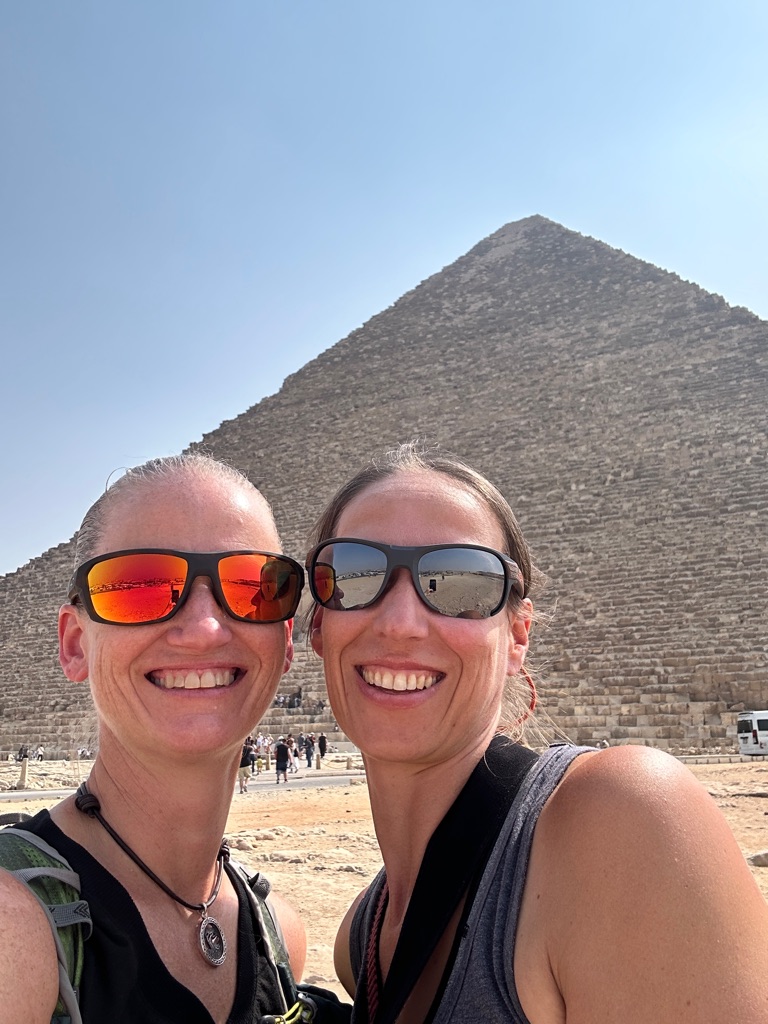
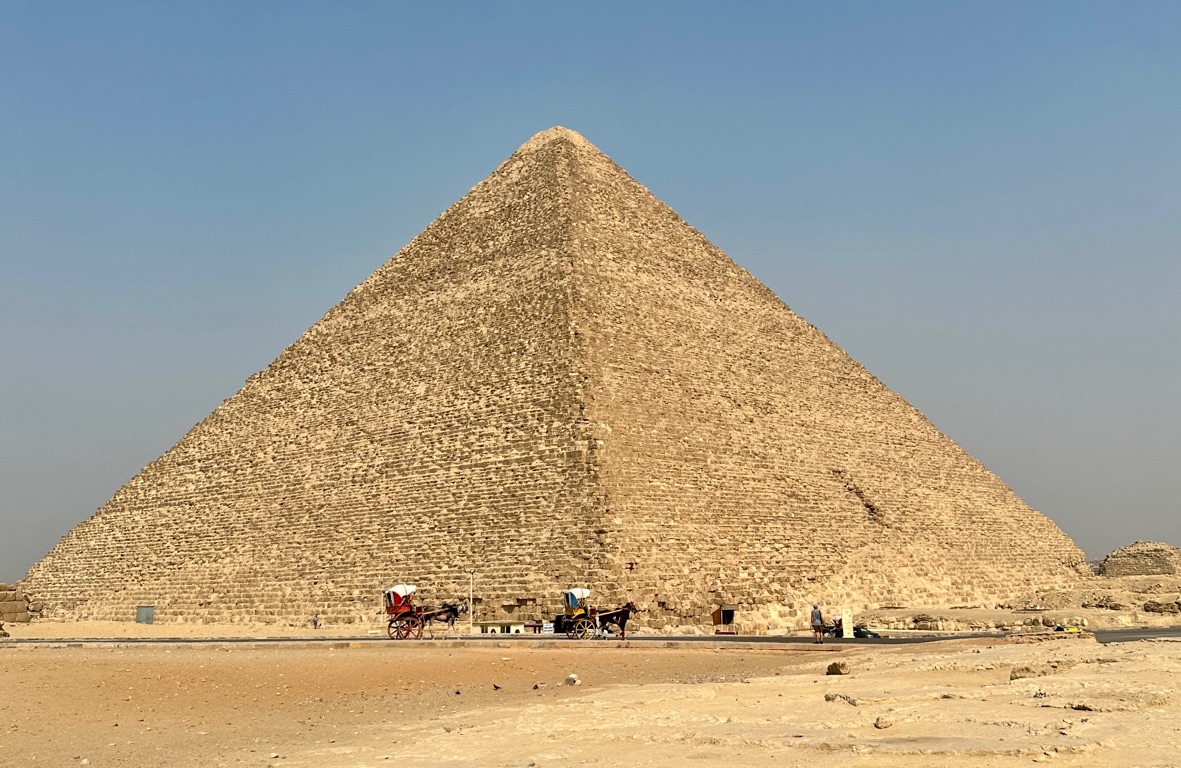
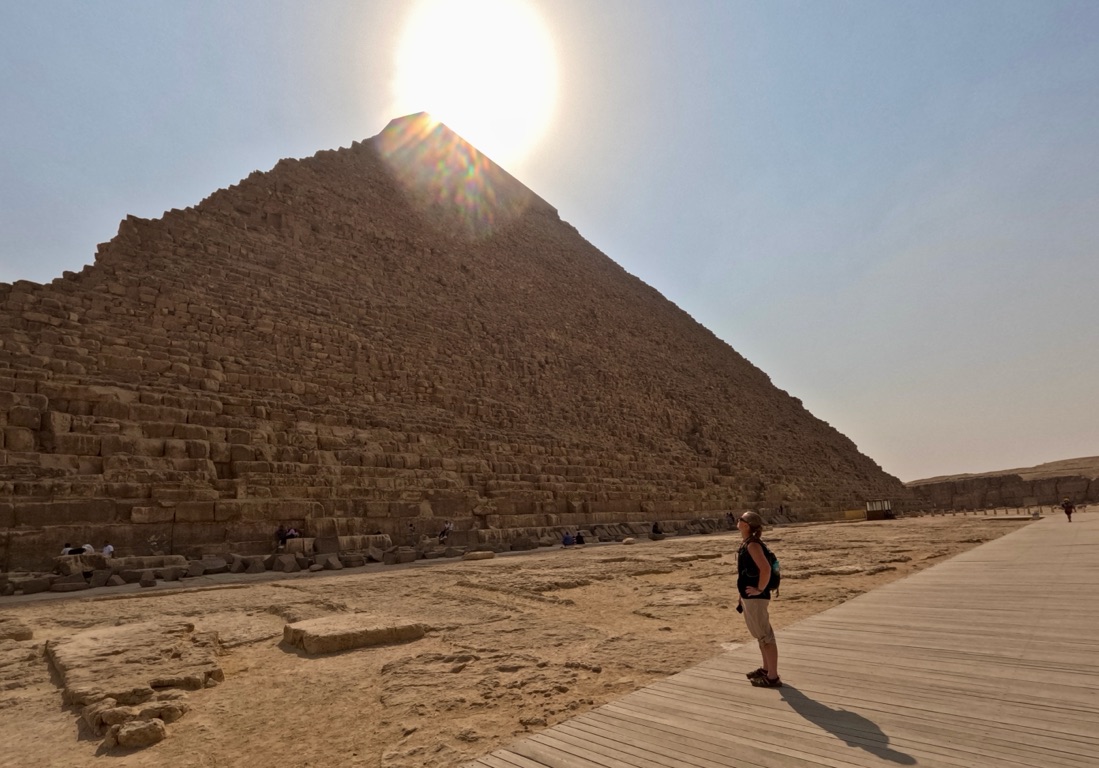
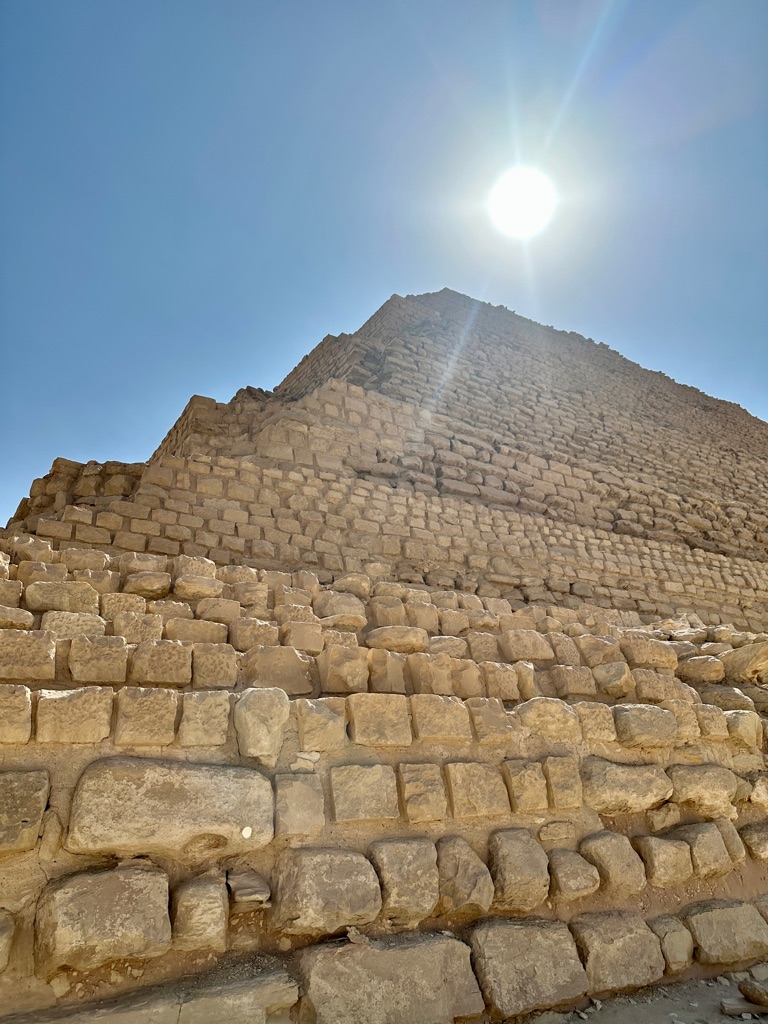
The Great Pyramid of Giza is the largest Egyptian pyramid. It served as the tomb of pharaoh Khufu, who ruled during the Fourth Dynasty of the Old Kingdom. Built c. 2600 BC, over a period of about 26 years, the pyramid is the oldest of the Seven Wonders of the Ancient World, and the only wonder that has remained largely intact. It is the most famous monument of the Giza pyramid complex, which is part of the UNESCO World Heritage Site "Memphis and its Necropolis". It is situated at the northeastern end of the line of the three main pyramids at Giza.
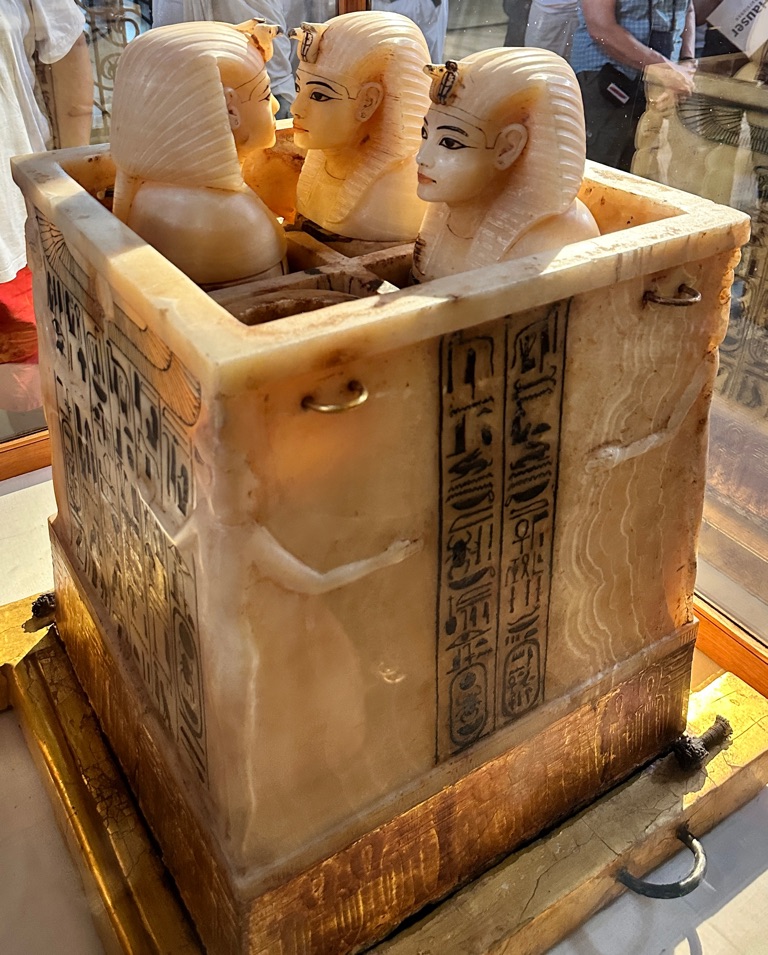
Canopic Chest of Tutankhamun
This alabaster canopic chest of Tutankhamun is considered to be one of the finest masterpieces of King Tut’s collection. The interior of the chest is divided into four compartments, each with a cylindrical hollow covered by a lid elegantly carved in the form of the king’s head.
At the four corners of the chest, carved in high relief, are four goddesses: Isis, Nephthys, Neith and Serket, who stretch out their arms to protect the contents of the chest.
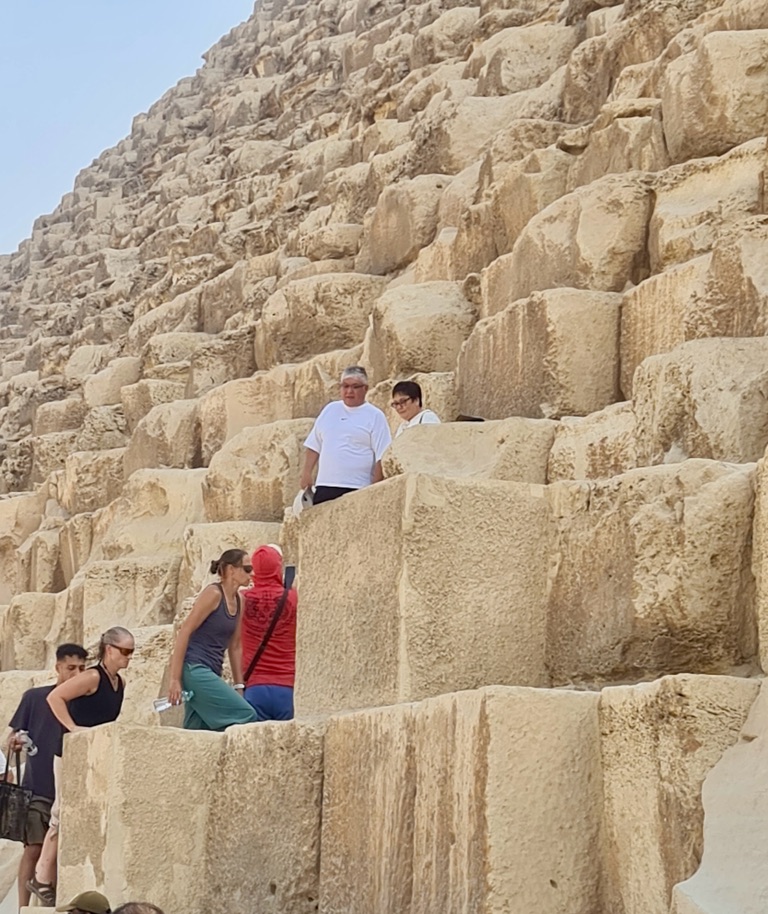
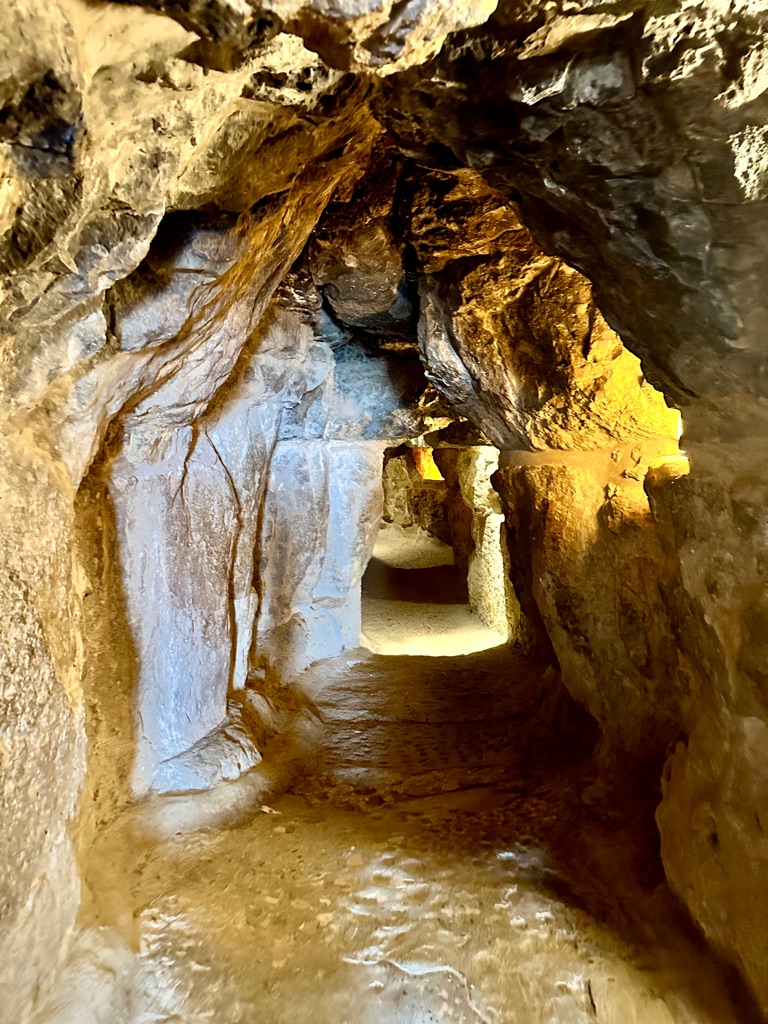
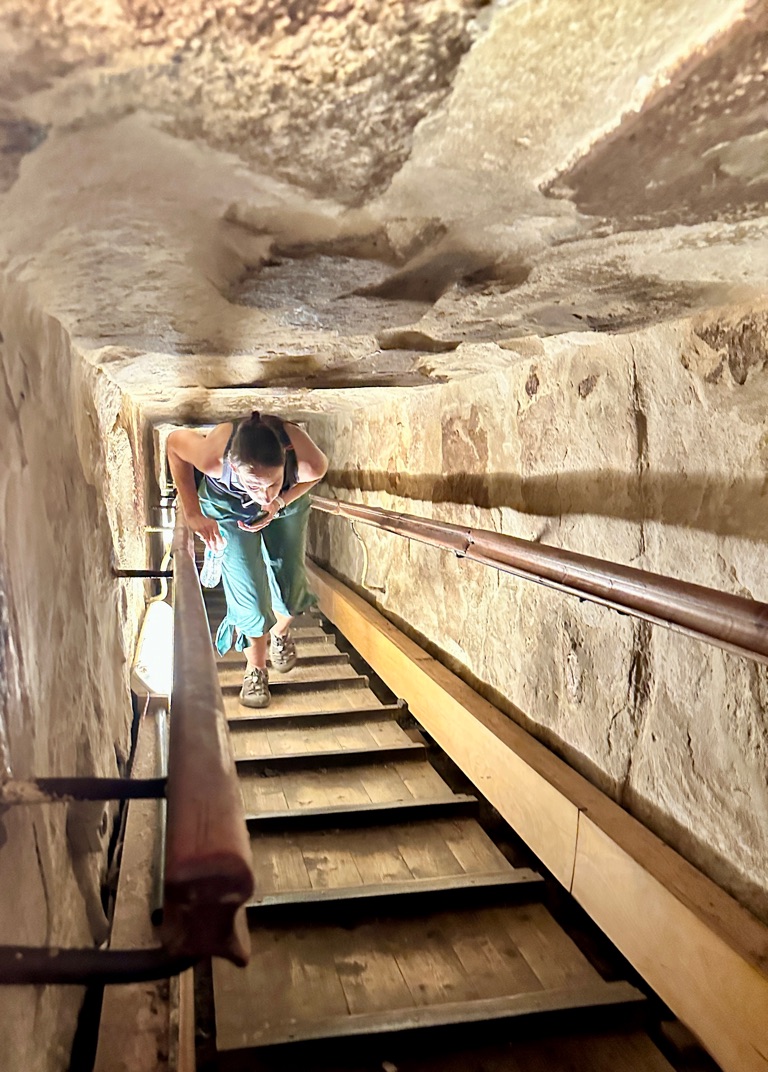
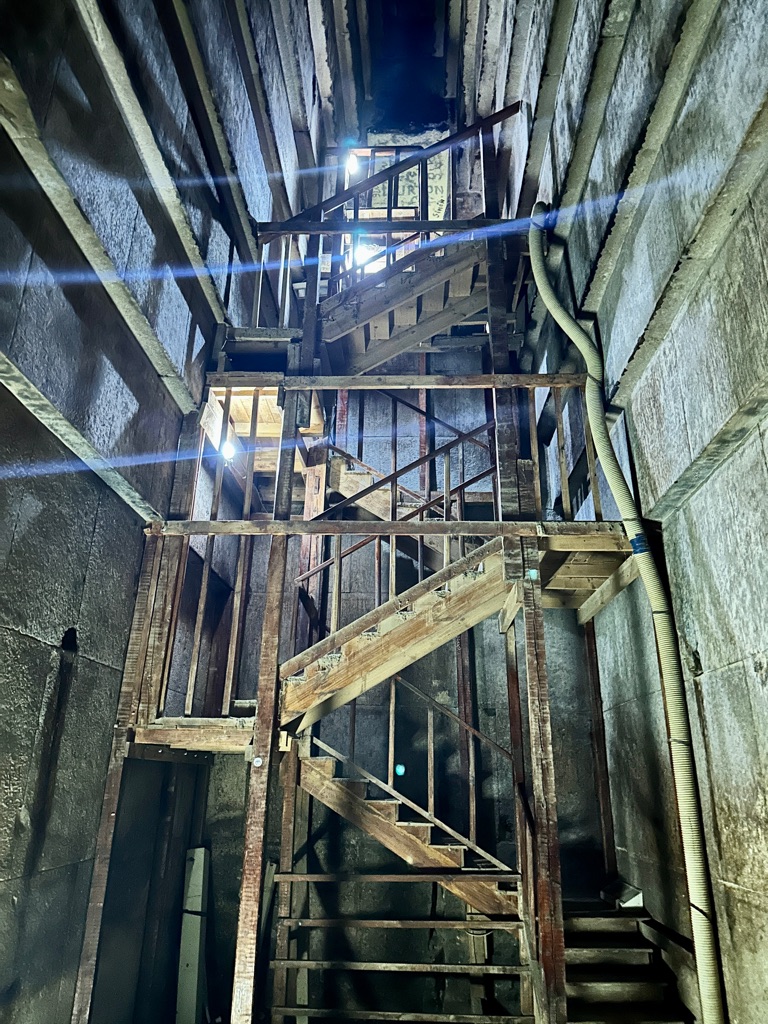
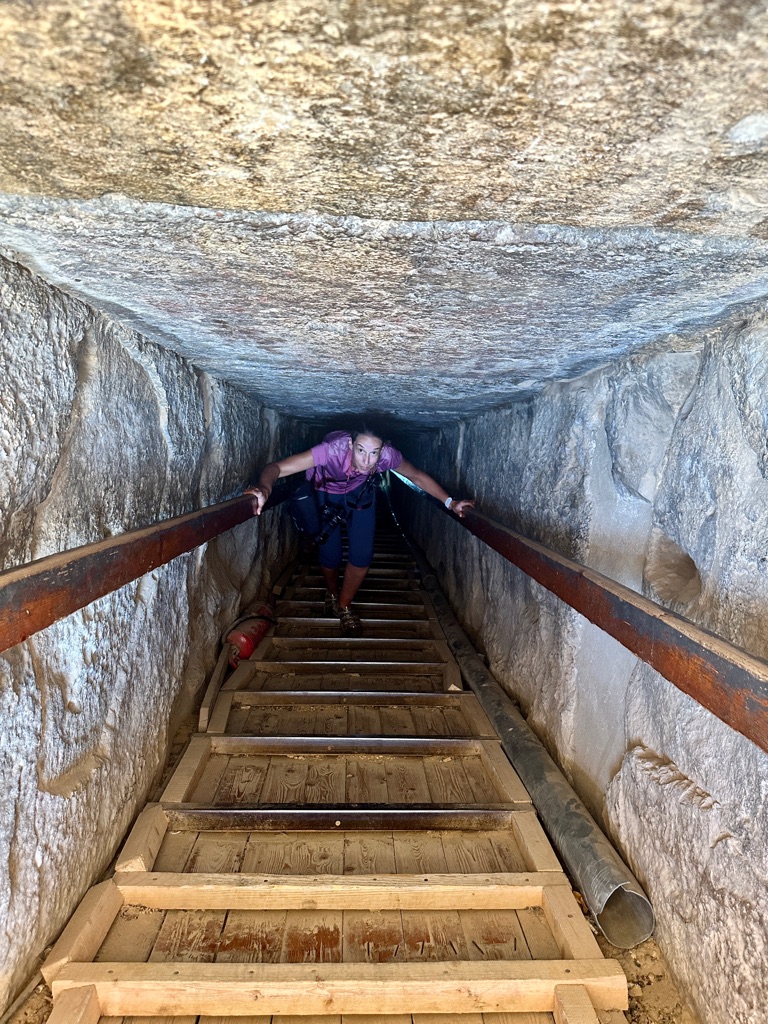
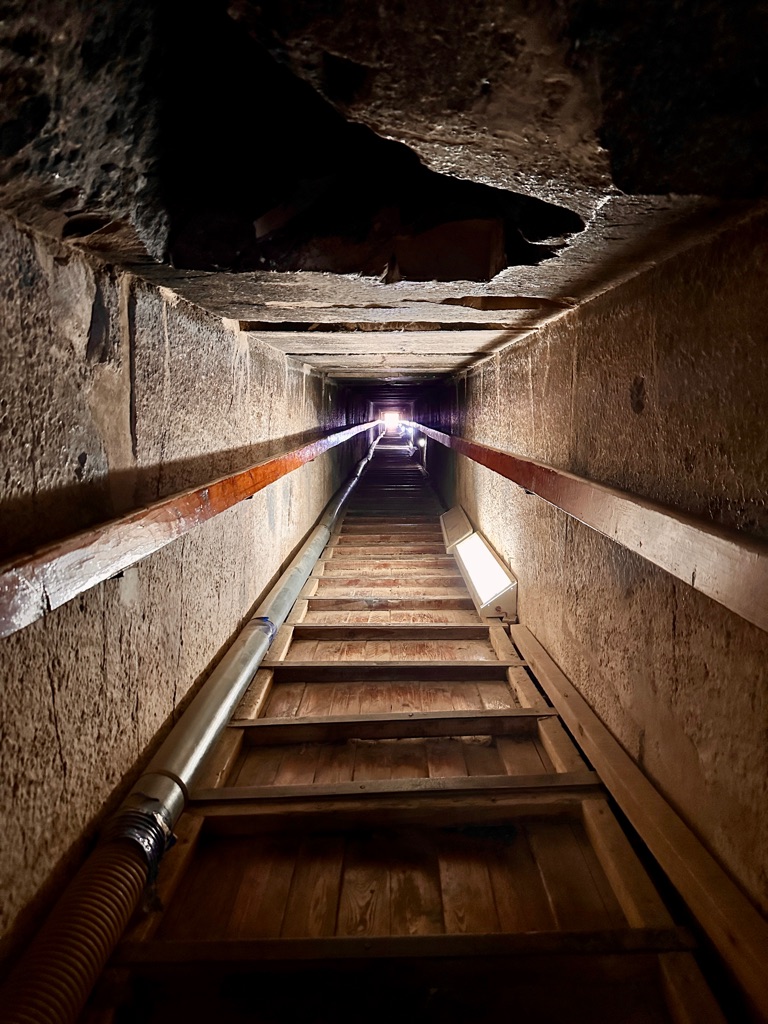
Entering the Great Pyramid to visit the Kings Chamber
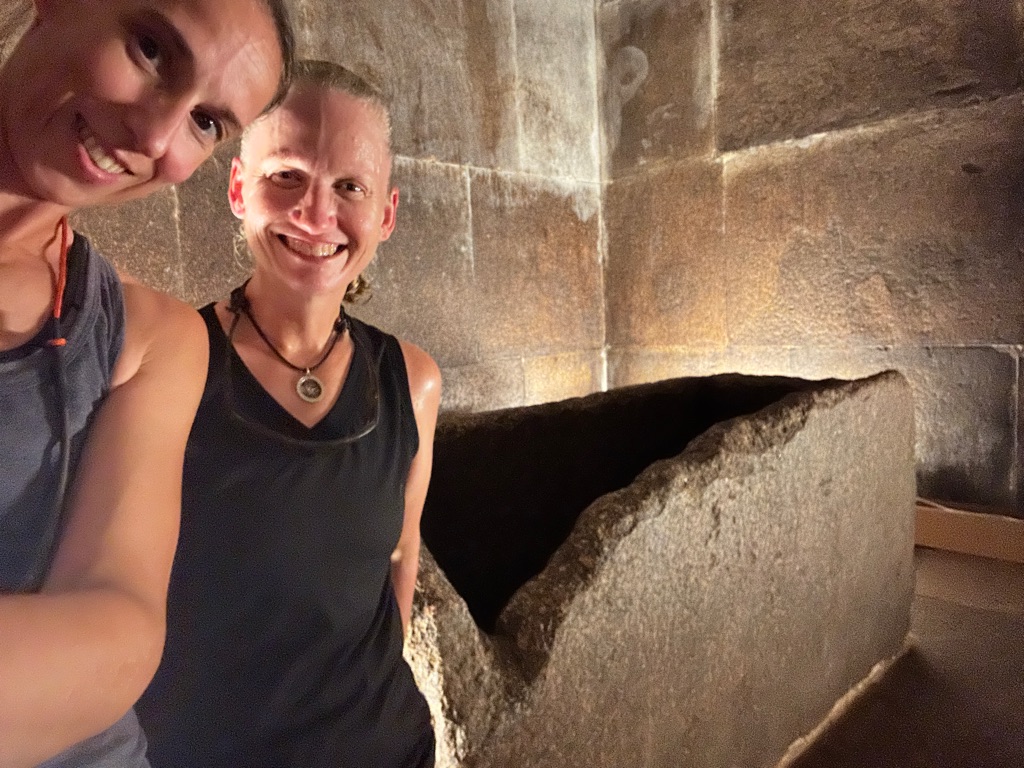
There are three known chambers inside of the Great Pyramid. The lowest was cut into the bedrock, upon which the pyramid was built, but remained unfinished. The so-called Queen's Chamber and King's Chamber, which contain a granite sarcophagus, are above ground, within the pyramid structure. Hemiunu, Khufu's vizier, is believed by some to be the architect of the Great Pyramid. Many varying scientific and alternative hypotheses attempt to explain the exact construction techniques, but, as is the case for other such structures, there is no definite consensus.

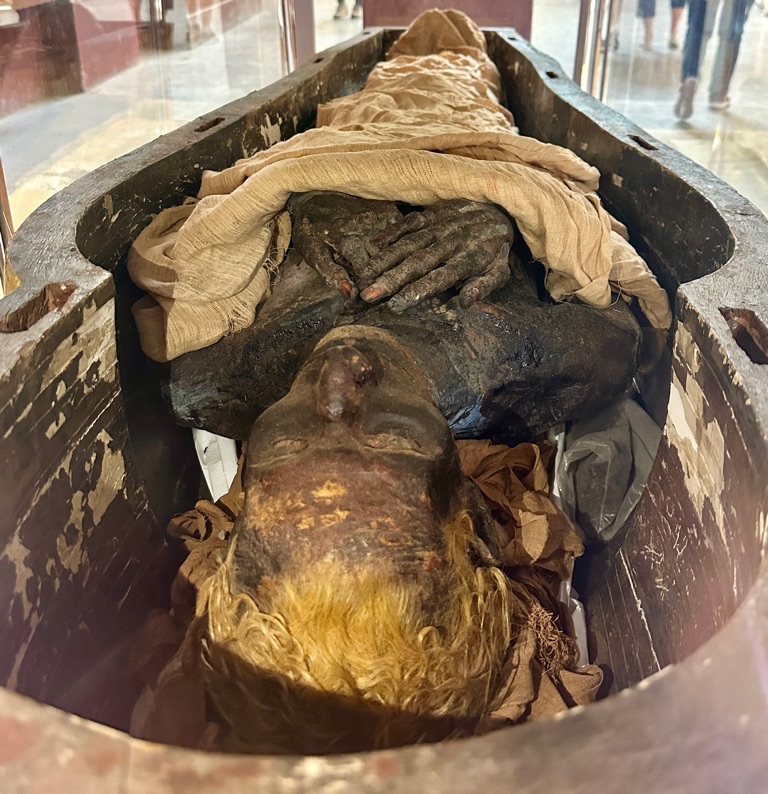
The tomb of Yuya and Thuya, is the burial place of the ancient Egyptian noble Yuya and his wife Thuya, in the Valley of the Kings. They were the parents of Queen Tiye, the chief wife of Pharaoh Amenhotep III. Their tomb was discovered in February 1905 by the Egyptologist James E. Quibell. The tomb was robbed in antiquity but preserved a great deal of its original contents including chests, beds, chairs, a chariot, and numerous storage jars. Additionally, the riffled but undamaged mummies of Yuya and Thuya were found within their disturbed coffin sets. Prior to the discovery of the tomb of Tutankhamun, this was considered to be one of the greatest discoveries in Egyptology.

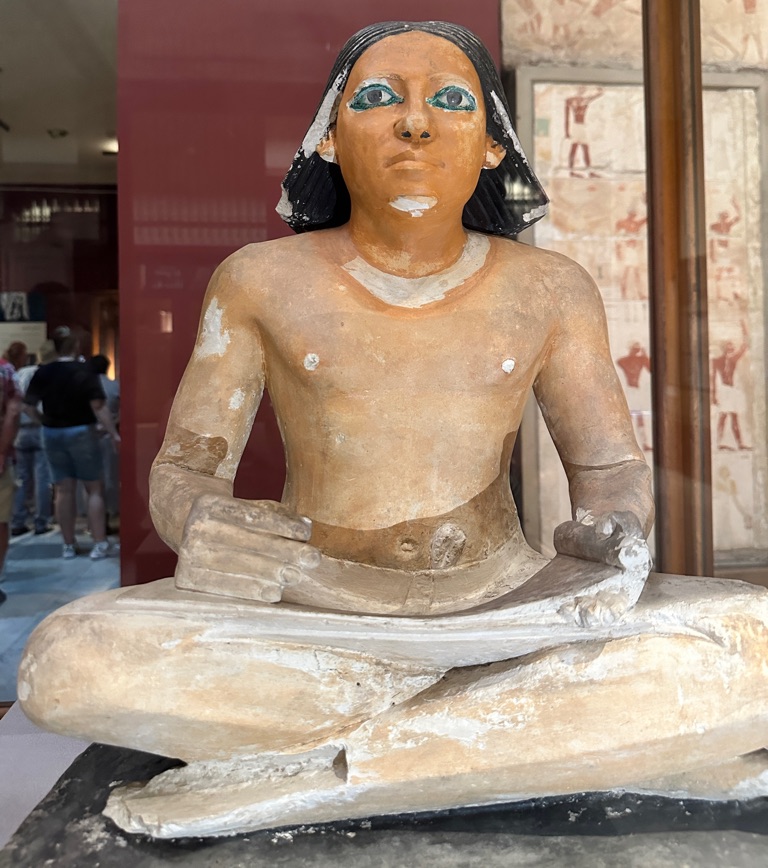
The sculpture of the Seated Scribe or Squatting Scribe is a famous work of ancient Egyptian art. It represents a figure of a seated scribe at work. The sculpture was discovered at Saqqara, north of the alley of sphinxes leading to the Serapeum of Saqqara, in 1850, and dated to the period of the Old Kingdom, from either the 5th Dynasty, c. 2450–2325 BCE or the 4th Dynasty, 2620–2500 BCE.
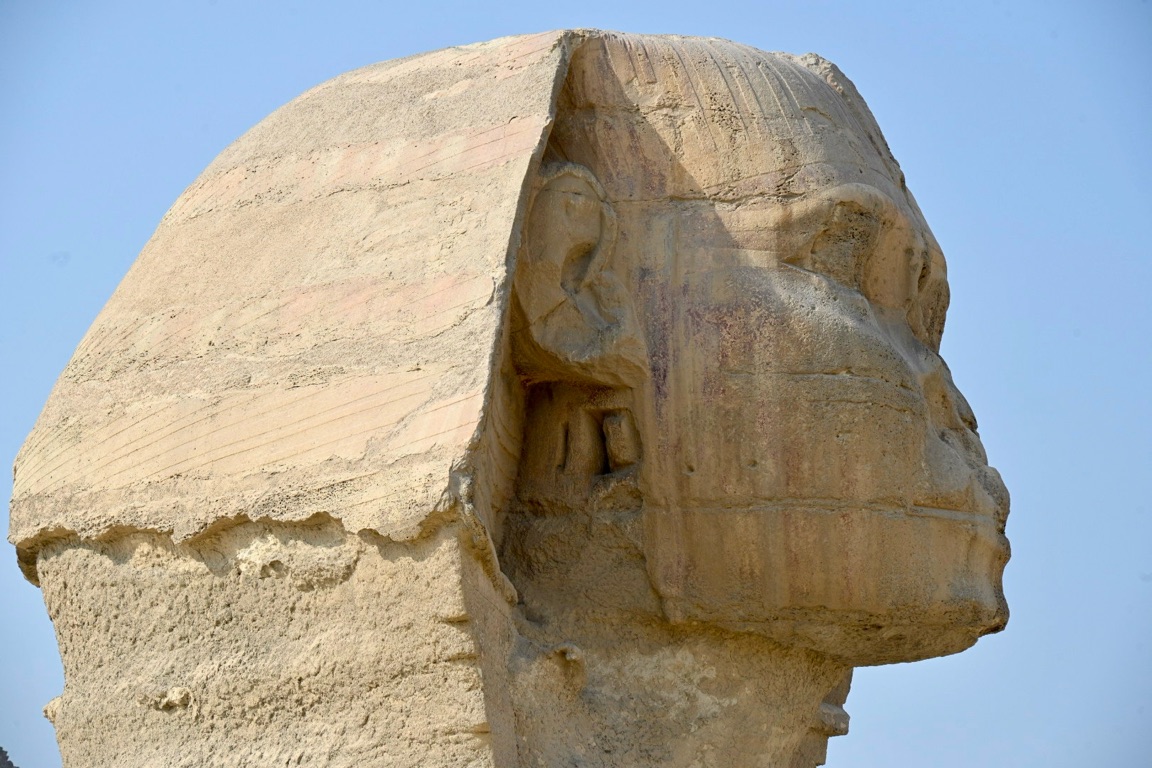
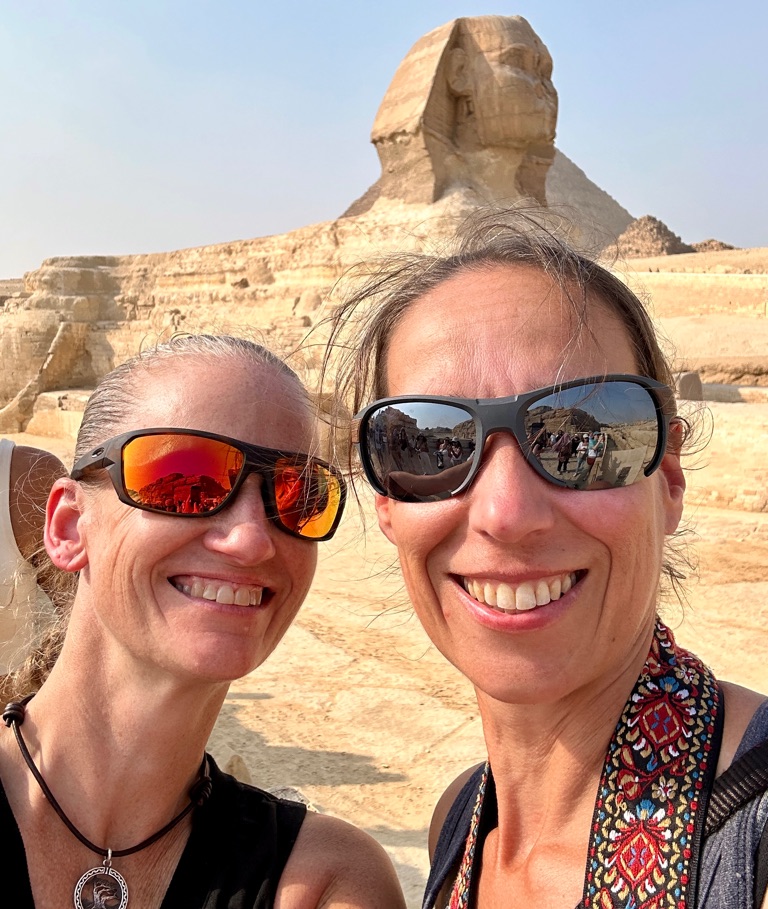
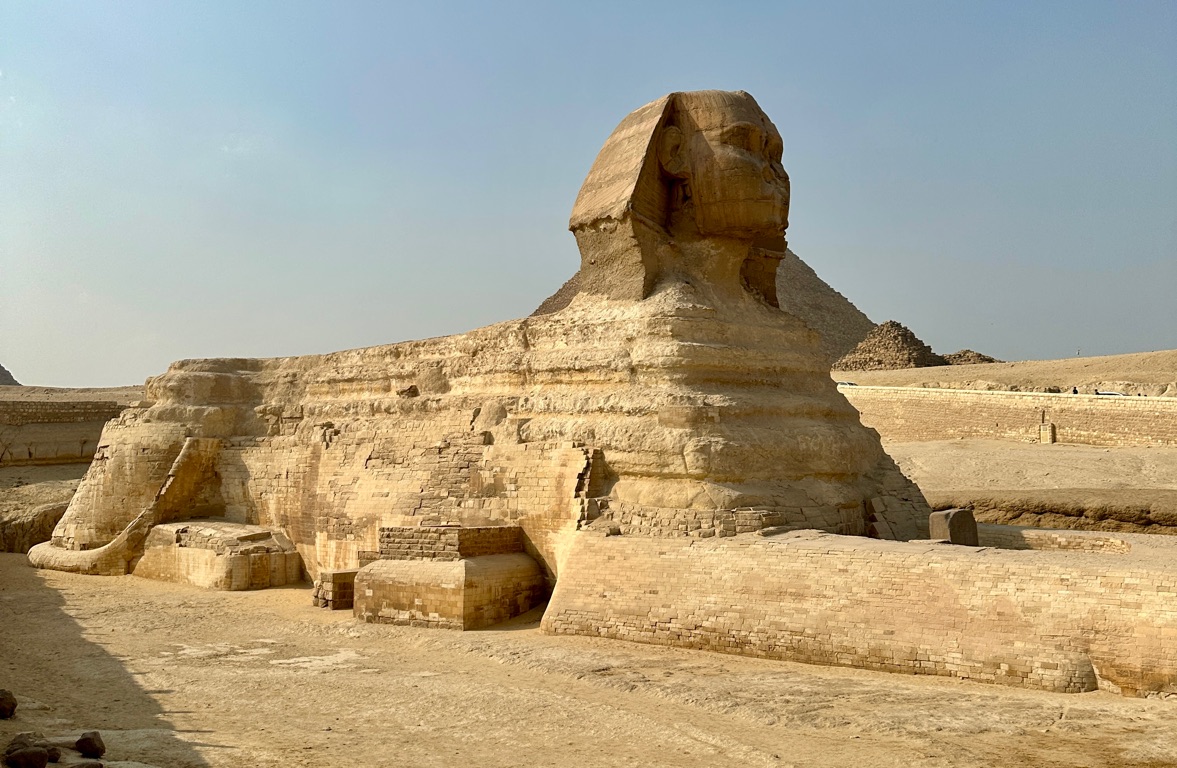
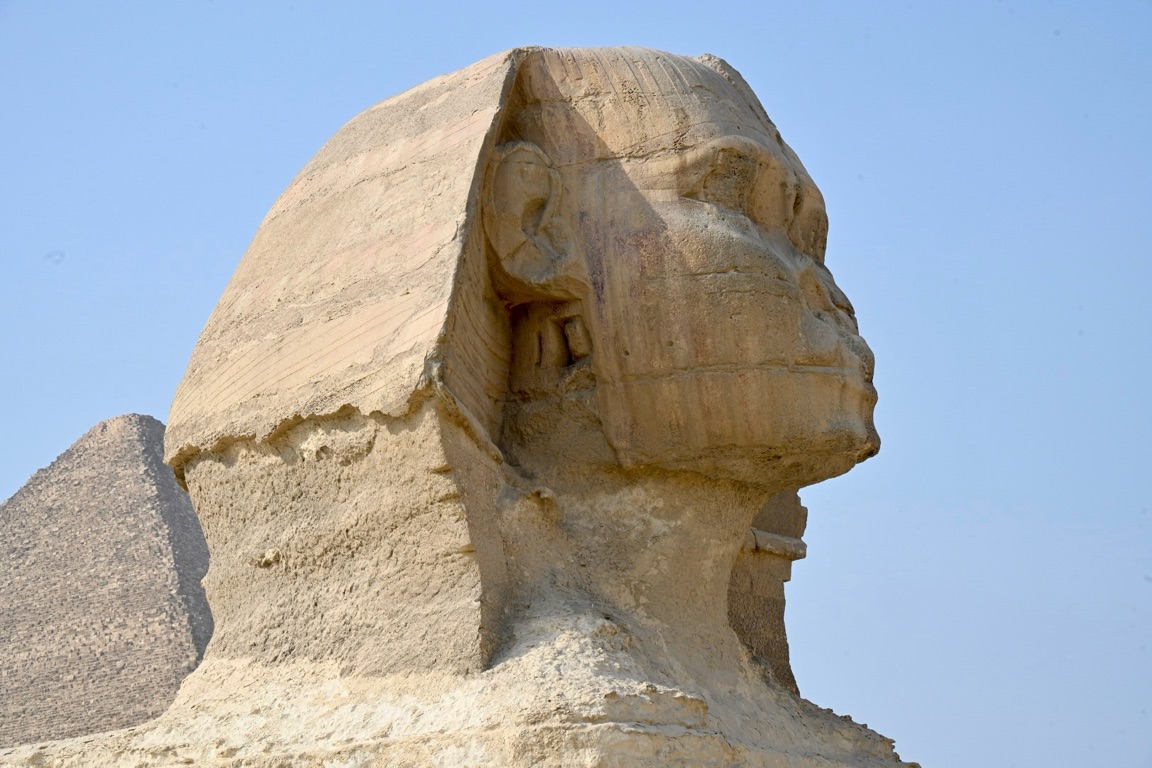
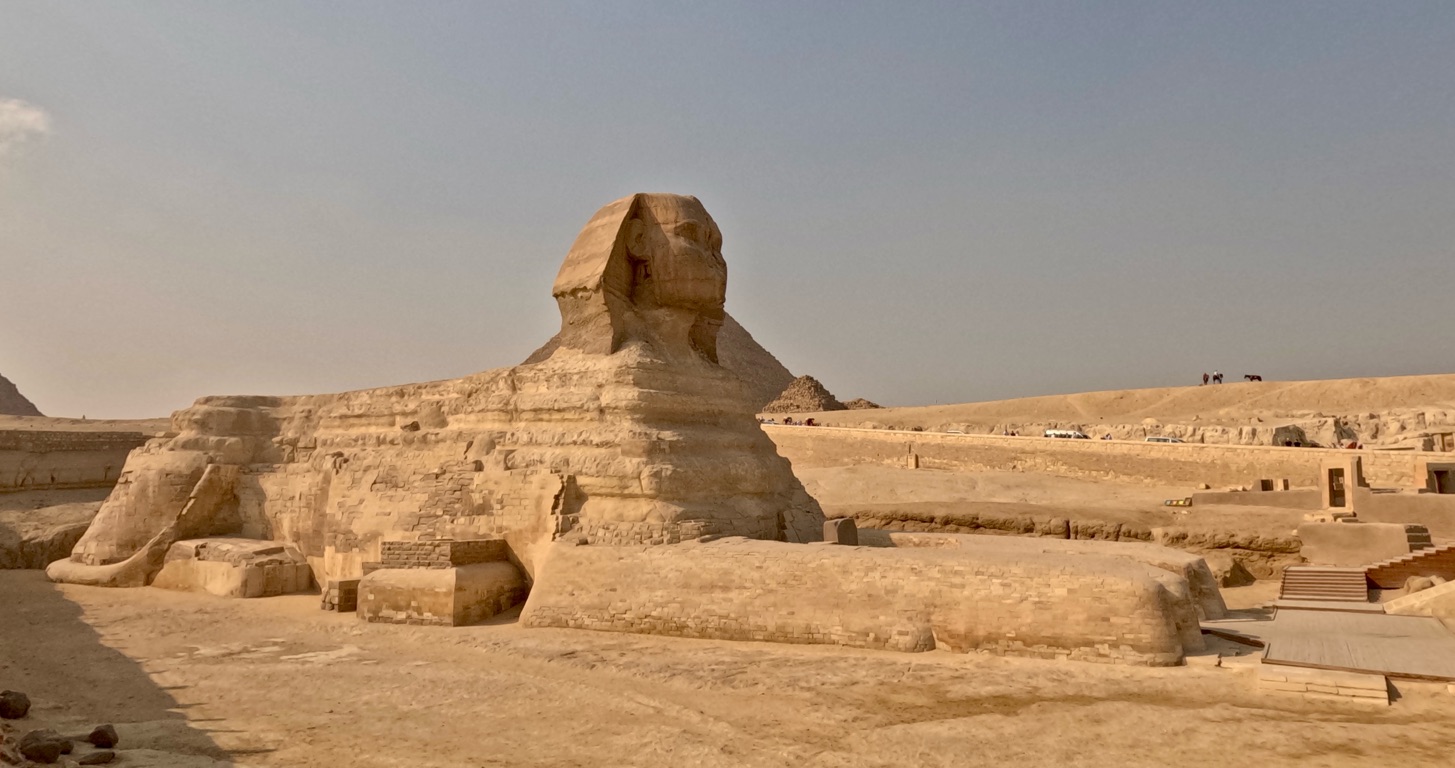
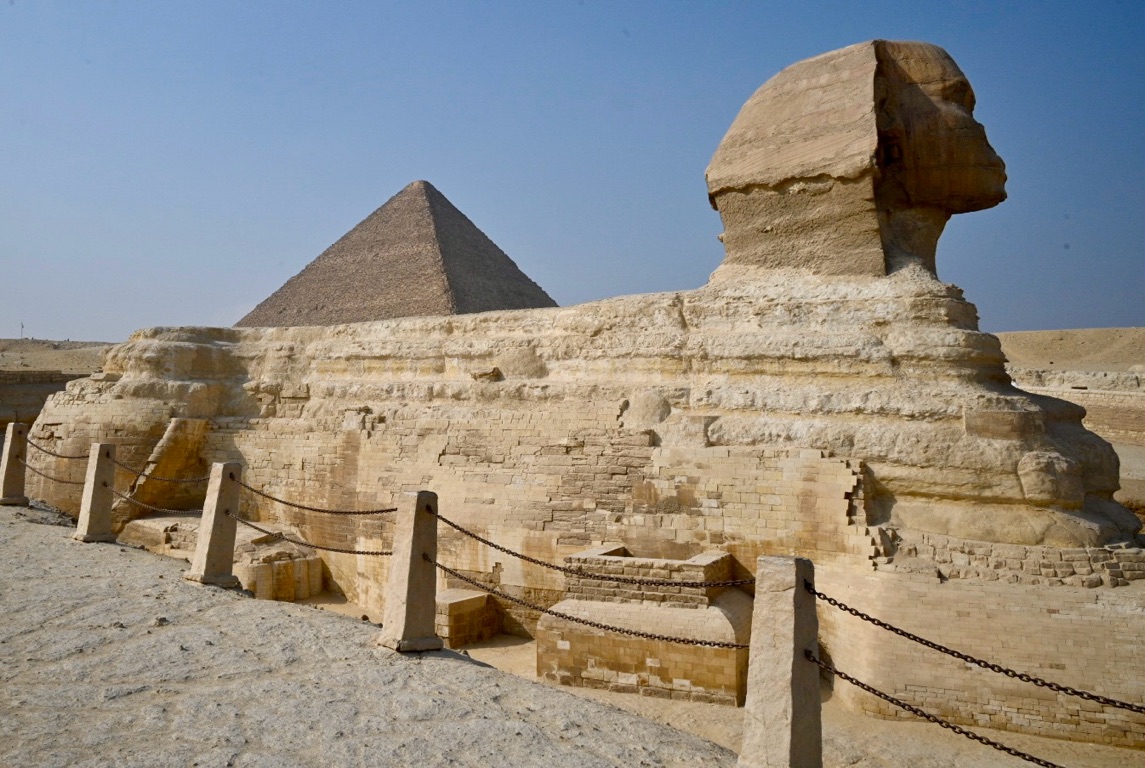
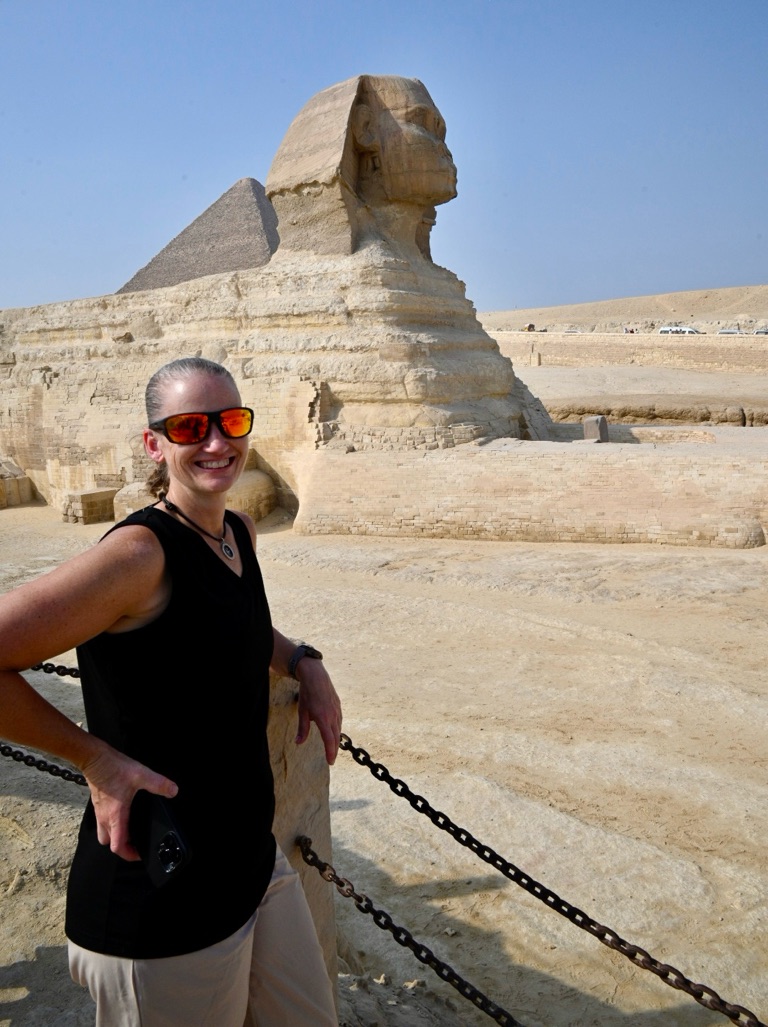
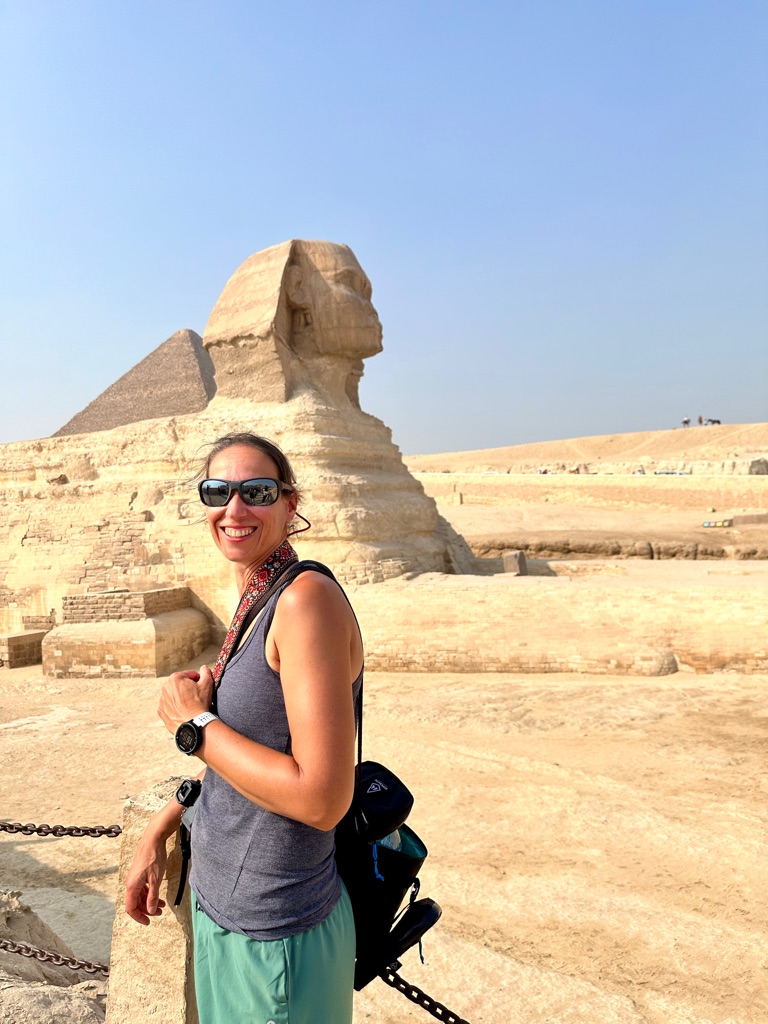
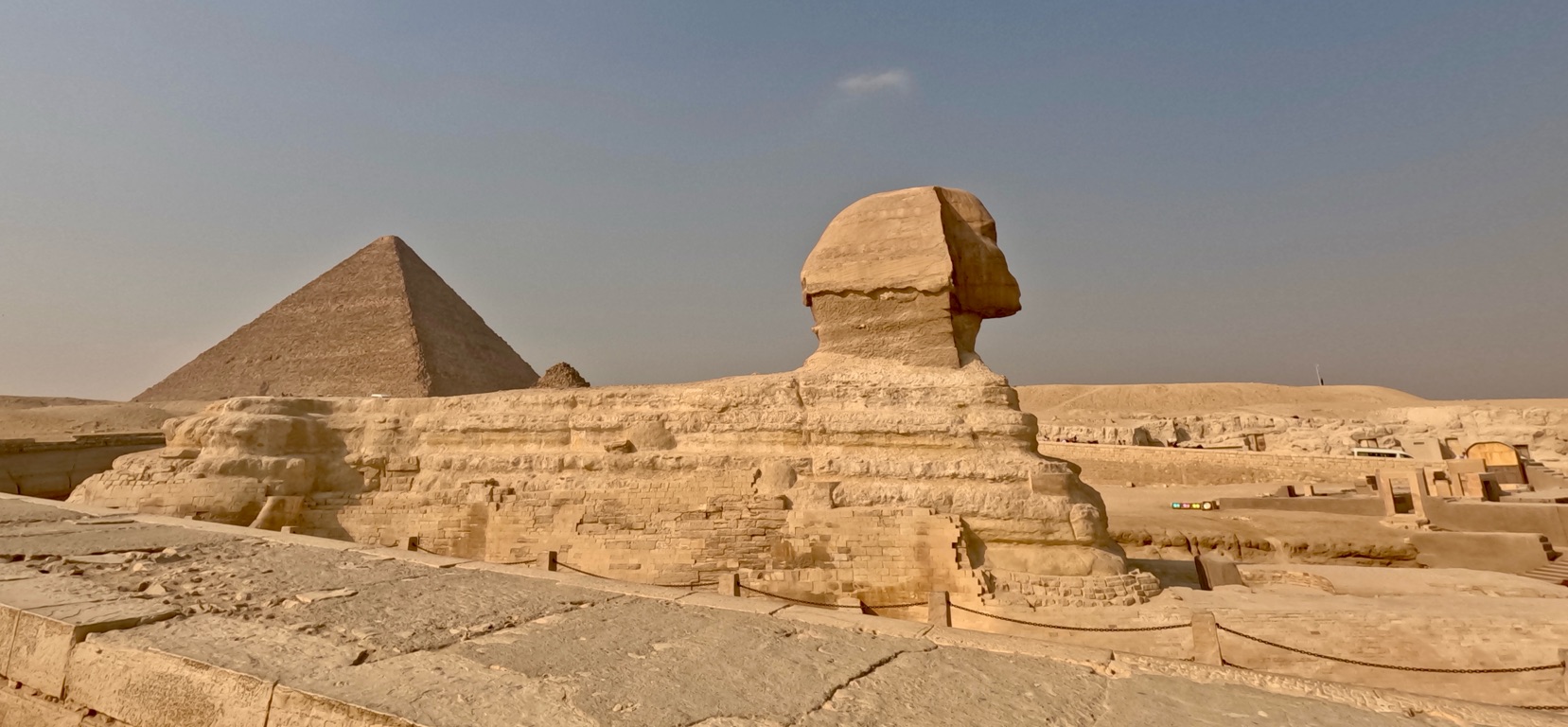
The Sphinx is the oldest known monumental sculpture in Egypt and one of the most recognizable statues in the world. The archaeological evidence suggests that it was created by ancient Egyptians of the Old Kingdom during the reign of Khafre (c. 2558–2532 BC).
The Great Sphinx of Giza is a limestone statue of a reclining sphinx, a mythical creature with the head of a human and the body of a lion. Facing directly from west to east, it stands on the Giza Plateau on the west bank of the Nile in Giza, Egypt. The face of the Sphinx appears to represent the pharaoh Khafre. The original shape of the Sphinx was cut from bedrock, and has since been restored with layers of limestone blocks. It measures 73 m (240 ft) long from paw to tail, 20 m (66 ft) high from the base to the top of the head and 19 m (62 ft) wide at its rear haunches.
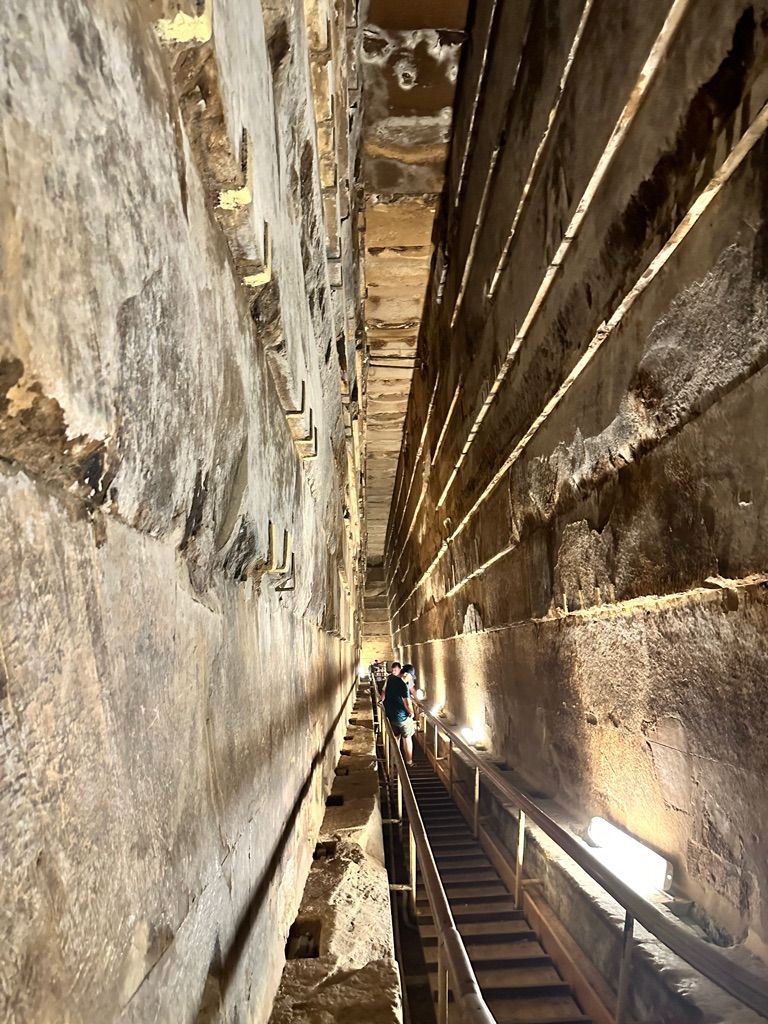
- The interior consists of a series of chambers and corridors. The Grand Gallery, a long, ascending passage, is particularly impressive. It features corbelled ceilings and is about 28 feet high, giving a sense of grandeur.
Its the only passageway from the Grand Gallery to the King's Chamber.
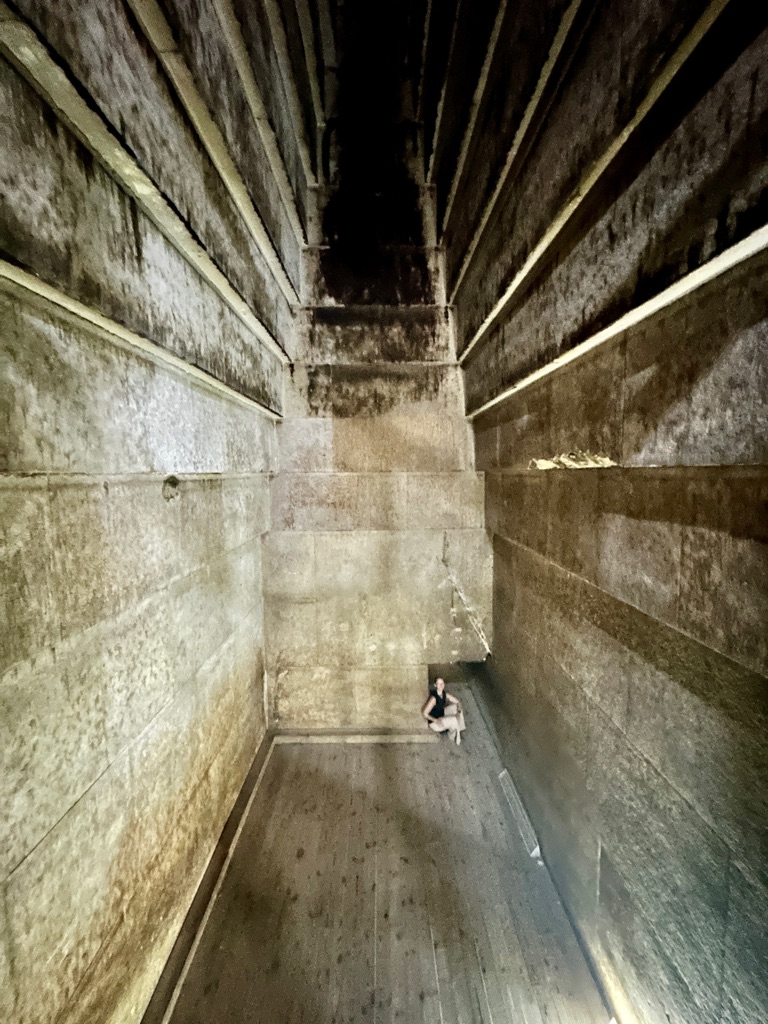
The King’s Chamber, where the sarcophagus of Pharaoh Khufu is located, is striking with its large granite blocks and a flat ceiling.
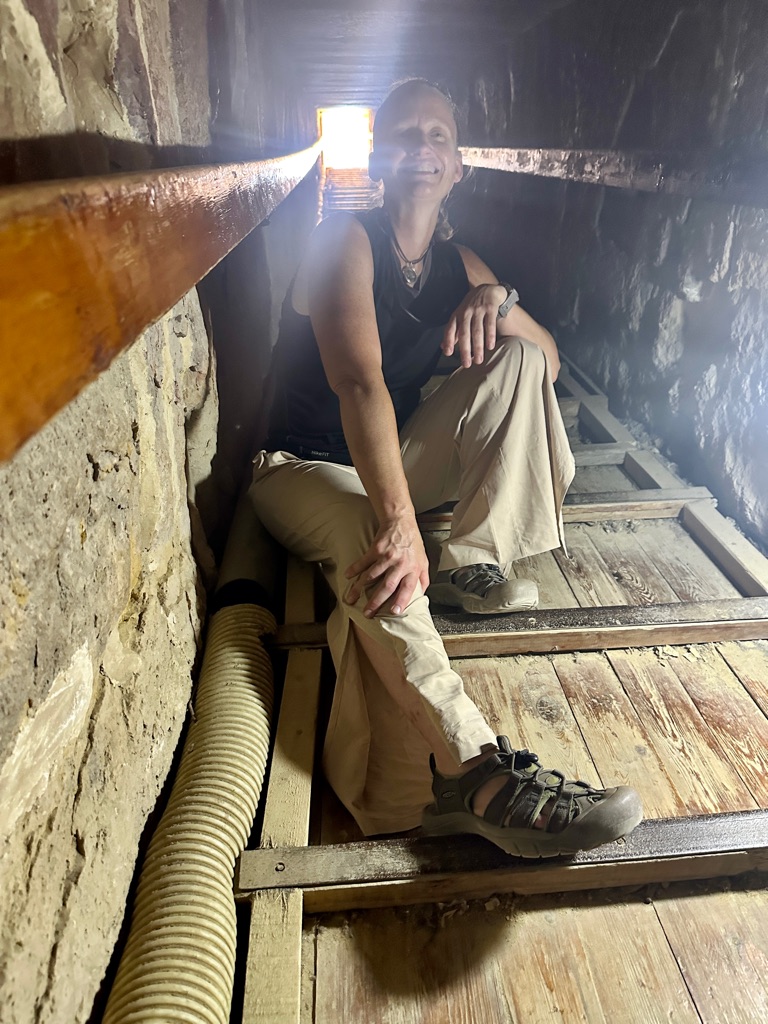
Not great for tall people
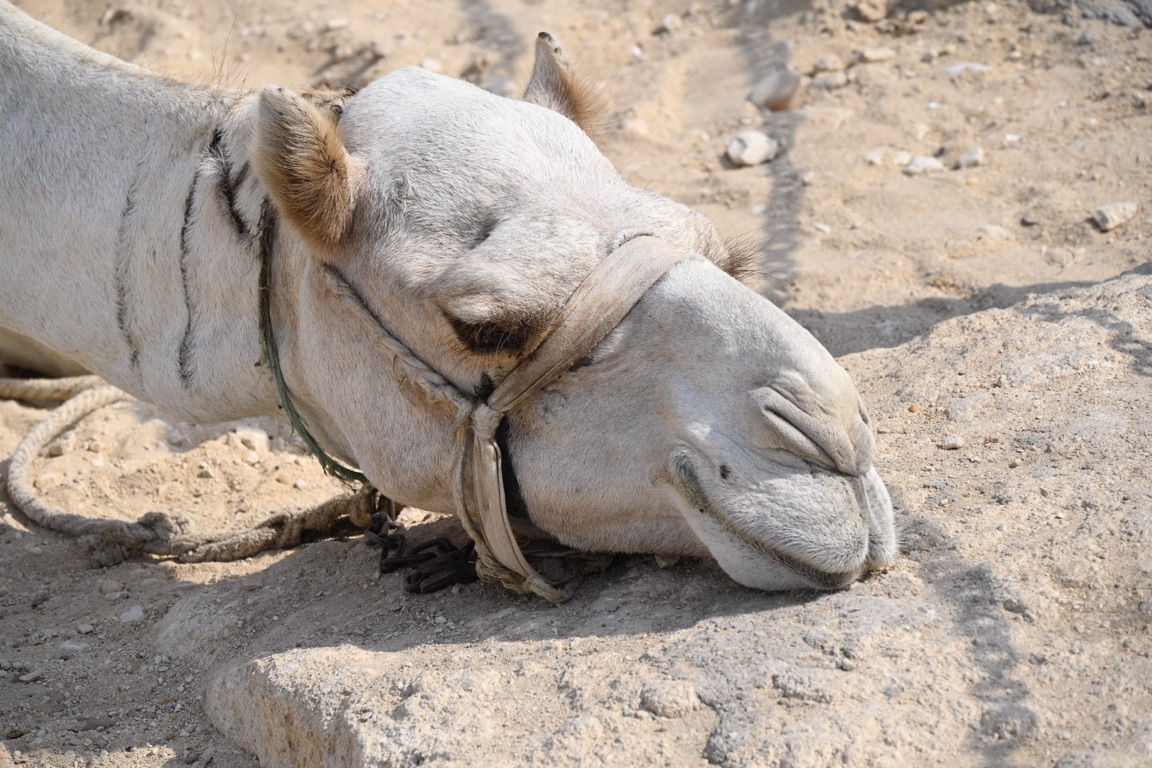
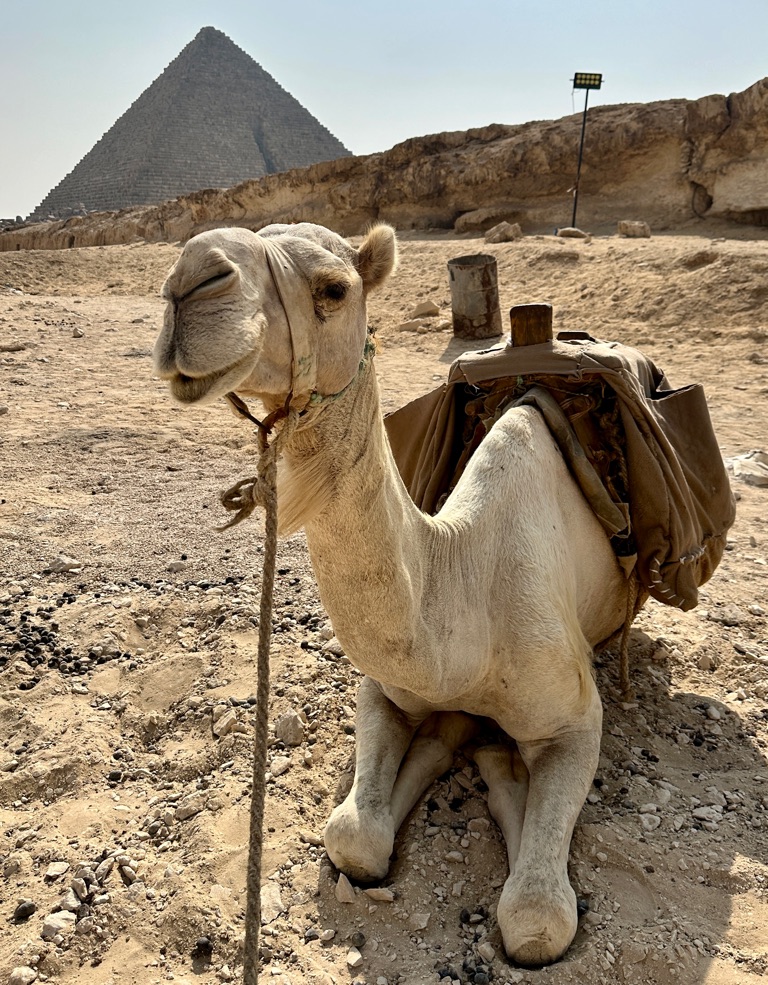
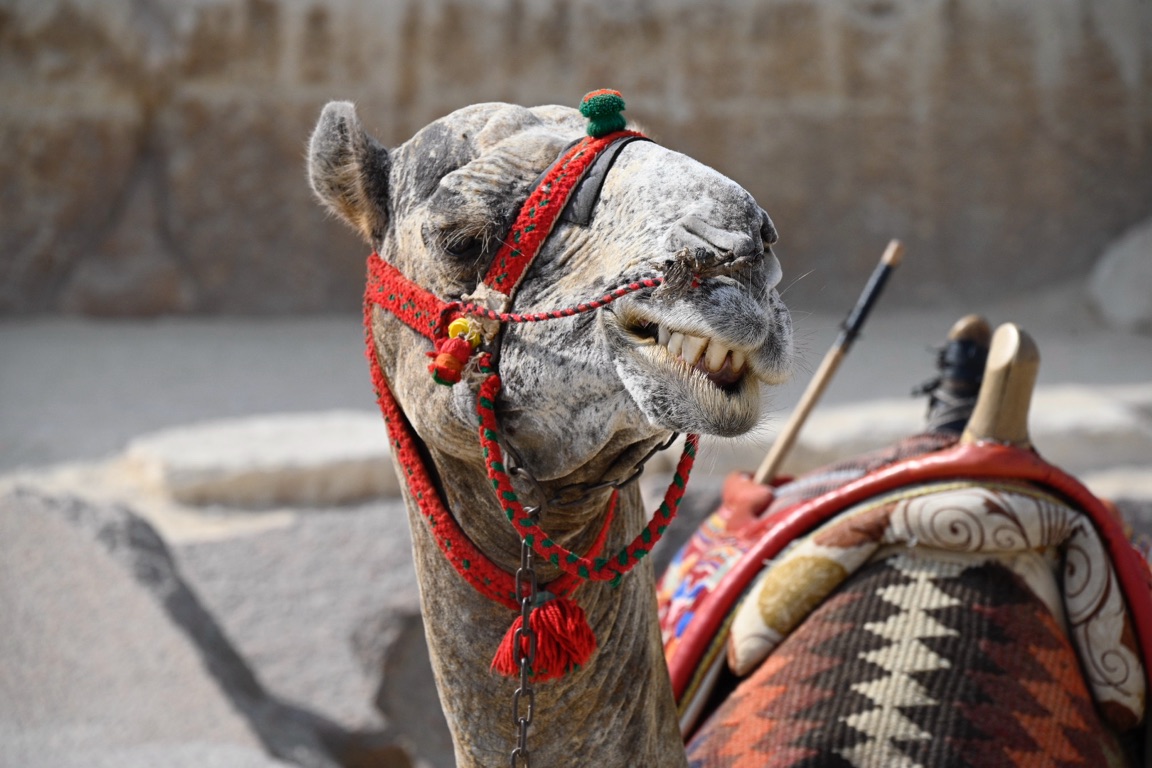
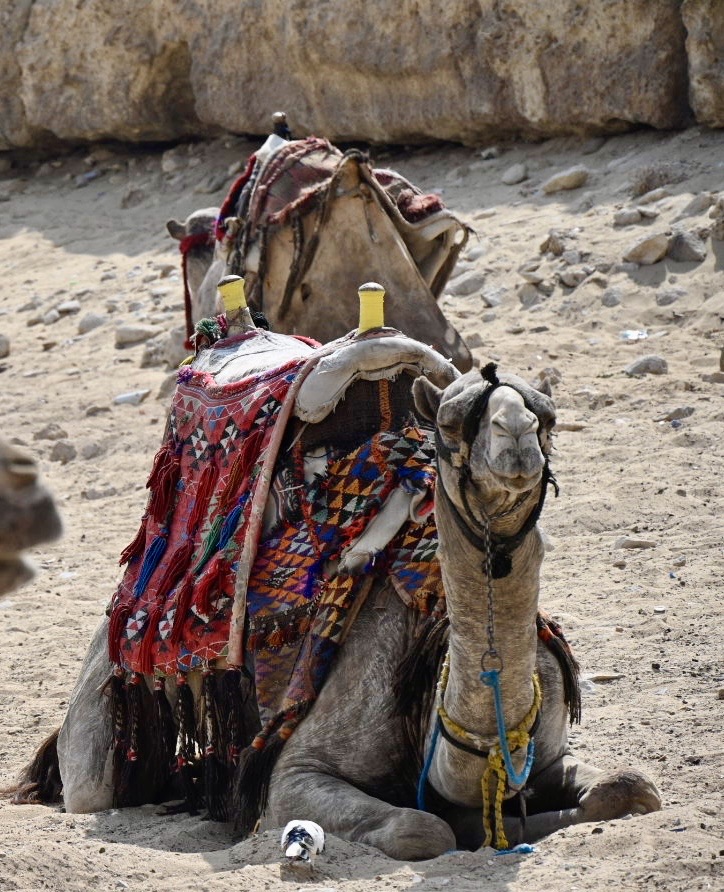
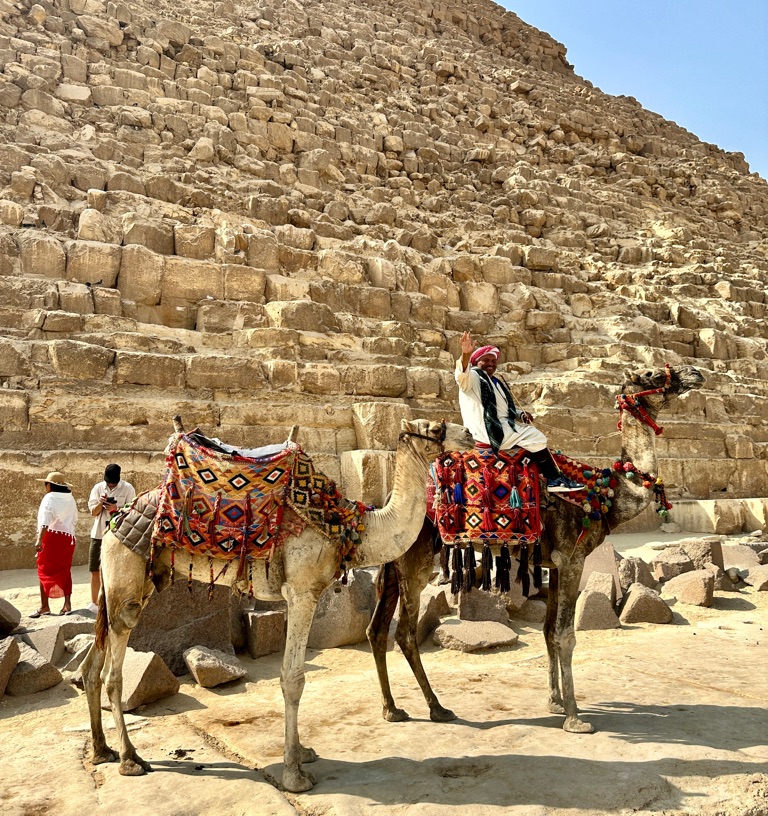
This is Moses, he was a security guys camel