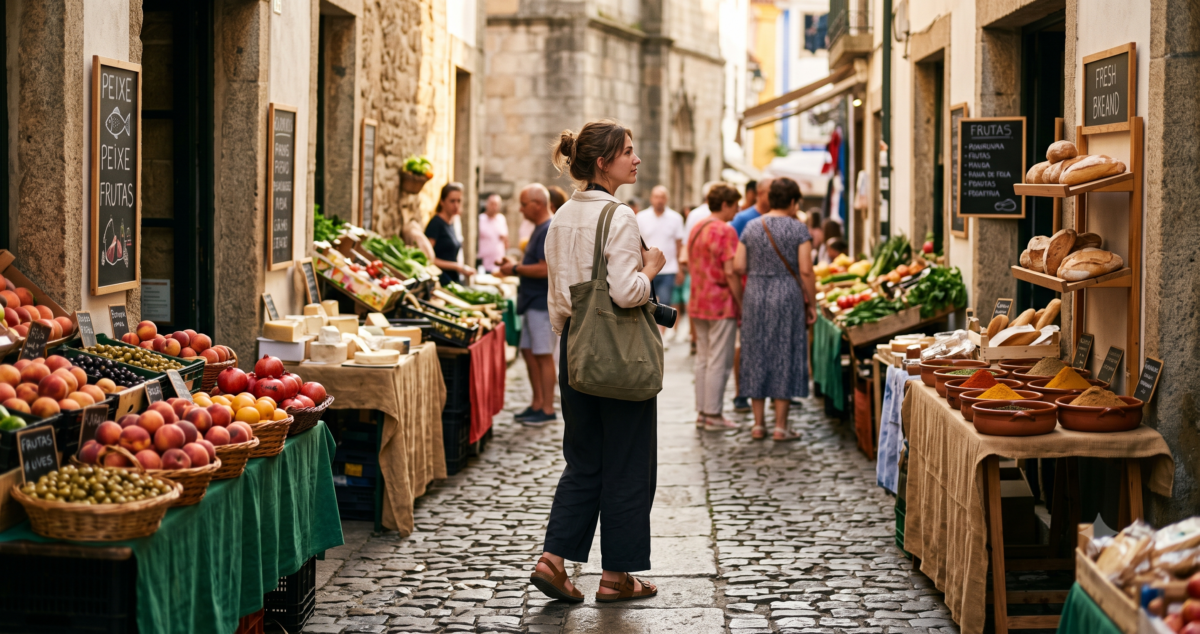
Two travelers land in the same country on the same week. One rents a car, drives three hours between “must-see” towns, and eats wherever is open near the parking lot. The other picks one walkable city, drops the bags, and eats lunch four blocks from the market. By day three, one of them has seen more. The other one remembers more.
That difference isn’t luck. It’s a decision — the same one Operators make every time they plan a food and culture trip: pick the city small enough and dense enough that the food finds you, instead of the other way around.
The best destinations for food and culture travel in 2026 share three traits: a walkable historic core under 3 miles across, a market or street-food culture that operates daily rather than seasonally, and a shoulder-season window where both crowds and prices drop. Lisbon, Bologna, Oaxaca, and Fukuoka hit all three.
This is the Travel Decision Stack applied to one specific kind of trip — the one where the food is the itinerary, not a break from it.
The best food cities aren’t the ones with the most Michelin stars. They’re the ones small enough that hunger is the only reason you need to turn left instead of right.
- Walkability and food quality are correlated, not coincidental — compact historic cores force markets, bakeries, and street food into daily walking range.
- Lisbon, Bologna, Oaxaca, and Fukuoka each pass the Travel Decision Stack test for food and culture travel in 2026.
- Daily costs range from $70 (Oaxaca) to $220 (Bologna) depending on season and dining style.
- Shoulder-season timing (spring or early autumn for most of these cities) is the single biggest lever on both crowd size and price.
- Operators plan the city first and the restaurant list second — reservations follow the itinerary, not the other way around.
Get $6,640 in travel gifts — just for saying “maybe”
Try Journo Insider today and unlock The Syndicate 7-week travel course ($899), the Insiders Exclusive Library ($1,337), the Supercharged Travel Fund Challenge ($3,600), and more — free for 14 days. Keep the gifts even if you cancel.
Claim your free gifts → Keep everything even if you cancel.What makes a city right for food and culture travel?
A food and culture destination earns the label when three things are true at once: the historic core is walkable in under 3 miles end to end, there’s a working market or street-food culture that locals actually use — not one built for tourists — and there’s a shoulder season where both hotel rates and restaurant lines drop by 30% or more.
Most travel content skips straight to “best restaurants in X.” That’s backwards. In practice, the city does the work. Pick a walkable one and the food finds you between the museum and the hotel. Pick a spread-out one and every meal becomes a 20-minute rideshare decision, which is where food trips usually fall apart.
Why walkability matters more than the restaurant list
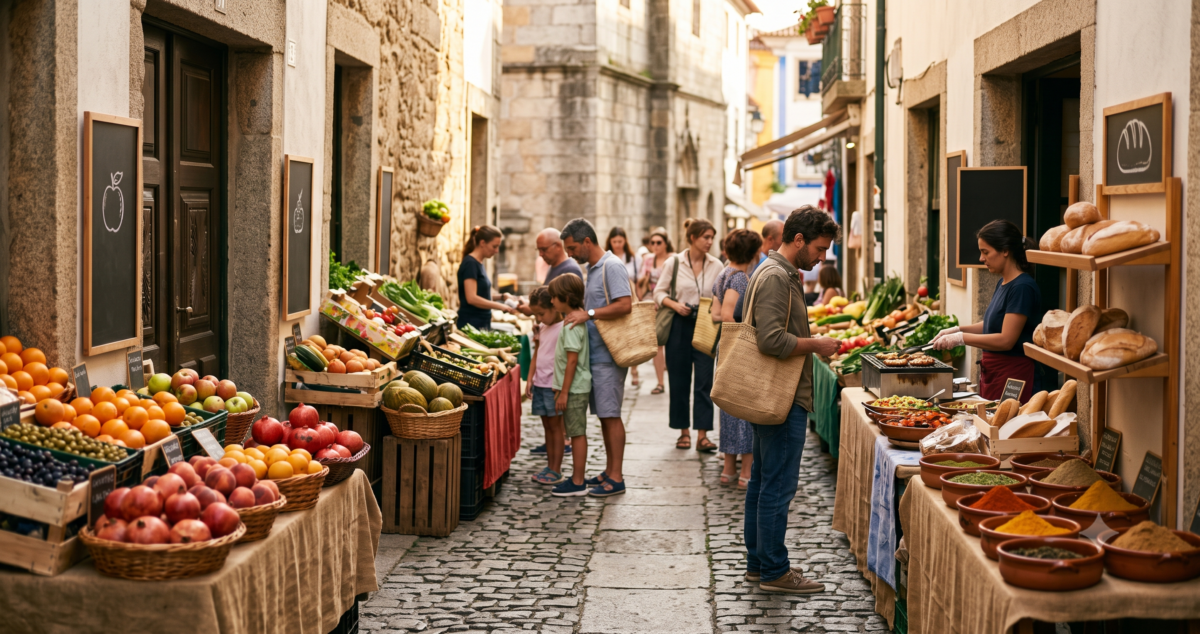
A walkable core compresses discovery. Bologna’s historic center alone holds 38 kilometers of covered porticoes — a network so extensive that UNESCO added it to the World Heritage List in 2021 — and a traveler passes six bakeries and two markets just getting from the hotel to the main square. That’s not a curated itinerary — it’s geography doing the curating. Cities without that density require a plan for every single meal, which is exhausting by day four.
The 4 best destinations for food and walkable cities in 2026
Lisbon, Portugal
Lisbon’s Baixa-Chiado-Alfama triangle covers most of what matters on foot, with the city’s historic trams filling in the hills. The Time Out Market consolidates 26 restaurant stalls from the country’s top chefs under one roof — Time Out’s own official count — and the pastel de nata at Manteigaria is a 6-minute walk from nearly any hotel in the center.
Timing verdict: April–June or September–October. July and August bring peak heat and peak crowds — hotel rates jump 35-45% and the Alfama’s narrow streets get genuinely uncomfortable at midday.
Cost range: $120-180 per day mid-range, $250+ for higher-end dining and boutique hotels.
Operator tip: Skip the Lisboa Card unless staying 3+ nights — under that, paying per tram and museum entry is cheaper. TAP Air Portugal’s Star Alliance connections make Lisbon an easy points redemption from most U.S. hubs.
Bologna and Emilia-Romagna, Italy
Bologna is Italy’s food capital by reputation and by fact — tortellini, ragù, and parmigiano all trace back to this region. The city’s covered porticoes mean a traveler can walk the entire historic center in a downpour without an umbrella, and day trips to Modena and Parma run 35-45 minutes by regional train.
Timing verdict: May–June or September. August is a trap — many family-run restaurants close for the month while owners take their own vacation, which is the opposite of what a food trip needs.
Cost range: $150-220 per day, driven up by the region’s higher average restaurant prices compared to southern Italy.
Operator tip: Base in Bologna and day-trip by regional rail rather than renting a car — parking in Modena and Parma’s historic centers is restricted, and the train removes that problem entirely.
Oaxaca, Mexico
Oaxaca’s Benito Juárez market and surrounding streets deliver mezcal, mole, and tlayudas within a compact historic center that rewards wandering. Monte Albán, the nearby archaeological site, adds a half-day culture trip without requiring a hotel change.
Timing verdict: October–April, the dry season. Late October into early November overlaps with Día de los Muertos — extraordinary, but it’s peak demand and requires booking 4-6 months out.
Cost range: $70-110 per day, making Oaxaca the most affordable of the four by a wide margin.
Operator tip: Direct flights from most U.S. hubs are limited — expect a connection through Mexico City. Build a buffer of at least 2 hours for that connection during Día de los Muertos travel weeks.
Fukuoka, Japan
Fukuoka is the birthplace of tonkotsu ramen and home to yatai — open-air street-food stalls that set up nightly along the Naka River. The compact core means the city rewards walking far more than Tokyo does, and Dazaifu, a shrine town with its own food culture, is a 30-minute train ride away.
Timing verdict: Late March–April for cherry blossoms or October–November for autumn color. June is Japan’s rainy season and August is uncomfortably humid for a walking-heavy trip.
Cost range: $130-190 per day.
Operator tip: Fukuoka works as an alternate entry point into Japan via ANA or JAL rather than always routing through Tokyo, which spreads out the points redemption options across both Star Alliance and oneworld. A national JR Rail Pass is usually unnecessary here — the city itself doesn’t require it.
Not sure which of these four fits your trip?
The Destination Finder tool inside Journo Insider runs your dates, budget, and food priorities against real seasonal pricing data — the same Travel Decision Stack logic used in this article, applied to your specific window.
Try Journo Insider free for 14 days → Free for 14 days. Keep your gifts even if you cancel.How the four destinations compare
| Destination | Best For | Timing Verdict | Daily Cost Range | Walkability |
|---|---|---|---|---|
| Lisbon, Portugal | Market culture, seafood, tram-assisted hills | April–June, Sept–Oct | $120-180 | High (with tram support on hills) |
| Bologna, Italy | Pasta, cured meats, day trips by rail | May–June, September | $150-220 | Very high (38km covered porticoes) |
| Oaxaca, Mexico | Mezcal, mole, budget-friendly culture | October–April | $70-110 | High (compact historic center) |
| Fukuoka, Japan | Street-food stalls, ramen, shrine day trips | Late Mar–Apr, Oct–Nov | $130-190 | Very high (dense compact core) |
How to apply the Travel Decision Stack to your own trip
The Travel Decision Stack is Journo’s 4-layer framework for turning “I want a good food trip” into an actual booking: Experience → Real Cost → Timing → Execution. Here’s how to run it for a food and culture destination.
Start with what you actually want — daily market visits, a specific regional cuisine, a walkable historic core, or all three. Most travelers pick a city name first and hope the experience follows. Operators reverse that order.
The flight is one line item. Daily food and lodging costs, shown in the table above, tell you what the trip actually costs day to day. A $400 flight to a $220-a-day city can cost more overall than a $900 flight to a $110-a-day city on a 7-night trip.
Every destination above has a specific shoulder-season window. Booking outside that window doesn’t ruin the trip, but it does erase the cost advantage — peak-season Lisbon costs close to what off-season Bologna costs, for a worse experience.
All four cities above connect through major alliance hubs. Checking transfer partners before booking cash fares is the difference between a $900 economy seat and a business-class seat for the taxes and fees alone.
For food and walkable-city travel in 2026, Lisbon and Bologna offer the strongest combination of market culture and compact historic cores in Europe, Oaxaca is the most affordable option globally at $70-110 a day, and Fukuoka delivers Japan’s best street-food culture without Tokyo’s sprawl. Match the city to its shoulder-season window for the best price-to-experience ratio.
Frequently asked questions
What is the best destination for food and walkable cities in 2026?
Bologna, Italy edges out the others for pure food density thanks to its 38 kilometers of covered porticoes and concentration of regional specialties, but Lisbon and Oaxaca are close behind depending on budget and desired cuisine.
Which of these destinations is the most affordable?
Oaxaca, Mexico is the most affordable at $70-110 per day, roughly half the daily cost of Bologna. Flights typically connect through Mexico City, which is worth factoring into the total trip cost.
Do I need a rental car in any of these cities?
No. All four destinations are built around walkable historic cores, and day trips from each city — Modena and Parma from Bologna, Dazaifu from Fukuoka, Monte Albán from Oaxaca — are all reachable by train or short transfer without a car.
When is the worst time to visit Bologna for food?
August. Many family-run restaurants close for the month while owners take their own summer break, which defeats the purpose of a food-focused trip. May, June, and September are stronger windows.
Is Día de los Muertos a good time to visit Oaxaca?
Yes, but it’s the city’s peak demand period. Hotels and tables book out 4-6 months in advance, and prices rise accordingly. Travelers who can’t book that far ahead should target a different October or November window.
How does the Travel Decision Stack apply to food travel specifically?
The same four layers — Experience, Real Cost, Timing, Execution — apply to any trip type. For food travel, Experience means defining the cuisine and walkability priorities first, and Execution means checking points transfer partners before booking a cash flight.
Which destination is best for a first-time visitor to Japan focused on food?
Fukuoka is a strong alternative to starting in Tokyo. It’s more compact, less overwhelming, and centers around yatai street-food culture that’s easier to navigate on a first trip, with Dazaifu as an easy half-day addition.
Do these destinations work for a 5-7 day trip?
Yes. Each city’s walkable core is compact enough to explore thoroughly in 4-5 days, leaving 1-2 days for a day trip to the surrounding region without needing to change hotels.
Try Journo Insider — keep the gifts no matter what
14 days free. Over $6,640 in travel resources including The Syndicate course, the Exclusives Library, and the Supercharged Travel Fund Challenge. Cancel and keep everything — no questions asked.
Say “maybe” and claim your gifts → Free for 14 days. Cancel anytime — gifts are yours to keep.