
A journalist covering a story overseas rarely spends the entire day in one place. An assignment might begin with an interview at a hotel, continue with a visit to a local business and end with a train journey to another city. Meanwhile, an editor back home may request photographs, a source may change the meeting time and a deadline keeps getting closer.
Keeping in touch sounds simple until the usual phone connection stops working. International roaming can be expensive, local SIM cards take time to arrange, and public Wi-Fi is not always reliable. Journalists who travel regularly need a communication setup that works across borders without constant troubleshooting.
Journo Insider
Get $6,640 in travel gifts — just for saying “maybe”
Start the 14-day free trial and keep the gifts even if you cancel.
Claim your free gifts →No credit card required. Cancel any time.
Get Mobile Data Sorted Before the Flight
Arriving in a foreign country without mobile internet can make the first few hours difficult. A reporter may need to contact a local fixer, confirm a hotel booking or check directions before heading to an interview. Searching for a SIM card at the airport is not always convenient.
Travel eSIMs offer an option for compatible phones. An eSIM is a digital SIM profile installed on the device instead of a physical card. Travellers can usually purchase a package and install it before departure, then activate it according to the provider’s instructions.
For reporters comparing international data options, the eSIM Plus service is one provider worth considering. The main details to check are destination coverage, data allowance, package validity and available mobile networks. A journalist spending a week in one country has different requirements from someone crossing several borders during an assignment.
The phone must support eSIM technology and be unlocked. Many travel packages provide mobile data rather than a traditional telephone number, so journalists should check exactly what is included before purchasing.
Keep Your Regular Number Available
Mobile data covers maps, messaging, email and file transfers, but journalists still need a reliable way for editors and sources to reach them by telephone.
One common arrangement is to keep the home SIM active while using a travel eSIM for internet access. Phones with dual-SIM support can often handle both lines, although settings vary by model and network. Users can select which line handles mobile data and outgoing calls.
Before departure, check the home operator’s roaming rates. Incoming calls, outgoing calls and voicemail access may all carry charges abroad.
A virtual phone number provides another communication option. It is an online number that works through a service or application rather than a conventional SIM card. Depending on the provider, it may support incoming calls, text messages or both.
For journalists dealing with international contacts, a separate number can be useful when sharing contact details with interviewees or arranging appointments. It also keeps a personal number separate from work-related communication.
There are limitations. Not every virtual number supports SMS verification, and some banking services and online platforms reject them. It should not be treated as a replacement for a regular mobile line, particularly when important accounts depend on receiving security codes.
Have a Backup When the Network Fails
A hotel may advertise Wi-Fi, but the connection can be slow during busy periods. At a conference, hundreds of visitors may put pressure on the same network. For a journalist working to a deadline, these problems can delay an interview or prevent photographs from reaching an editor.
Mobile data provides an alternative when public Wi-Fi is unreliable. A travel eSIM can serve as the main connection, with hotel or venue Wi-Fi available as a backup. Reporters who regularly work outside major cities may also carry a portable hotspot, provided there is suitable network coverage.
Download interview notes, maps, accommodation details and important documents before leaving a reliable connection. Keep essential phone numbers somewhere accessible offline.
Large media files need particular attention. Uploading high-resolution video can consume a substantial part of a mobile data allowance. It is often better to send essential photographs first and transfer the remaining material later through a stable Wi-Fi connection.

A solid setup keeps you connected on the road. The Syndicate shows how Operators pay for the flight itself with points instead of cash.
Try Journo Insider free for 14 days →Choose Apps That Work at Your Destination
Journalists rarely communicate through just one application. An editor may prefer email, a local source may use WhatsApp, and a colleague might rely on a newsroom messaging platform.
Before travelling, check which services are commonly used at the destination. Some applications may be blocked, restricted or unreliable. Depending entirely on one messaging service can leave a reporter without contact with sources at an inconvenient moment.
Agree on a backup method with the newsroom before departure. If the usual application stops working, everyone should know whether to switch to email, make a telephone call or use another channel.
For scheduled interviews, confirm the time and location a day in advance. If a source changes the meeting place at short notice, a working mobile connection makes it easier to check the new address and update the editor.
Important details such as meeting addresses, schedules and contact information should also be kept somewhere outside group chats, where they can easily disappear among routine messages.
Protect Your Phone and Reporting Material
A journalist’s phone may contain unpublished recordings, source contacts, interview notes, photographs and private conversations with editors. Losing the device is inconvenient, but exposing confidential information can be far more serious.
Set a strong screen lock and enable the phone’s tracking and remote-locking features before travelling. Back up essential files to a secure location, following newsroom policies on sensitive material. Check that important accounts remain accessible if the home SIM is unavailable.
Public Wi-Fi deserves caution, particularly when accessing newsroom accounts or transferring sensitive documents. A VPN may be appropriate, depending on newsroom rules and local regulations. Check the laws of the destination before using one.
Review notification settings too. A message containing a source’s name or interview details should not appear openly on a locked screen in a public place.
Plan Ahead for Multi-Country Assignments
A mobile package that works well in one country may not cover the next destination. Journalists travelling across several borders should check coverage for every stop rather than assume that one plan includes the entire route.
Regional eSIM packages can be convenient for multi-country trips. Country-specific packages may offer better value when a reporter spends most of the assignment in one place. The decision depends on the itinerary, expected data consumption and available networks.
Keep track of the remaining allowance. Automatic photo backups, application updates and video streaming can use mobile data without much warning. Turning off unnecessary background downloads can prevent the connection from running out halfway through an assignment.
Save the provider’s support details and installation instructions offline. If a connection fails at an airport or after crossing a border, having those details readily available saves time.
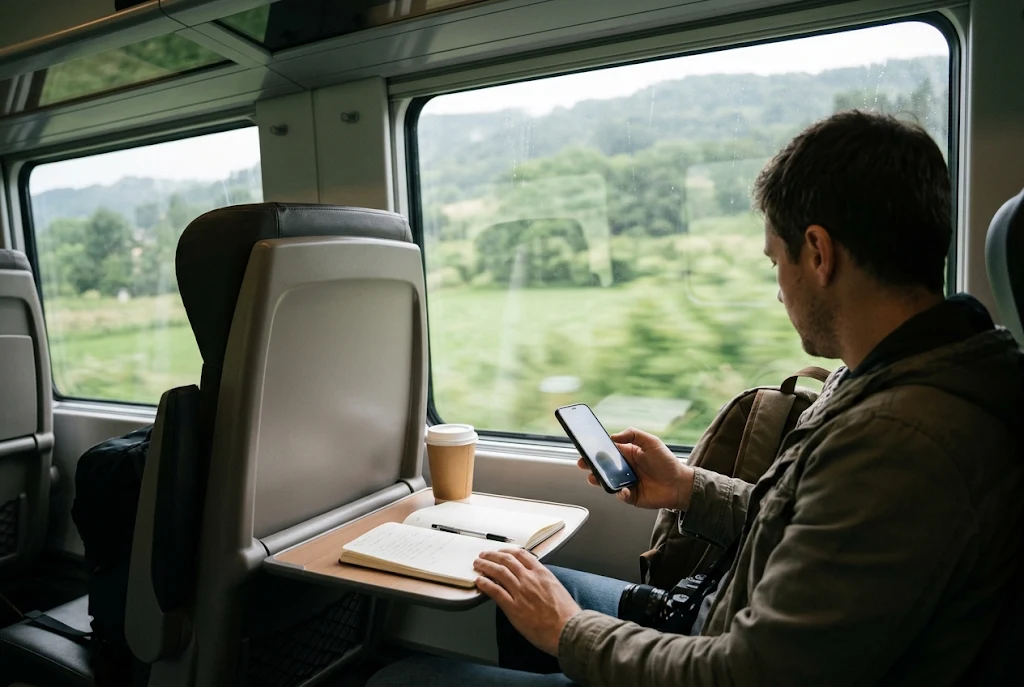
A Communication Checklist Before Departure
A journalist does not need several phones or expensive subscriptions. A well-planned setup is usually enough.
Before leaving, check that the handset is unlocked and supports eSIM technology. Arrange a suitable data package, review roaming charges and decide how editors and sources will reach you. Download essential documents and agree on a backup communication method with the newsroom.
After landing, test mobile data, confirm that the regular number works and check the available network coverage. Keep an eye on data consumption throughout the assignment.
International reporting involves enough unexpected changes without adding avoidable phone problems to the schedule. A reliable connection, a working contact number and a sensible backup plan give journalists one less thing to worry about while they concentrate on finding the story.
Journo Insider
Stay connected, book smarter, and keep $6,640 in travel gifts
Try Journo Insider free for 14 days. Keep the gifts even if you cancel.
Say “maybe” and claim your gifts →