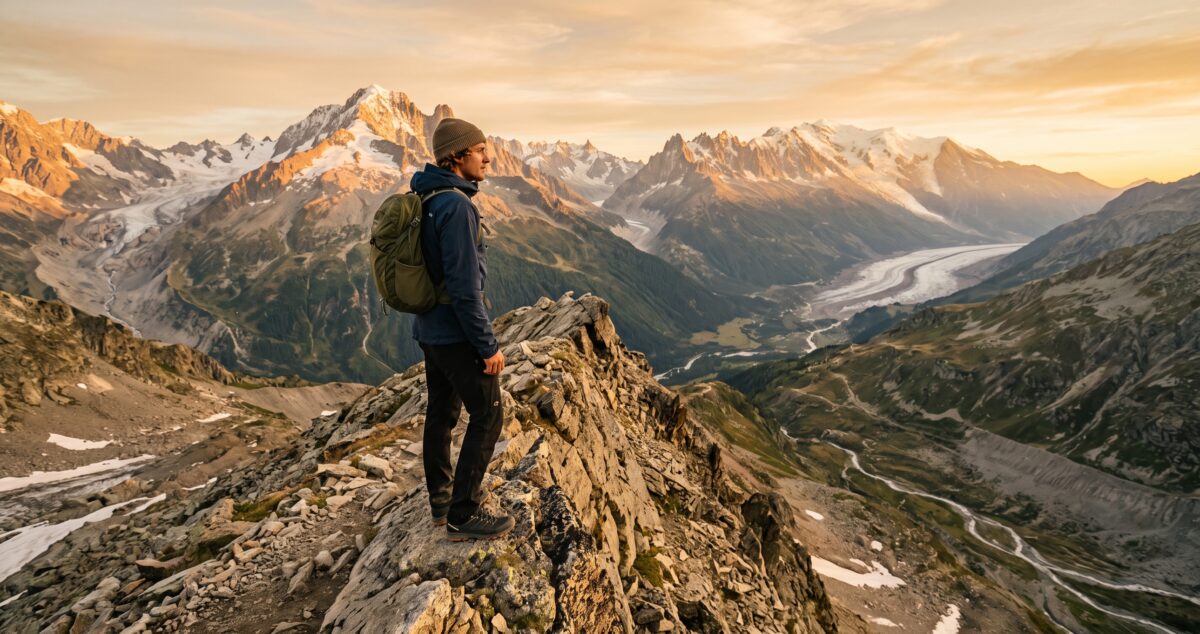
Two travelers. Same week off. Same rough budget. One booked a package trip to a resort with an “adventure activities” menu. The other planned a week in Patagonia using the Travel Decision Stack. Six months later, one has a tan that faded. The other has a story they’ve told forty times.
The difference isn’t money. It’s method. Most people pick adventure destinations the same way they pick everything else — by what sounds exciting in a headline. Operators use a framework that works backward from what they actually want, filters by what they can actually spend, and times the trip to avoid spending 30% more for the same experience.
This article applies The Travel Decision Stack — Experience, Real Cost, Timing, Execution — to five of the best adventure travel destinations in the world. Each entry includes a timing verdict, honest cost range, and what an Operator does differently to extract maximum nature payoff from the trip.
- The best adventure travel destinations aren’t ranked by impressiveness — they’re matched to what you actually want to experience and what you’re willing to spend to get there.
- Five destinations covered: Patagonia (Chile/Argentina), Iceland, Kyrgyzstan, Queenstown (New Zealand), and the Azores (Portugal).
- Timing is the highest-leverage decision for adventure travel — the same destination can cost 40–60% less in shoulder season with nearly identical conditions.
- The Travel Decision Stack cuts through hype and forces three honest questions before you book: What is the actual experience? What does it truly cost? When is the right window?
- The Destination Finder tool below matches your specific adventure style to the destination that fits — without guesswork.
Get $6,640 in travel gifts — just for saying “maybe”
Try Journo Insider today and unlock The Syndicate 7-week travel course ($899), the Insiders Exclusive Library ($1,337), the Supercharged Travel Fund Challenge ($3,600), and more — free for 14 days. Keep the gifts even if you cancel.
Claim your free gifts → Keep everything even if you cancel.Jump to:
What actually makes a destination “adventure”?
Adventure travel has a marketing problem. Every resort with a zipline calls itself an adventure destination. Every island with a snorkeling tour promises “untouched nature.” The word means everything, which means it tells you nothing.
For the purposes of this article, an adventure destination earns that label by meeting two criteria. First, the natural environment is the primary experience — not the backdrop for a poolside photo, but the actual thing you’re there to be inside. Second, the physical engagement is real. You’re moving through that environment, not observing it from a comfortable distance.
That definition immediately narrows the field. It rules out most Caribbean resorts, most European city trips that bolt on a day hike, and most “adventure packages” that pad the itinerary with spa days. What’s left is a much shorter list of places that deliver on the premise.
The distinction most travelers miss: Activity volume and adventure depth are not the same thing. Seven activities in four days is a product. Three days in genuinely wild terrain — with real uncertainty about weather, real physical challenge, real isolation from ordinary life — is an adventure. Operators choose based on depth, not density.
Applying the Travel Decision Stack to adventure travel
The Travel Decision Stack is a 4-layer framework: Experience, Real Cost, Timing, Execution. Applied to adventure destinations, it works like this.
Layer 1 — Experience: What are you actually going to do?
Before you pick a destination, name the experience in specific terms. Not “see mountains” — that’s every mountain destination. Try: multi-day backcountry trekking with wild camping, or glacier travel with technical ice equipment, or high-altitude riding through nomadic landscapes. The more specific the description, the shorter the list of destinations that actually deliver it. Most mismatched adventure trips start here — at a description too vague to choose from.
Layer 2 — Real Cost: What does this trip actually cost?
Adventure travel has a cost illusion. The destination itself looks affordable — Kyrgyzstan is cheap, the Azores are moderate — but the gear, the guides, the transport, and the logistics frequently double the budget. As covered in the Travel Budget Truth article, the real cost of a trip includes everything from the moment you leave your front door. Operators calculate that number before booking flights, not after.
Layer 3 — Timing: When is the right window?
Adventure travel is more timing-sensitive than almost any other category. Weather doesn’t just affect comfort — it affects access. The O Circuit in Patagonia closes entirely for parts of winter. Iceland’s highland roads are gated from October to June. The Timing Optimization Framework applies directly here: for adventure destinations, the Goldilocks Zone is typically a 6-to-10-week window where conditions are reliable but crowds haven’t peaked. That window rarely aligns with school holidays or peak-season pricing.
Layer 4 — Execution: How do you actually make this happen?
Adventure destinations often require permits, gear, guides, acclimatization days, or multi-carrier routing that most booking platforms handle badly. Execution means resolving all of that before you commit to a flight. The specific Operator tips in each destination section below address this layer directly.
Patagonia, Chile/Argentina
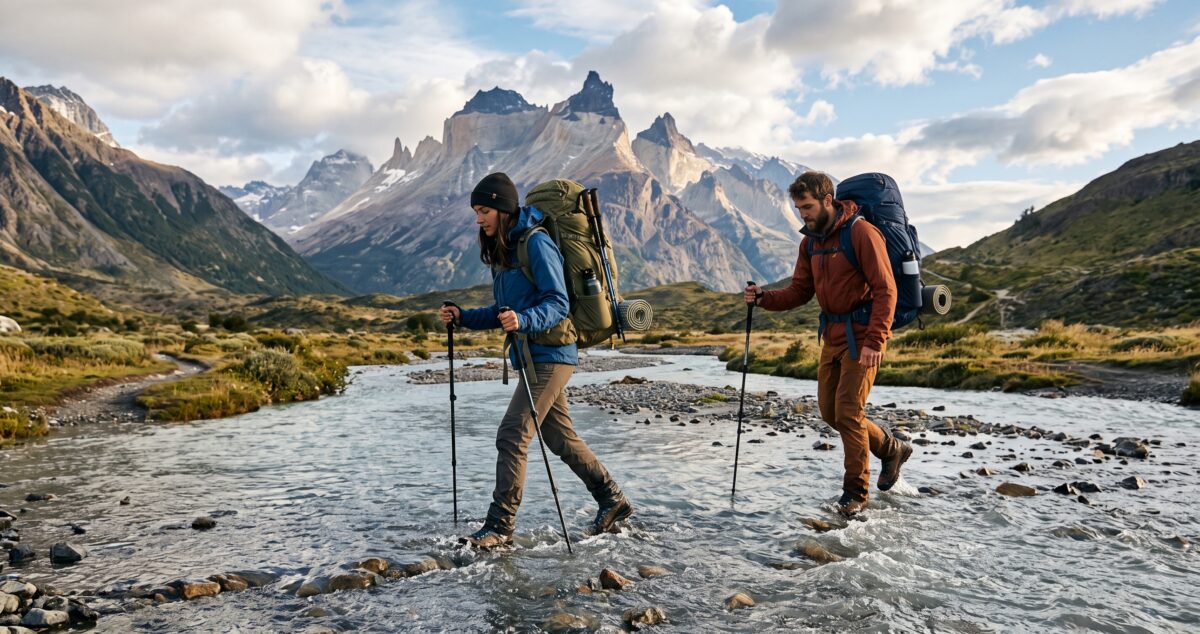
Patagonia is the reference point everything else gets compared to. The Torres del Paine massif in Chilean Patagonia, the granite spires of El Chaltén in Argentina, the Southern Patagonian Ice Field — this is what wilderness looks like when it’s operating at full intensity. The hiking is genuinely remote. The weather changes without warning. Days of effort deliver views most travelers will never see.
The experience in specific terms
The W Circuit (4–5 days) and the O Circuit (8–9 days) in Torres del Paine are the anchors. The O Circuit is one of the best multi-day hikes in the world — it circles the entire massif, combining glacial valley crossings with exposed ridge sections and backcountry camps with no road access. El Chaltén adds day hikes to Fitz Roy and Cerro Torre, both iconic. Ice trekking on Perito Moreno Glacier is a half-day add-on, about 4 hours on the ice with crampons. Budget at least 10 days for a real Patagonia trip.
Real cost range
Budget $3,500–$5,500 per person all-in from North America or Europe. Flights to Punta Arenas or Balmaceda run $900–$1,400 roundtrip. Park entry for Torres del Paine is $36–$54 per person depending on season. Refugio camping and huts inside the park add $50–$180/night depending on whether you’re tenting or sleeping in a refugio. Guides for the O Circuit run $150–$300/day. The bus from Puerto Natales to the park is ~$20 each way.
Timing verdict: November to mid-January
Peak season runs December to February. November is the best value window — conditions are reliable, wind is typically lower than December, and camp permits are available without competing with peak-season crowds. February is warmer but windier and fully booked. Avoid March onward unless you’re specifically experienced in cold-weather hiking — the O Circuit weather deteriorates fast.
Operator tip
Book CONAF camp permits the moment they open for your target season — typically in August for November onward. The O Circuit camps sell out within hours. If you miss the official permit window, watch the CONAF cancellation system: slots open daily. Many travelers who “couldn’t get permits” never checked the cancellation feed.
Iceland
Iceland is the most accessible big-nature destination for North American and European travelers — direct flights, no visa, English spoken everywhere. That accessibility is real, but it cuts both ways. The infrastructure makes the logistics easy. It also means that in peak season, the most famous spots (Jökulsárlón Glacier Lagoon, the Golden Circle) are legitimately crowded in a way that undercuts the wilderness premise.
The answer isn’t to skip Iceland. The answer is to go deeper into it than most people do.
The experience in specific terms
The Highlands — Landmannalaugar, the Laugavegur Trail, Þórsmörk — are where Iceland earns its adventure credentials. The Laugavegur is a 55km multi-day trek through rhyolite mountains, volcanic plains, geothermal areas, and glacial rivers. The F-roads (interior highland roads) require a 4WD capable vehicle and open only from late June to mid-September. Glacier hiking on Vatnajökull, ice cave tours, and multi-day kayaking in the Westfjords all qualify as genuine adventure rather than sightseeing.
Real cost range
Iceland runs $250–$400/day all-in per person for a properly planned adventure trip. That includes rental vehicle (4WD is mandatory for highland access, typically $100–$200/day), accommodation (guesthouses or Highland huts, $40–$120/night), and food. Flights from Europe run $150–$400 roundtrip. From North America, $500–$900 roundtrip. A 10-day Iceland adventure trip totals roughly $3,500–$5,000 per person from Europe, $4,500–$6,500 from North America.
Timing verdict: Late June to mid-August for highlands; October to March for aurora
The Highland F-roads open from mid-June to mid-September. Late June to July offers the midnight sun, which enables long hiking days. August is peak season — prices spike 35–50% and popular trails get crowded. For aurora chasing, October through March is the window, but highland access is closed. These are effectively two different Iceland trips.
Operator tip
Book Highland hut accommodation (Landmannalaugar, Hrafntinnusker, Álftavatn, Emstrur) through the Ferðafélag Íslands (Icelandic Touring Association) — they manage the hut system and reservations open in January for summer. Many travelers attempt to show up as walk-ins and find full huts. Book in January, travel in July.
Kyrgyzstan
Kyrgyzstan is the highest-value adventure destination on this list by a significant margin. The Tian Shan and Pamir-Alay mountain ranges contain thousands of kilometers of trails that see a fraction of the foot traffic of comparable alpine routes in Europe or South America. Infrastructure is minimal. The landscape is extraordinary. Local guesthouses and yurt camps run $15–$40/night. A full day with a horse guide costs $20–$50.
This is what adventure travel looked like before it became an industry.
The experience in specific terms
The Tian Shan mountains offer multi-day horse treks through high pastures where nomadic Kyrgyz families still spend summers. The Ala Archa National Park is a 30-minute drive from the capital Bishkek and has serious alpine routes up to 4,800m. The Jyrgalan Valley near Karakol has seen recent trail development — it’s the closest thing Kyrgyzstan has to a developed multi-day hiking corridor. Song-Kul Lake (3,016m) is a summer yurt camp destination that requires 4WD or a 3-hour horse ride to reach. Expect zero mobile coverage and no rescue services outside of major valleys.
Real cost range
A 10-day Kyrgyzstan adventure trip runs $1,200–$2,200 all-in per person from Europe. From North America, add $700–$1,200 for flights. Ground costs are genuinely low: $20–$35/night for yurt stays and CBT (Community Based Tourism) guesthouses, $10–$20 for local meals, $50–$100/day for horse + guide. Visa-on-arrival is available for most nationalities at $0 (e-visa) or a small fee.
Timing verdict: June to September
The highland passes and Song-Kul are accessible June through September. July and August are the warmest months. June has residual snowpack on high passes but fewer visitors. September sees the nomad families descending from summer pastures — a different experience but deeply atmospheric. October through May means closed passes and yurt camps.
Operator tip
Book through the Community Based Tourism (CBT) offices in Karakol, Bishkek, or Naryn — they coordinate local guides, horses, and homestays at fair prices and the income goes directly to local families. The USAID-supported Destination Kyrgyzstan network has vetted guides with English-language capability. Avoid booking “Kyrgyzstan adventure tours” through international aggregators — you pay 3x the price for the same guide and yurt.
Ready to plan an adventure trip — but not sure which destination fits your style?
The Goldilocks Booking Forecaster inside Journo Insider analyzes your timing window, budget, and experience preferences to identify where you’ll get maximum nature payoff. Try it free for 14 days as part of The Syndicate course package.
Try Journo Insider free for 14 days → Free for 14 days. Keep your gifts even if you cancel.Queenstown, New Zealand
Queenstown earns its place on this list for one reason: density of world-class adventure options within a small geographic radius. Bungee jumping originated here. The Remarkables and Coronet Peak provide serious alpine skiing. The Milford Track — widely considered one of the best hiking trails on earth — is a 4-day, 53.5km trail accessible via guided or independent walking. The Routeburn Track adds another world-class multi-day option.
This is the most expensive destination on the list. That cost is real and unavoidable in New Zealand. But the concentration of what’s available is unlike anywhere else.
The experience in specific terms
The Great Walks system — including the Milford, Routeburn, and Kepler tracks — is the anchor for serious hikers. Independent walkers must ballot for Milford Track huts through DOC (Department of Conservation) in May for the following season. The Fiordland scenery on the Milford rivals Patagonia. For multi-activity trips, Queenstown also offers canyon swings, paragliding, white-water rafting on the Shotover River, and helicopter access to remote ski terrain. This is the one destination where doing 5 activities in 4 days actually qualifies as adventure rather than tourism — they’re all operating at a legitimate level.
Real cost range
New Zealand is expensive. A 12-day Queenstown-anchored adventure trip runs $5,500–$9,000 per person all-in from North America, including flights ($1,200–$1,800 roundtrip). DOC hut passes for the Milford Track run NZ$70–$85/night. Independent guided trips on the Milford start at NZ$800–$1,200. Daily expenses in Queenstown run NZ$150–$250/day. Activity costs stack up fast — bungee ($250), canyon swing ($250), half-day white-water rafting ($160).
Timing verdict: November to early April for hiking; June to August for ski
The Great Walks season runs October through April. November and March are shoulder months with lower hut demand and marginally lower accommodation prices in Queenstown. December and January are peak summer — busiest on trails, warmest temperatures. The ski season (June–August) is entirely different trip — Queenstown transforms in winter, prices drop significantly in June before the July school holiday surge.
Operator tip
The Milford Track ballot opens in late May for the following summer season (October–April). It fills within days. If you miss the ballot, independent last-minute hut bookings sometimes appear from cancellations — check the DOC booking system daily in November and December. Guided walks with Ultimate Hikes don’t require ballot entry but cost NZ$2,495–$3,200 per person.
The Azores, Portugal
The Azores is the most underrated entry on this list. Nine volcanic islands in the mid-Atlantic, 1,500km west of Lisbon — less visited than Iceland, far cheaper, with direct flights from Europe and seasonal flights from Boston and Toronto. The landscape is relentlessly dramatic: calderas, crater lakes, coastal lava fields, and whale migration routes that bring sperm whales, blue whales, and orcas within 30 minutes of the harbor.
São Miguel is the main island and the entry point. But the adventure case for the Azores lives on Faial, Pico, and Flores.
The experience in specific terms
Pico Island has the highest mountain in Portugal — 2,351m — and the climb is a serious 7-hour round trip that requires a licensed guide and good conditions. Flores is considered by many to be the most beautiful island in the Atlantic: waterfalls into crater lakes, cliffs, and almost no tourist infrastructure. The interisland ferry system connects major islands and the ferry between Faial and Pico takes 25 minutes. Whale watching from São Miguel has an 80–95% cetacean sighting rate May through September. Canyoning in the volcanic ravines of São Miguel is accessible year-round.
Real cost range
The Azores runs $1,800–$3,200 per person all-in from Europe for 10 days. From North America (Boston or Toronto seasonally), $2,500–$4,000. Flights from Lisbon cost $80–$180 roundtrip. Accommodation runs $60–$120/night on most islands. Whale watching tours: $60–$90/person. Pico Mountain climbing with a guide: $50–$70. This is the best per-dollar nature experience accessible to European travelers on this entire list.
Timing verdict: May to October — best in June and September
Whale watching peaks May through September. June and September offer the best combination of conditions, lower prices than July–August, and reliable weather. July and August are peak season — the Azores is popular with Portuguese and continental European travelers and accommodation prices reflect it. October is late shoulder with some whale activity remaining but cooler ocean conditions.
Operator tip
Book whale watching with companies that use spotters (vigias) on elevated land positions rather than relying solely on ship-based searching — the sighting rates are meaningfully higher. On Flores, Fajã Grande is the best base for canyoning and coastal hikes. Rent a car on each island individually rather than trying to bring one on the ferry — interisland car transport is expensive and unnecessary.
Side-by-side comparison: The 5 best adventure travel destinations
| Destination | Best experience type | Cost/person (10 days, incl. flights) | Best timing window | Difficulty to plan |
|---|---|---|---|---|
| Patagonia | Multi-day remote trekking | $3,500–$5,500 | Nov–Jan | High (permits, logistics) |
| Iceland | Highland driving + trekking + aurora | $3,500–$6,500 | Late June–Aug or Oct–Mar | Moderate (4WD required) |
| Kyrgyzstan | Horse trekking + alpine climbing | $1,200–$3,500 | Jun–Sep | High (minimal infrastructure) |
| Queenstown, NZ | Great Walks + multi-activity | $5,500–$9,000 | Nov–Apr (hike) or Jun–Aug (ski) | Moderate (ballot required) |
| Azores | Whale watching + volcanic trekking | $1,800–$4,000 | May–Oct (best: Jun, Sep) | Low-Moderate |
How to choose your adventure destination in 4 steps
Name the experience, not the destination. Start with what you want to be doing — multi-day hiking with wild camping, horse trekking through remote terrain, whale watching at close range, glacier travel. That description narrows the list faster than any other filter.
Calculate real cost, not listed prices. Add flights, gear rental or purchase, guide costs, permits, food, accommodation, and interregional transport. For adventure destinations, the total is typically 40–80% higher than what you calculate from accommodation costs alone. The true cost of travel framework gives you the full methodology.
Identify the Goldilocks window. For every adventure destination, there’s a 4–8 week window where conditions are reliable, prices haven’t peaked, and permits aren’t sold out. That window is almost never the school holiday calendar. Plan around the destination’s natural season, not your reflex to book in August.
Resolve permits and bookings before flights. For Patagonia’s O Circuit, Milford Track, and Iceland’s Highland huts — the trip is unviable without advance permits. Do the permit work before you book flights. Many adventure trips fail at the execution layer because travelers buy flights first and discover permit availability second.
The destination is not the adventure. The trip you plan into it is. Two people can stand on the same viewpoint in Patagonia — one walked 8 days to get there, one took a day tour from Puerto Natales. Same GPS coordinates. Completely different experience. The Travel Decision Stack determines which version you’re planning.
Related reading: The Travel Optimization System explains the full framework Operators use for every trip decision, including destination selection. For timing strategy applied to any destination, see The Timing Optimization Framework. For the real math on destination costs, see Travel Budget Truth.
Frequently asked questions
What is the best adventure travel destination for first-timers?
The Azores is the most accessible starting point for travelers new to adventure-focused trips. The infrastructure is solid, the logistics are manageable, the cost is reasonable, and the nature payoff — whale watching, volcanic craters, dramatic coastlines — is genuine. Iceland is a close second if you’re willing to navigate the 4WD requirement and higher costs. Both destinations offer real wilderness without the permit complexity of Patagonia or Kyrgyzstan’s minimal infrastructure.
How far in advance should I book adventure travel?
Permit-dependent destinations require 6–12 months of lead time. Patagonia’s O Circuit camp permits typically open in August for November onward and sell out within hours. The Milford Track ballot in New Zealand opens in May for the October–April season. Iceland’s Highland huts open reservations in January for the following summer. For non-permit destinations like Kyrgyzstan and the Azores, 3–4 months is workable — though flights and accommodation in peak season book up faster than most travelers expect.
Which adventure destination offers the best value for money?
Kyrgyzstan delivers the most nature per dollar spent, by a significant margin. Ground costs of $30–$60/day for accommodation and local guides make a 10-day trip genuinely affordable once you’re there. The challenge is flights — routing through Istanbul or Almaty adds cost and transit time. For travelers who want excellent value without extreme logistics, the Azores offers the best balance of cost, nature quality, and ease of access — particularly from Europe.
Is Patagonia worth the cost?
Yes — for travelers who want multi-day remote trekking. The O Circuit in Torres del Paine is genuinely one of the best hikes in the world. At $3,500–$5,500 all-in per person, it costs more than comparable experiences in Kyrgyzstan or the Azores, but delivers a wilderness scale and landscape drama that those destinations don’t match. The question isn’t whether Patagonia is worth it — it’s whether multi-day backcountry trekking is what you actually want. If yes, it’s worth it. If you want nature without the multi-day commitment, the Azores or Iceland may fit better.
Can I do big adventure travel without a guide?
On most of these destinations, yes — with caveats. The Laugavegur Trail in Iceland and the Great Walks in New Zealand have well-marked trails, hut systems, and search-and-rescue infrastructure that make independent travel realistic. Patagonia’s W Circuit is accessible independently; the O Circuit is possible but requires more experience and self-sufficiency. Kyrgyzstan’s backcountry — particularly high-altitude passes — warrants a local guide for route-finding and safety in remote terrain. Pico Mountain in the Azores requires a licensed guide by regulation.
What should I look for in an adventure travel operator?
Three things matter: local ownership (the guide actually knows the terrain, not just the brochure version), a realistic client-to-guide ratio (8:1 is the maximum for any serious wilderness trip), and emergency protocols. Ask specifically: what is the plan if a participant is injured 3 days from a road? If the answer is vague, find another operator. For CBT-style destinations like Kyrgyzstan, look for operators who route your money to local families rather than international aggregators.
How does the Travel Decision Stack apply to adventure travel?
The four layers — Experience, Real Cost, Timing, Execution — map directly to the four questions that determine whether an adventure trip delivers what you actually want. Experience means naming the specific activity, not the destination category. Real Cost means calculating the full all-in number including gear, permits, and transport — not just flights and hotels. Timing means finding the Goldilocks window where conditions are right and prices haven’t peaked. Execution means resolving permits, guides, and logistics before you commit to flights. Most failed adventure trips skip one of these layers.
Try Journo Insider — keep the gifts no matter what
14 days free. Over $6,640 in travel resources including The Syndicate course, the Exclusives Library, and the Supercharged Travel Fund Challenge. Cancel and keep everything — no questions asked.
Say “maybe” and claim your gifts → Free for 14 days. Cancel anytime — gifts are yours to keep.