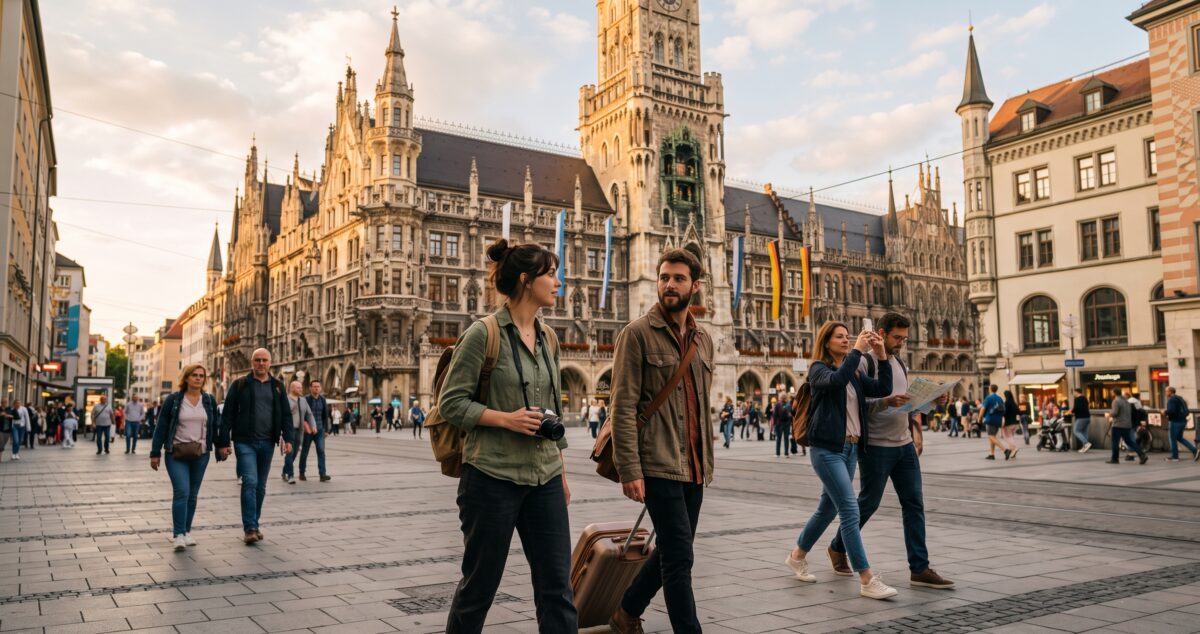
Two travelers land in Munich on the same September afternoon. One booked a hotel near Marienplatz six months out for €140 a night. The other waited until three weeks before the trip and paid €410 a night for a room twenty minutes outside the city, because Oktoberfest had already claimed every affordable bed within walking distance of the Theresienwiese.
Same city. Same month. A near-triple difference in the hotel bill — and neither traveler did anything wrong except decide when to book.
Munich rewards planning more than almost any other European capital, because one 16-day festival compresses a full year of hotel and flight demand into a fifth of the calendar. Most travelers treat Munich the way they’d treat any city break — pick dates, search hotels, hope for the best. Operators treat it as a sequencing problem, because that’s what it actually is.
The room isn’t three times more expensive. It’s the same room — you just asked for it three weeks too late.
This guide runs Munich through the Travel Decision Stack, Journo’s four-layer framework for turning a destination idea into a booked trip without overpaying: Experience, Real Cost, Timing, and Execution. Book central Munich six or more months ahead for the September 19–October 4, 2026 Oktoberfest window, budget three to four days minimum, and move through the city on a €10.10 day transit ticket instead of a rental car.
- Oktoberfest 2026 runs September 19 – October 4. Book central hotels 6+ months out or expect prices to double or triple.
- A single MVV transit ride in central Munich costs €4.20. A day ticket covering the whole city is €10.10.
- Give Munich 3-4 full days minimum — more if you’re adding Neuschwanstein Castle, the Alps, or Salzburg as a day trip.
- The English Garden is larger than New York’s Central Park, with a permanent river wave surfers ride year-round.
- Outside the festival window, Munich runs on a normal beer-garden-and-museum rhythm, with noticeably lower prices in April-May and October-November.
Get $6,640 in travel gifts — just for saying “maybe”
Try Journo Insider today and unlock The Syndicate 7-week travel course ($899), the Insiders Exclusive Library ($1,337), the Supercharged Travel Fund Challenge ($3,600), and more — free for 14 days. Keep the gifts even if you cancel.
Claim your free gifts →Keep everything even if you cancel.
What Makes Munich Worth Visiting in 2026?
Munich is Germany’s third-largest city, home to roughly 1.5 million people, sitting in southern Bavaria within easy reach of the Alps. English is widely spoken in tourism-facing businesses, even though German is the everyday language. The climate is continental — warm summers, cold winters, and the occasional snow — which matters more than it sounds like it should, because it’s the reason Munich has both a world-class beer garden culture and a genuinely good Christmas market season.
It’s a city that’s grand and cozy in the same breath. Centuries-old architecture sits a few blocks from a beer garden under chestnut trees, and that contrast is most of what makes it memorable.
What Are the Best Things to Do in Munich?
Munich rewards both planners and wanderers, which is a rare combination in a major European capital.
Marienplatz and the Glockenspiel
Marienplatz is the obvious starting point. The Neues Rathaus anchors the square, and its Glockenspiel puts on a short animated show daily at 11 a.m. and noon. It’s touristy, but it’s touristy for a reason — arrive a few minutes early to get a clear sightline.
The English Garden
The English Garden is one of Europe’s largest urban parks, bigger than New York’s Central Park, and it has a feature Central Park doesn’t: surfers riding a permanent standing wave on the Eisbach river, year-round, regardless of season.
Deutsches Museum and Nymphenburg Palace
The Deutsches Museum is one of the largest science and technology museums in the world — budget at least half a day. Nymphenburg Palace, the former summer residence of Bavarian royalty, sits on the edge of the city and is worth the tram ride out for the grounds alone.
Should You Time Your Trip Around Oktoberfest?
If your dates line up with late September or early October, you’ll be arriving during the biggest party the city throws all year. According to official Oktoberfest visitor figures, the festival pulls in somewhere between 6 and 7 million visitors annually. In 2026, Oktoberfest runs September 19 through October 4 on the Theresienwiese — mark that window whether you’re planning to attend or planning to avoid it.
The festival started as a royal wedding celebration in 1810, for Crown Prince Ludwig and Princess Therese of Saxony-Hildburghausen. Nobody remembers the original couple’s wedding gifts. Everyone remembers the beer tents that outlasted them by two centuries.
If your dates don’t line up with the festival, that’s not a loss. Munich’s beer garden culture runs all year — just without the same scale of chaos, and at a fraction of the hotel price.
When Should You Book: Costs and Crowds by Season?
The single biggest lever on a Munich trip’s cost isn’t the flight. It’s which 16 days of the year you land on.
| Season | Dates | Central Hotel (double, per night) | Crowd Level | Best For |
|---|---|---|---|---|
| Oktoberfest | Sep 19 – Oct 4, 2026 | €300–450+ | Extremely high | Beer tent culture, immersive festival energy |
| Summer | Jun – Aug | €180–240 | High | Beer gardens, English Garden, long daylight |
| Christmas Markets | Late Nov – Dec | €150–200 | Moderate–high | Festive atmosphere, mulled wine, shorter days |
| Shoulder | Apr–May, mid-Oct–Nov | €110–160 | Low–moderate | Sightseeing without crowds, best overall value |
The shoulder season doesn’t get talked about much because it doesn’t have a festival attached to it. That’s exactly what makes it the best value on the calendar — same museums, same beer gardens, a third of the hotel price.
Where Should You Eat in Munich?
Bavarian food is heartier than most first-timers expect. Weisswurst, pretzels, and schnitzel show up everywhere, but Munich’s food scene stretches well past the classics, with a strong mix of modern German kitchens and international spots tucked into neighborhoods like the Glockenbachviertel. Browsing best Munich restaurants ahead of your trip is a solid way to line up reservations before weekend crowds beat you to a table, especially during a busy season.
Breakfast culture is worth planning around too. Munich has a strong café scene, and a slow morning coffee before a day of sightseeing tends to set the whole day right — especially with outdoor seating and good people-watching.
How Do You Get Around Munich Once You Land?
Munich’s public transport system, the MVV, is genuinely easy to figure out even without German. Central Munich sits entirely in fare Zone M, which covers almost every sight a first-time visitor wants to see. A single ride costs €4.20. A day ticket covering unlimited rides in Zone M costs €10.10, and a group day ticket for up to five people is €19.70 — cheaper per person than almost any single-ride combination if you’re traveling with others.
The airport S-Bahn reaches the city center in about 40–45 minutes. Beyond that, the old town itself is compact enough to explore mostly on foot once you’ve settled in — you won’t need a car inside the city, and parking in the center is more hassle than it’s worth.
Stop guessing when Oktoberfest hotel prices actually spike
Journo Insiders use the Goldilocks Booking Forecaster to time hotel and flight bookings around exactly this kind of demand spike — not just for Munich, but for any destination with a seasonal squeeze. It’s one of six AI tools built into the membership, alongside The Syndicate travel course.
Try Journo Insider free for 14 days →Free for 14 days. Keep your gifts even if you cancel.
How Long Should You Stay in Munich?
Give yourself at least three or four days if you want to actually see the city rather than skim the surface. Munich also works well as a jumping-off point for day trips — Neuschwanstein Castle, the Bavarian Alps, or even a quick train ride to Salzburg across the Austrian border. Add a day for each of those you want to include, rather than trying to cram them into an already-packed itinerary.
How Do You Actually Book a 2026 Munich Trip?
Run it through the four layers of the Travel Decision Stack in order. Skipping a layer is how travelers end up overpaying without realizing why.
Decide what you actually want first. Full Oktoberfest immersion, a quieter historic city break, or a Munich-plus-Alps trip are three different itineraries with three different booking windows — pick before you start pricing anything.
Price the trip against the season table above, not against a single hotel search. A “cheap” Oktoberfest flight paired with a €400-a-night room isn’t actually cheap — look at the full trip cost, not the headline number.
If Oktoberfest is the goal, book central lodging 6+ months out. If it isn’t, shift toward April–May or mid-October–November and let the calendar do the discounting for you.
Load the MVV or MVGO app before you land, buy day tickets instead of singles once you’re taking more than two rides, and reserve restaurant tables ahead of time during any high-crowd window.
Your next move: pick your Munich week on the season table above, then book central lodging before the calendar sets the price for you.
Visit Munich in 2026 for Oktoberfest (Sept 19–Oct 4) if festival energy is the goal, but book central lodging 6+ months ahead — rooms run €300–450+ during the festival versus €110–160 in shoulder season. Give the city 3-4 days minimum, use the €10.10 MVV day ticket to get around, and add a day trip to Neuschwanstein, the Alps, or Salzburg if time allows.

Frequently Asked Questions
What’s the best time to visit Munich in 2026?
Shoulder season — April-May or mid-October through November — offers the best combination of low crowds and low prices. If Oktoberfest itself is the goal, target September 19 through October 4 and book central hotels at least six months ahead.
How many days do I need in Munich?
Three to four full days covers the core city — Marienplatz, the English Garden, the Deutsches Museum, and Nymphenburg Palace. Add a day for each day trip, such as Neuschwanstein Castle or Salzburg.
Is Munich expensive to visit?
It depends almost entirely on timing. Central hotel rooms can run €300-450+ a night during Oktoberfest, but drop to €110-160 in shoulder season for a comparable room. Public transport stays cheap year-round at €4.20 per ride or €10.10 for a full day.
Do I need to speak German in Munich?
No. German is the everyday language, but most people working in tourism, hotels, and restaurants speak solid English. Learning a few basic phrases is appreciated but not required.
How do I get from Munich Airport to the city center?
The airport S-Bahn connects directly to the city center in about 40-45 minutes. It’s the simplest and most reliable option, and it runs on the same MVV ticket system used throughout the city.
Is Oktoberfest worth visiting if I don’t drink beer?
Yes — the festival includes amusement rides, live music, and traditional Bavarian food alongside the beer tents. That said, expect the accommodation and crowd trade-offs either way, since the festival’s scale affects the whole city, not just the tents themselves.
What day trips are possible from Munich?
Neuschwanstein Castle, the Bavarian Alps, and Salzburg across the Austrian border are all reachable as day trips. Each adds roughly a full day to your itinerary once you factor in travel time both ways.
Do I need a car in Munich?
No. The city center is compact and walkable, and the MVV public transport network covers everything else. A car adds parking hassle without adding convenience inside the city itself.
Try Journo Insider — keep the gifts no matter what
14 days free. Over $6,640 in travel resources including The Syndicate course, the Exclusives Library, and the Supercharged Travel Fund Challenge. Cancel and keep everything — no questions asked.
Say “maybe” and claim your gifts →Free for 14 days. Cancel anytime — gifts are yours to keep.