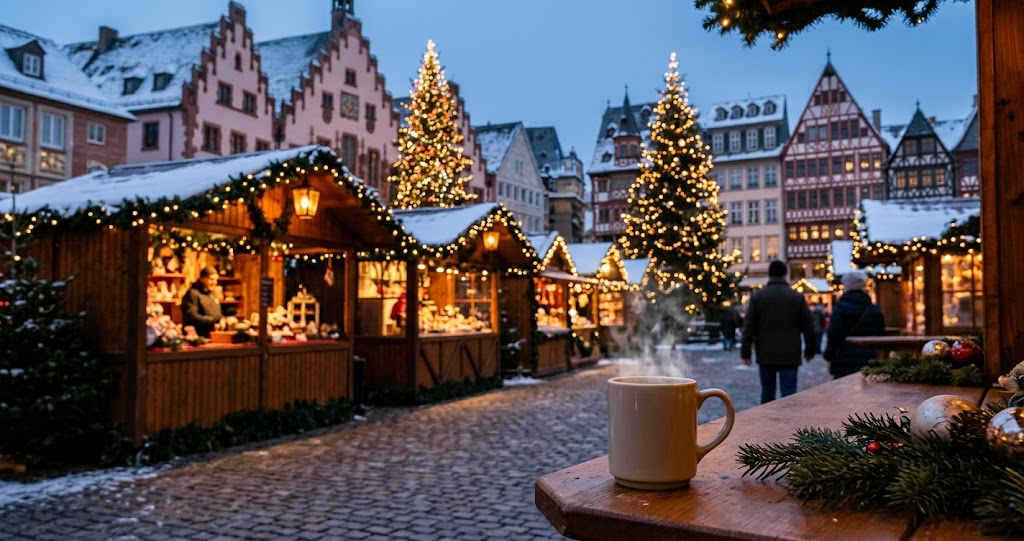
Every December, the same five or six names fill the lists: Nuremberg, Strasbourg, Vienna, Prague, Cologne. They are lovely. However, they also pull in millions of visitors, and at their peak you shuffle past the stalls in a queue instead of browsing them. In fact, the crush is now the main complaint in market reviews, ahead of price and ahead of weather.
So this guide does something different. For each famous market, we picked a smaller swap that keeps the same feeling, usually less than two hours away. Then we scored each one on the Travel Decision Stack: what the experience is really like, what four nights cost, which days and hours are calm, and how to get there. As a result, our five best Christmas markets in Europe for 2026 are Regensburg, Esslingen, Valkenburg, Bratislava and Tallinn, each with its 2026 dates, a crowd forecast by weekday and a real cost range.
TL;DR: the best Christmas markets in Europe in 2026, without the crush
- Swap Nuremberg for Regensburg, Strasbourg for Esslingen, Cologne for Valkenburg, Vienna for Bratislava and Prague for Tallinn. Each swap keeps the magic and loses most of the crowd.
- The calmest time at almost any market is Monday to Thursday before about 3 pm. The worst is Friday and Saturday evening, above all on the weekends of December 12-13 and 19-20.
- Four nights cost about $1,100 to $1,900 per person with a round-trip flight from the US. Bratislava is the cheapest; Esslingen and Regensburg cost the most.
- The sweet spot for 2026 is the first week of December: fly out on Sunday, November 29 or Monday, November 30, after the Thanksgiving rush, and walk the markets Tuesday to Friday.
- Want markets after Christmas? Tallinn runs until January 6, 2027, and Bratislava and Valkenburg’s Christmas Town until January 3.
Journo Insider
Get $6,640 in travel gifts — just for saying “maybe”
Start the 14-day free trial and keep the gifts even if you cancel.
Claim your free gifts →No credit card required. Cancel any time.
Which Christmas markets in Europe are less crowded?
The least crowded Christmas markets in Europe are usually not tiny villages. Instead, they are real cities with a strong market tradition that simply sit one train ride away from a famous name. That matters, because a real city gives you hotels, restaurants and something to do in the daytime, while the smaller crowd gives you room to enjoy it. Pick the market you were planning below to see its swap.
Swap finder: which famous market were you planning?
-
Nuremberg → Regensburg
The same Bavarian gingerbread, sausages and medieval old town, but with four smaller markets instead of one huge one, and a candlelit market inside a princely castle. It is about one hour from Nuremberg by train.
See Regensburg -
Strasbourg or Colmar → Esslingen
Half-timbered houses and a fairy-tale square, plus Germany’s best-known medieval Christmas market, with fire shows, blacksmiths and candle dipping. It is about 15 minutes from Stuttgart by S-Bahn.
See Esslingen -
Cologne → Valkenburg
Instead of a cathedral square, the stalls sit inside old marlstone caves that stay at about 54°F all winter. Valkenburg is about 2 hours from Cologne and only 10 minutes from Maastricht.
See Valkenburg -
Vienna → Bratislava
Four connected squares of punch stands and potato pancakes in a compact baroque old town, at roughly half of Vienna’s prices. In fact, it is only about an hour from Vienna airport.
See Bratislava -
Prague → Tallinn
A medieval old town with towers and a single market in the Town Hall Square, under a tree in the spot that claims Europe’s first public Christmas tree. It also stays open until January 6.
See Tallinn
How do you pick the best Christmas market for your trip?
The Travel Decision Stack, for Christmas markets
- Experience. First, decide what kind of market you want: a candlelit castle, a medieval show, a market in a cave, a cheap and lively local scene, or a snowy old town.
- Real Cost. Next, price four nights, not just the flight. Hotel rates in market towns jump on December weekends, so the same room can cost 30% to 50% more on a Saturday.
- Timing. Then pick the days and hours. Our Timing Optimization Framework explains why the right week beats the right city, and at a market the right hour matters even more.
- Execution. Finally, plan the route. Each market below is one short train ride from a big airport, so you can land, ride and be holding a mug within a few hours.
Also, every destination below gets a crowd forecast by day and time of day. These are Journo estimates based on opening hours, where the day-trippers come from and what visitors report each year. They are not official counts. Still, the pattern is the same almost everywhere: weekdays are calm, weekend evenings are packed, and the last two weekends before Christmas are the busiest of all.
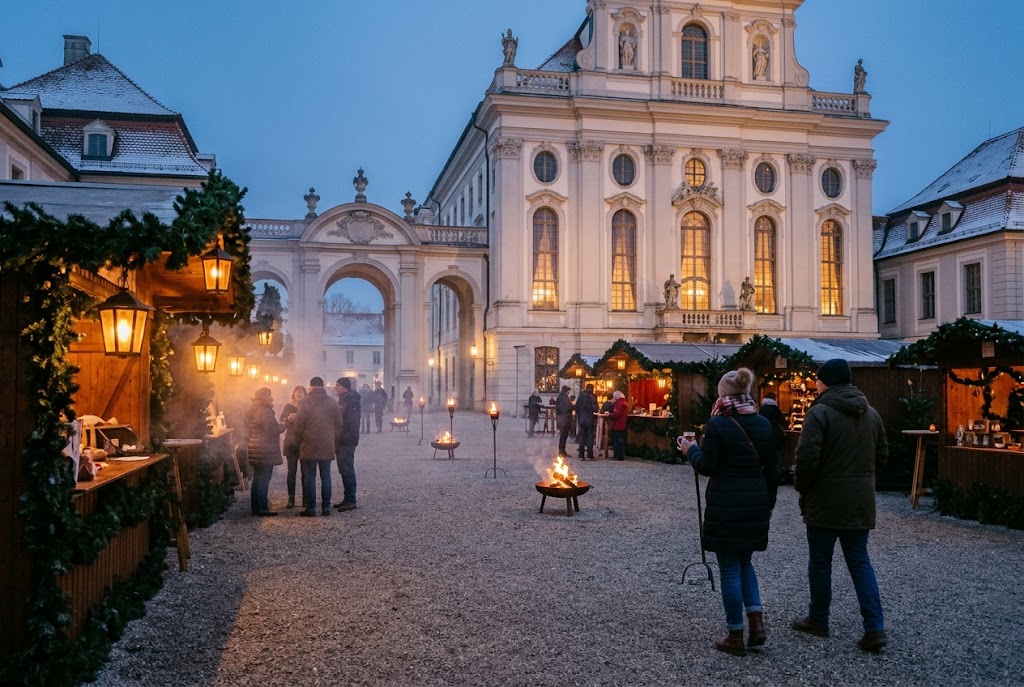
Regensburg, Bavaria, Germany
First, Regensburg is the swap for anyone who dreamed of Nuremberg. It has the same Bavarian food and the same medieval streets, and its old town is a UNESCO World Heritage Site. However, instead of one giant market, it spreads Christmas across four smaller ones, so no single square ever takes the whole crowd.
The experience in specific terms
Start in daylight at the Christkindlmarkt on Neupfarrplatz, the main city market, for gingerbread, roasted almonds and a first mug of Glühwein. Next, walk to the Lucrezia market on Haidplatz, where the stalls sell handmade crafts. Then, as it gets dark, head to the Romantic Christmas Market in the courtyards of Thurn und Taxis Castle, the home of a princely family, lit by torches and fire bowls. By day, cross the 12th-century Stone Bridge, eat sausages at the Historic Sausage Kitchen next to it, and hear the cathedral choir if your dates line up. The old town is small and every market is a short walk apart, so the Walkable Route Designer can link all four in one loop.
Entry reality. US citizens can visit Germany and the rest of the Schengen area visa-free for up to 90 days in 180. Since the EU’s Entry/Exit System started, your face and fingerprints are recorded at the border on your first entry, so allow extra time. ETIAS is not expected before 2027. Fly into Munich, then take the train to Regensburg in about 1.5 hours.
Market card · Regensburg
- 2026 dates
- Castle market Nov 20 to Dec 23 (closed Nov 22). Neupfarrplatz Nov 23 to Dec 23.
- Hours
- Castle: from 3 pm on weekdays, from 2 pm on weekends. Neupfarrplatz: from 10 am.
- Entry
- Castle market about €6.50 to €8 Monday to Thursday and about €13.50 on weekends. City markets are free.
- Getting there
- Munich airport, then about 1.5 hours by train.
Real cost range
Budget about $1,350 to $1,850 per person for four nights, sharing a room. That covers a round-trip flight to Munich at about $800, about $70 for trains, about $80 a night for your share of a hotel, and about $70 a day for food, mulled wine and castle tickets. Above all, the castle ticket rewards weekday visits: on a Monday it costs about half the Saturday price, and the courtyards are far emptier.
Crowd forecast · Regensburg
Calmest: Monday to Wednesday, before 6 pm. Most crowded: Friday and Saturday evenings at the castle.
Timing verdict: Monday to Thursday, November 30 to December 10
The castle market opens on Friday, November 20, and the city market follows on Monday, November 23. However, the first week of December gives you every market at once with weekday calm. In contrast, the weekends of December 12-13 and 19-20 bring coach tours from across Bavaria. So, for the best balance, arrive on a Monday, visit the castle on a Tuesday or Wednesday evening, and leave before Friday.
Operator tip
Buy the castle ticket for a weekday evening and walk in at opening time, about 3 pm. You get the courtyards in daylight, then you watch the torches and lights come on at dusk, and you leave just as the after-work crowd arrives. Also, keep the mug: the deposit is refunded when you return it, but a market mug makes a better souvenir than anything on sale.
Esslingen am Neckar, Germany
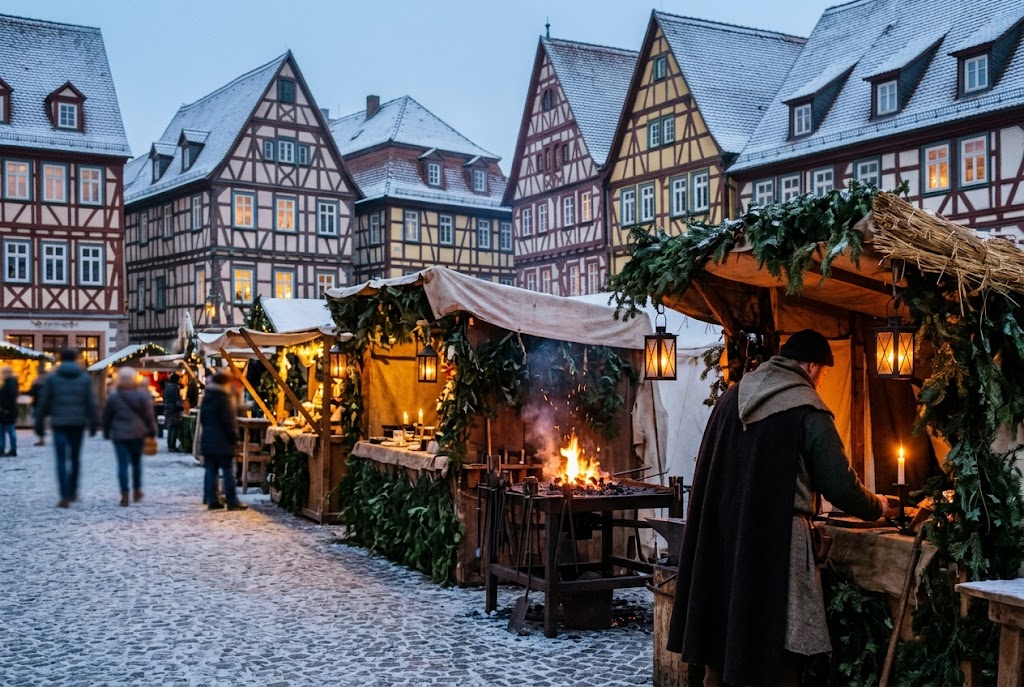
Next, Esslingen is the swap for the half-timbered fairy tale of Strasbourg or Colmar. Its old town survived the war almost untouched, and every winter it hosts the Medieval and Christmas Market, about 180 stalls with costumed traders and about 500 shows on four stages. It is not empty, though. The market draws over a million visits a year, so timing matters more here than anywhere else on this list.
The experience in specific terms
On the medieval side, watch blacksmiths and glassblowers at work, dip your own candle, eat flatbread from a wood-fired oven, and drink hot mead or spiced Hypocras from a clay cup. Then cross to the Christmas side around the Old Town Hall, whose clock plays a tune on the hour, for the more classic gingerbread and ornaments. By day, climb the covered stairway up to the castle walls above the vineyards, and visit Kessler, Germany’s oldest sparkling-wine cellar, founded in 1826. Because Stuttgart is only 15 minutes away, the Trip Day Optimizer can split your days between Esslingen in the morning and Stuttgart’s museums in the afternoon.
Entry reality. The same Schengen rules apply as in Regensburg. Fly into Stuttgart with one connection, or into Frankfurt and take a train of about 1.5 hours.
Market card · Esslingen
- 2026 dates
- November 24 to December 22.
- Hours
- Daily 11 am to 8:30 pm, Fridays and Saturdays to 9:30 pm.
- Entry
- Free. Hands-on activities such as candle dipping cost a few euros.
- Getting there
- About 15 minutes by S-Bahn from Stuttgart main station.
Real cost range
Budget about $1,400 to $1,900 per person for four nights. That includes a flight at about $850, about $60 for trains, about $80 a night for your share of a room, and about $70 a day for food and drinks. In addition, staying in Stuttgart rather than in Esslingen itself often saves money on weekends, since the city has far more hotels and the S-Bahn runs late.
Crowd forecast · Esslingen
Calmest: Monday to Thursday, 11 am to 1 pm. Most crowded: Saturday from mid-afternoon, and Sunday afternoon.
Timing verdict: weekday late mornings, November 24 to December 10
The market opens on Tuesday, November 24, and its first two weeks are the calmest. On weekdays, arrive at 11 am, when the stalls open and the school groups have not yet arrived. Meanwhile, avoid Saturdays in December entirely if you can, since the market fills with day-trippers from all over southern Germany. If you must go on a weekend, go on Sunday morning instead.
Operator tip
Do the medieval market first, while it’s quiet, and save the shows for later. The fire and juggling shows on the stages pull the biggest crowds in the evening, so in the morning you get the craftspeople to yourself. Then, after lunch, take the S-Bahn back to Stuttgart for a museum, and return for one fire show after dark.
A Christmas market trip gets cheaper the earlier you lock the flight. Journo Insider members get the fare drops and points deals that pay for the hotel.
Try Journo Insider free for 14 days →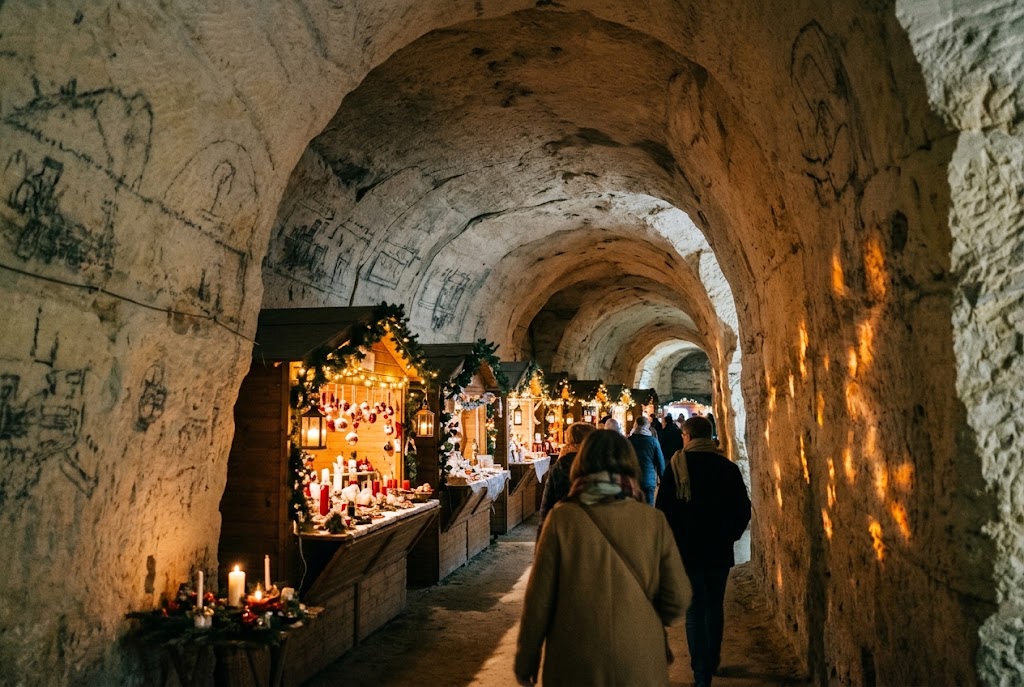
Valkenburg, Netherlands
Valkenburg is the swap for the Rhine markets of Cologne and Aachen, and it is the most unusual market on this list. The little town in the south of the Netherlands turns into Christmas Town every winter, with two markets set deep inside old marlstone caves. It does get busy, especially at weekends. Even so, on a weekday the caves feel like a secret.
The experience in specific terms
Walk the lit tunnels of the Gemeentegrot (Municipal Cave) and the Fluweelengrot (Velvet Cave), where the stalls sit among old carvings and wall drawings. Because the caves stay at about 54°F all year, you are warm and dry even when it rains outside. Next, ride the cable car up the hill to the Winter Wonderland, walk to the ruins of the only hilltop castle in the Netherlands, and watch the Christmas Parade of lit floats if your dates line up. Then spend your evenings in Maastricht, 10 minutes away by train, which has its own market and a lovely old center. Before you pick a hotel, paste its reviews into Review Genie to spot the noise and heating complaints that winter guests leave.
Entry reality. The Netherlands is in the Schengen area, so the same rules apply. Fly into Amsterdam or Brussels, then take the train in about 2.5 hours.
Market card · Valkenburg
- 2026 dates
- Cave markets November 13 to December 30 (closed December 25). Christmas Town to January 3.
- Hours
- Cave markets 11 am to 7 pm on weekdays, from 10 am on weekends.
- Entry
- Each cave market about €9 to €11 per adult, cheaper Monday to Thursday and online.
- Getting there
- About 10 minutes by train from Maastricht, or 2.5 hours from Amsterdam.
Real cost range
Budget about $1,350 to $1,800 per person for four nights. That covers a flight at about $700, about $70 for trains, about $85 a night for your share of a room in Valkenburg or Maastricht, about $75 a day for food, and about $30 for cave tickets. As a result, it costs a little less than the German picks, mainly because flights to Amsterdam are some of the cheapest to Europe in early December.
Crowd forecast · Valkenburg
Calmest: Monday to Thursday, at 11 am opening. Most crowded: Saturday all day, and Sunday afternoon.
Timing verdict: Monday to Thursday, mid-November to early December
Valkenburg opens earlier than any other market here, on Friday, November 13, so it is the only pick that works before Thanksgiving. The local tourism board itself advises weekday visits, because at weekends parking is almost impossible and the cave queues grow long. Therefore, go Monday to Thursday, take the train instead of driving, and enter the first cave at opening time.
Operator tip
Buy your cave tickets online the night before. Online tickets cost about a euro less than at the door, and the weekday price is about €2 lower than the weekend one. More importantly, you walk past the ticket queue, which is where most of the waiting happens. Do both caves on the same morning, then have lunch in the town before the afternoon coaches arrive.
Bratislava, Slovakia
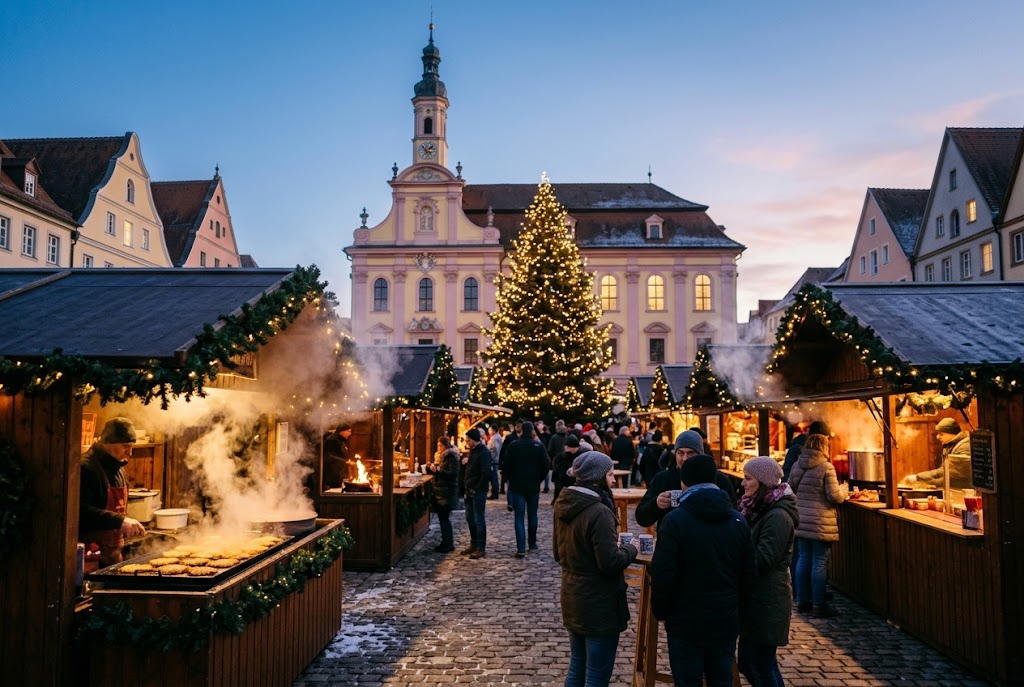
Bratislava is the swap for Vienna, and it is the best value on this list. Its compact baroque old town links four market squares within a five-minute walk. Also, food and drink cost roughly half of what they do in Vienna, which is only about an hour away.
The experience in specific terms
Start at the Main Square under the Old Town Hall tower, where the biggest market sits, then walk to Františkánske and Primaciálne squares and down to Hviezdoslavovo Square near the opera house. Eat lokše, thin potato pancakes filled with duck fat or poppy seed jam, and a grilled cigánska pečienka pork sandwich, and drink hot punch or medovina, a warm honey wine. Many punch stands raise money for charity, which is part of why locals come every evening after work. By day, climb up to the castle for the view over the Danube and see St. Martin’s Cathedral, where Hungarian kings were once crowned. Before you go, the Local Language Helper gives you the Slovak for “one punch, please” and “thank you” (ďakujem).
Entry reality. Slovakia is in the Schengen area and uses the euro. Fly into Vienna, then take the bus or train from the airport to Bratislava in about an hour.
Market card · Bratislava
- 2026 dates
- November 26 to January 3, 2027 (closed December 24 and 25).
- Hours
- Food stalls about 10 am to 10 pm daily; gift stalls to about 8 pm.
- Entry
- Free. Carry some euro cash for the small stalls.
- Getting there
- About one hour by bus or train from Vienna airport.
Real cost range
Budget about $1,100 to $1,500 per person for four nights, the lowest on this list. That covers a flight to Vienna at about $750, about $30 for the airport bus, about $55 a night for your share of a hotel, and about $45 a day for food and drinks. To see the gap for yourself, check the Wobbly Pop Index: a beer in Bratislava costs far less than one in Vienna, and the same goes for a mug of punch.
Crowd forecast · Bratislava
Calmest: any weekday morning or early afternoon. Most crowded: every evening after 5 pm, peaking on Friday.
Timing verdict: weekday daytime, November 30 to December 18
The markets open on Thursday, November 26. Unlike the others, Bratislava gets busy every evening, since locals meet at the punch stands after work, and the weekends add day-trippers from Vienna. So browse the stalls in daylight, when the squares are calm, and come back after dark only for the atmosphere. Also, note that the stalls close on December 24 and 25, then reopen until January 3.
Operator tip
Fly into Vienna, but sleep in Bratislava. Hotels in Bratislava’s old town cost far less than central Vienna, and the train between the two takes about an hour. Then do Vienna as a day trip on a weekday morning, when its markets are at their quietest, and be back in Bratislava for lokše and punch by dark.
Tallinn, Estonia
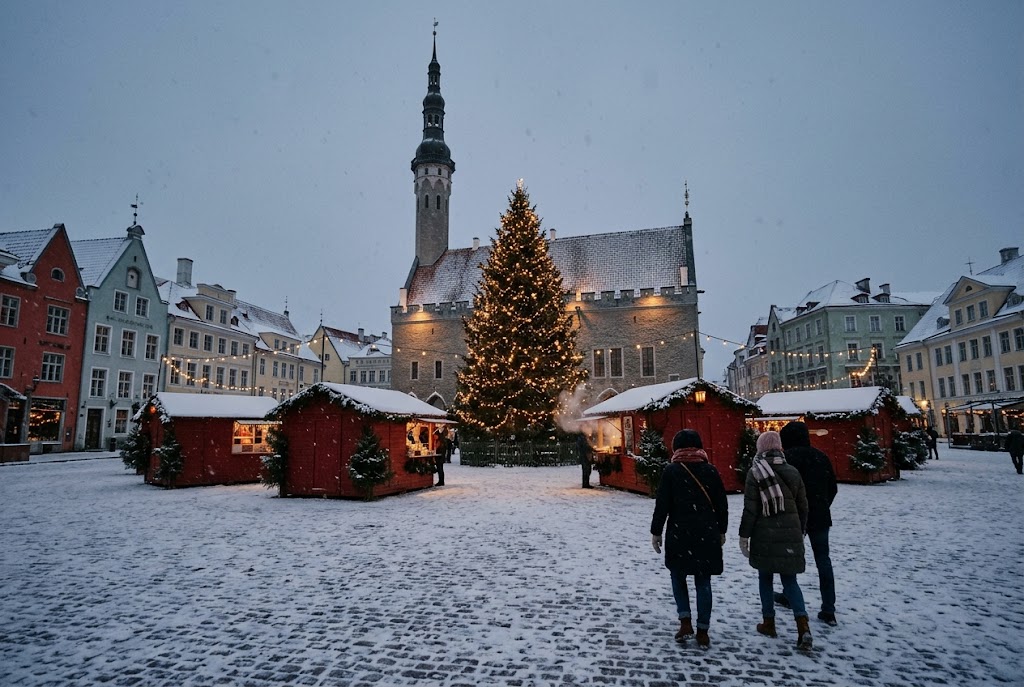
Finally, Tallinn is the swap for Prague’s towers and cobbles. Its medieval old town is one of the best preserved in Europe, and in winter it often has snow. Its single market fills the Town Hall Square, so it is small enough to walk in under an hour, yet it runs for longer than any other market on this list.
The experience in specific terms
Stand under the big tree in the Town Hall Square, where Tallinn says the first public Christmas tree in Europe stood in 1441, and drink glögi, the local mulled wine, from a deposit mug. Then eat blood sausage with sauerkraut, buy hand-knitted mittens and gingerbread, and walk up to Toompea Hill for the view over the red roofs. On another day, visit the old factories of Telliskivi Creative City for food and design shops, and see Kadriorg Palace in the snow. Most US flights connect through Helsinki, and the Layover Maximizer tells you if your connection is long enough to see the city. For a deeper look at a walkable food city like this one, see our guide to destinations with incredible food and walkable cities.
Entry reality. Estonia is in the Schengen area and uses the euro. Fly in through Helsinki, or take the two-hour ferry across from Helsinki.
Market card · Tallinn
- 2026 dates
- November 20, 2026 to January 6, 2027, open on Christmas Day.
- Hours
- Stalls daily 10 am to 8 pm; drink stalls later.
- Entry
- Free. Small deposit on the glögi mugs.
- Getting there
- One connection, usually through Helsinki; the airport is 15 minutes from the old town.
Real cost range
Budget about $1,200 to $1,650 per person for four nights. That includes a flight at about $850, about $60 a night for your share of a room, about $50 a day for food and drinks, and about $20 for local transport. In other words, the flight is the expensive part, while everything on the ground is cheap by Western European standards.
Crowd forecast · Tallinn
Calmest: Monday to Thursday, in daylight. Most crowded: Saturday evenings, when ferries from Helsinki bring weekend visitors.
Timing verdict: weekdays in early December, or after Christmas
The market opens on Friday, November 20, and stays open until January 6, 2027. As a result, Tallinn is the only pick where the week after Christmas works well, when the rest of Europe’s markets have packed up. However, daylight is short, about six hours in late December, so do your sightseeing from about 10 am to 3 pm, and save the market for the dark afternoon.
Operator tip
Go between Christmas and New Year. Most of Europe’s markets close by December 23, so flights and hotels for the week after Christmas are often cheaper than in mid-December. Tallinn’s market, however, is still running, still lit, and much calmer. Fly in on December 27, stay four nights, and you get a market, the snow and a New Year’s Eve in a medieval town.
Which Christmas market is best for your trip?
Here are the best Christmas markets in Europe for 2026 side by side. Every cost is per person for four nights, sharing a room, with a round-trip economy flight from a major US hub in early December.
| Market | Instead of | 2026 dates | Entry | Calmest time | 4 nights per person |
|---|---|---|---|---|---|
| Regensburg, Germany | Nuremberg | Nov 20–Dec 23 | Castle about €6.50–13.50 | Mon–Wed before 6 pm | $1,350–1,850 |
| Esslingen, Germany | Strasbourg, Colmar | Nov 24–Dec 22 | Free | Mon–Thu 11 am–1 pm | $1,400–1,900 |
| Valkenburg, Netherlands | Cologne, Aachen | Nov 13–Dec 30 | About €9–11 per cave | Mon–Thu at opening | $1,350–1,800 |
| Bratislava, Slovakia | Vienna | Nov 26–Jan 3 | Free | Weekdays in daylight | $1,100–1,500 |
| Tallinn, Estonia | Prague | Nov 20–Jan 6 | Free | Mon–Thu in daylight | $1,200–1,650 |
Don’t pick the market. Pick the hour, then pick the market.
How do you plan a Christmas market trip without the crowds?
- Book the first week of December. Thanksgiving falls on November 26, 2026, so flights that week are expensive. Instead, fly out on Sunday, November 29 or Monday, November 30, when fares drop again. Our guide to when to book Christmas flights in 2026 explains how fast December fares rise from here, and the Goldilocks Booking Forecaster tells you whether to book now or wait.
- Plan markets for Monday to Thursday. Use the planner above. In general, be at the stalls at opening time, and use the evening for one market only, not three.
- Avoid the last two weekends. December 12-13 and 19-20 are the busiest days of the season almost everywhere. If your trip must cover a weekend, spend it on a day trip or a museum instead.
- Stay one stop away. Sleep in Stuttgart for Esslingen, in Maastricht for Valkenburg, or in Bratislava for Vienna. You pay less, and you ride in when the crowds are thin.
- Check the whole plan before you pay. Run it through the Regret-Free Trip Audit, and add up the real cost with our guide to why cheap destinations aren’t cheap. If you can’t go this December, our shoulder season destinations for 2026 show the calm weeks in the rest of the year, and our month-by-month 2026 travel calendar shows what else is at its best in December.
Quick answer
The best Christmas markets in Europe in 2026 without the crush are Regensburg, Germany (instead of Nuremberg, Nov 20 to Dec 23, about $1,350 to $1,850 for four nights with flights), Esslingen, Germany (instead of Strasbourg, Nov 24 to Dec 22, about $1,400 to $1,900), Valkenburg, Netherlands (instead of Cologne, Nov 13 to Dec 30, about $1,350 to $1,800), Bratislava, Slovakia (instead of Vienna, Nov 26 to Jan 3, about $1,100 to $1,500) and Tallinn, Estonia (instead of Prague, Nov 20 to Jan 6, about $1,200 to $1,650). For the smallest crowds, go Monday to Thursday in the first week of December, and visit before about 3 pm.Try Journo Insider — keep the gifts no matter what
Say “maybe” and claim your gifts →Frequently asked questions about Christmas markets in Europe in 2026
What are the best Christmas markets in Europe in 2026 without the crowds?
The best Christmas markets in Europe in 2026 without the big crowds are Regensburg and Esslingen in Germany, Valkenburg in the Netherlands, Bratislava in Slovakia and Tallinn in Estonia. Each one is a calmer swap for a famous market nearby: Nuremberg, Strasbourg, Cologne, Vienna and Prague.
When do Christmas markets open in 2026?
Most German and Central European Christmas markets open between November 20 and November 27, 2026, before the first Sunday of Advent on November 29. Valkenburg opens earliest, on November 13. Most close on December 22 or 23, while Bratislava stays open to January 3 and Tallinn to January 6, 2027.
What is the least crowded day to visit a Christmas market?
Monday to Thursday is the least crowded time at almost every Christmas market, especially before about 3 pm. Friday and Saturday evenings are the busiest, and the weekends of December 12-13 and 19-20, 2026 are the most crowded of the whole season.
How much does a Christmas market trip to Europe cost?
A four-night Christmas market trip to Europe costs about $1,100 to $1,900 per person from the US, sharing a room, including the flight. Bratislava is the cheapest at about $1,100 to $1,500, while Esslingen and Regensburg cost the most, at about $1,350 to $1,900.
Which Christmas markets in Europe are open after Christmas?
Tallinn’s Christmas market stays open until January 6, 2027, and is even open on Christmas Day. Bratislava’s markets close on December 24 and 25, then reopen on December 26 and run until January 3, and Valkenburg’s Christmas Town runs until January 3, although its cave markets close on December 30.
What is the cheapest Christmas market city in Europe?
Of the five markets here, Bratislava is the cheapest. Hotels cost about $55 a night per person and food and drink about $45 a day, roughly half of Vienna’s prices, and it is only an hour from Vienna airport.
In the end, the magic of a Christmas market was never about the famous name. Pick one of the best Christmas markets in Europe for 2026, go on a weekday, get there when the stalls open, and you will have the square, the lights and the mulled wine almost to yourself.