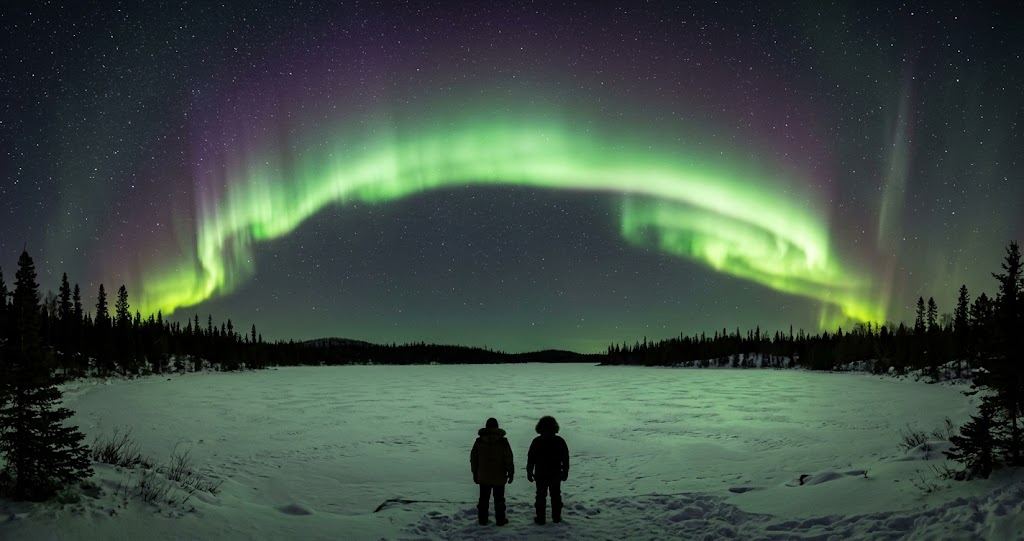
Most people plan an aurora trip backwards. First they pick the famous name, then they book three nights, and then they hope. However, the aurora is not the hard part. Under the auroral oval, the lights appear on most dark nights. In fact, the real enemy is cloud, so the question that decides your trip is simple: how many clear nights can you buy, and at what price?
So to find the best places to see the northern lights in 2026, this guide scores five winter destinations on three numbers. The first is clear-sky odds, the chance that a given night in the best months is clear enough to see the sky. The second is cost per night, per person, including the aurora outing. The third is minimum nights, which means how many nights you need for about a 9-in-10 chance of at least one good show. Our five picks are Yellowknife, Fairbanks, Rovaniemi, Tromsø and Iceland, and the numbers change the order most lists give you.
TL;DR: the best places to see the northern lights in 2026
- The best odds belong to Yellowknife in Canada: about 65% of winter nights are clear, so three nights give you roughly a 9-in-10 chance of a show.
- The best value is Fairbanks, Alaska. Four nights there cost about $1,610 per person with flights, the cheapest 9-in-10 chance on this list.
- Rovaniemi in Finnish Lapland needs about five nights, Tromsø in Norway about six, and Iceland about seven, because clouds roll in from the sea far more often.
- Winter 2026-27 is still a strong season. The Sun passed its peak in late 2024, but the years just after a solar maximum often bring some of the biggest storms.
- Go in late February or March if you can. The nights are still long and dark, the skies are usually clearer, and prices fall after the holidays.
Journo Insider
Get $6,640 in travel gifts — just for saying “maybe”
Start the 14-day free trial and keep the gifts even if you cancel.
Claim your free gifts →No credit card required. Cancel any time.
Is winter 2026-27 still a good season to see the northern lights?
Yes. The Sun runs on a cycle of about 11 years, and NASA and NOAA announced in October 2024 that it had entered its solar maximum period. The number of sunspots is now slowly falling. Even so, the declining years of a cycle often produce some of the strongest geomagnetic storms, the kind that pushed the aurora as far south as Florida and Mexico in May 2024. In other words, winter 2026-27 still gives you a strong sky to work with.
Still, the solar cycle only decides how often the big shows happen. For a normal trip, it matters far less than three other things: being under the auroral oval, being away from city lights, and above all, a clear sky. That is why every place below sits between about 62°N and 70°N, close to the band where the aurora is most frequent.
When to look up on a typical night
Displays can start as soon as it is fully dark, but the most active stretch is usually about 10 pm to 2 am local time. So plan to be outside, away from lights, for at least three hours of each clear night.
How do you choose the best place to see the northern lights?
The Travel Decision Stack, for the northern lights
- Experience. First, decide what kind of night you want: a heated viewing cabin, a hot spring under the sky, a glass igloo, or a minibus that chases clear gaps across a border.
- Real Cost. Next, price a night, not a trip. A cheap flight means little if you need seven nights to beat the clouds, so we count the room, food and aurora outing per person, per night.
- Timing. Then pick the month with the clearest skies. Our Timing Optimization Framework explains why the right month beats the right hotel almost every time.
- Execution. Finally, book enough nights. Clear-sky odds multiply, so one extra night often lifts your chance of a show more than any upgrade.
Here is how the math works. Under the oval, the aurora shows on most dark, clear nights; the Fairbanks visitor bureau puts it at about four clear nights in five. So your chance of a show on any one night is roughly the clear-sky odds multiplied by 0.8. Then each extra night gives you another try. For example, in a place with 45% clear nights, one night gives you about a 1-in-3 chance, but five nights give you almost 9 in 10. Try it for your own trip below.
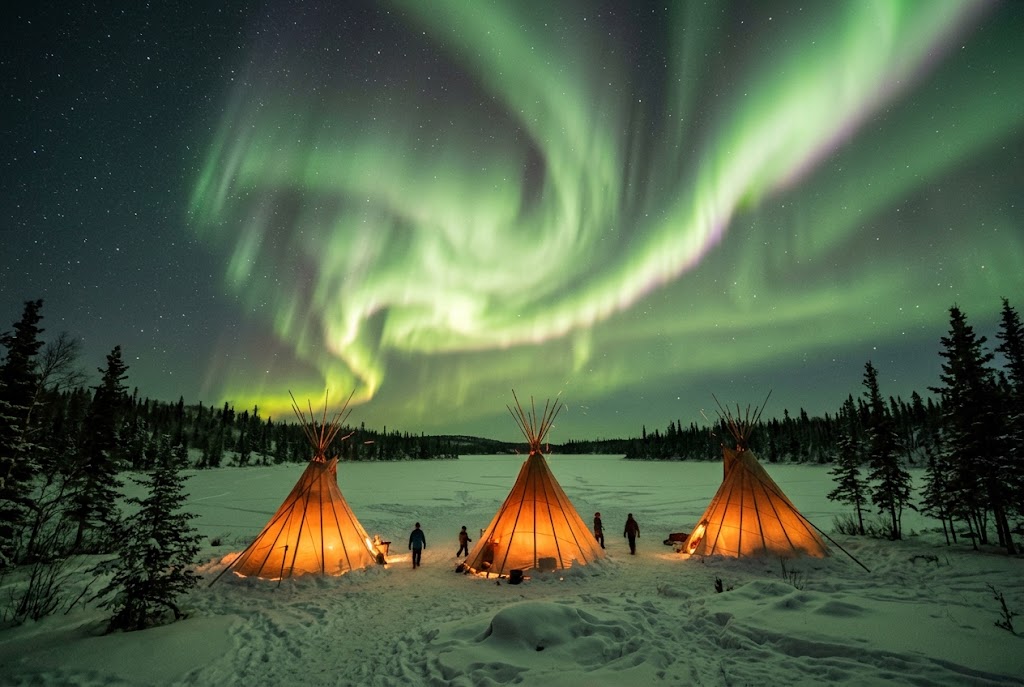
Yellowknife, Northwest Territories, Canada
First, Yellowknife is the place for people who cannot afford to miss. It sits right under the auroral oval on the flat, dry Canadian Shield, far from any ocean, so winter clouds are rarer here than anywhere else on this list. As a result, it needs the fewest nights.
The experience in specific terms
Spend your nights at a heated aurora viewing site outside town, where you wait in a warm cabin or teepee with hot drinks and step out onto the frozen shore when the sky lights up. By day, walk the Old Town on the edge of Great Slave Lake, eat lake whitefish fresh from the ice, and try dog sledding or snowshoeing across the frozen bays. In January and February, the ice road to the Dene community of Dettah usually opens across the lake. Then in March, the Snowking Winter Festival builds a snow castle on Yellowknife Bay. The Trip Day Optimizer fits the daytime plans around the late nights, so you still sleep.
Entry reality. US citizens need only a passport to fly to Canada, with no eTA. Flights usually connect through Calgary, Edmonton or Vancouver.
Real cost range
Budget about $1,830 per person for the minimum three nights, with a round-trip flight from the US at about $900. A more relaxed five nights comes to about $2,450. Each night costs about $310 per person: roughly $105 for your share of a hotel room, $150 for the aurora viewing site with transport, and $55 for food. Because the viewing site is the biggest cost, a package that bundles three nights of viewing usually beats paying night by night.
Sky report · Yellowknife
- Sep
- Oct
- Nov
- Dec
- Jan
- Feb
- Mar
- Apr
Timing verdict: late February to March
The winter aurora season runs from about mid-November to early April. December and January bring the longest nights, but also the deepest cold, often around −30°F with wind chill. In contrast, late February and March 2027 keep plenty of darkness, add longer days for sledding, and are usually 15 to 20 degrees warmer. Alternatively, late August to September is a quieter second season, when the lights reflect in lakes that have not frozen yet.
Operator tip
Rent the cold-weather gear, don’t buy it. Most viewing sites and outfitters in Yellowknife rent insulated parkas, snow pants and Arctic boots for the week, often for less than a single good pair of boots costs at home. Then pack light, keep your phone in an inside pocket so the battery survives, and spend the money you saved on a fourth night.
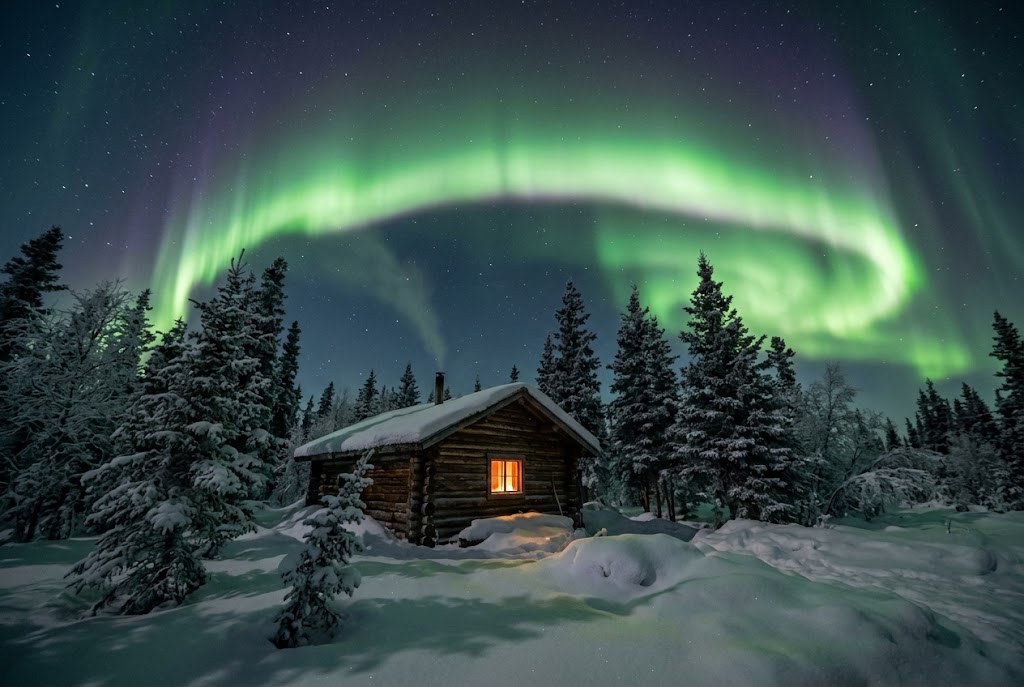
Fairbanks and Chena Hot Springs, Alaska
Next, Fairbanks is the best-value aurora trip for Americans. You need no passport, flights are the cheapest on this list after Iceland, and the inland Alaska climate is dry enough that four nights give you about a 9-in-10 chance.
The experience in specific terms
Split the trip in two. Spend two nights in or near Fairbanks, where you can drive up to a dark viewpoint such as Murphy Dome, visit the University of Alaska Museum of the North, and try a dog-mushing run. Then drive about 60 miles out to Chena Hot Springs for two nights, where you soak in the outdoor rock pool while you wait for the sky and tour the year-round Aurora Ice Museum. In late February and March, the World Ice Art Championships fill a park in Fairbanks with giant ice carvings. Before you book a lodge or a tour, paste its reviews into Review Genie to catch the red flags.
Entry reality. It is a domestic flight, so you need a REAL ID or a passport at the airport. Most routes connect through Seattle or Anchorage.
Real cost range
Budget about $1,610 per person for four nights, with a round-trip flight at about $650. Six nights come to about $2,090. Each night costs about $240 per person: about $80 for your share of a room, $55 for food, and $105 for a rental car, an aurora tour or the hot springs. The biggest lever is the flight. Fares to Fairbanks swing a lot, so the Goldilocks Booking Forecaster tells you whether to book now or keep watching.
Sky report · Fairbanks
- Sep
- Oct
- Nov
- Dec
- Jan
- Feb
- Mar
- Apr
Timing verdict: late February to March
Fairbanks promotes an aurora season from late August to late April. However, the skies are usually clearest from late February to March, when the coldest snaps are over and the ice carvings are up. December and January have the longest nights, yet they also bring the hardest cold, with lows that can fall to −40°F. Meanwhile, September is a lovely surprise: autumn colors by day and aurora over open water at night.
Operator tip
Ask for the aurora wake-up call. Many hotels and lodges around Fairbanks will phone your room when the lights appear, so you can sleep between checks instead of standing in the cold for hours. Book the lodge that offers it, set out your layers before bed, and you lose almost nothing on the nights the sky stays quiet.
The cheapest aurora trip is the one with the fewest wasted nights. Journo Insider members get the fare drops and points deals that make an extra night free.
Try Journo Insider free for 14 days →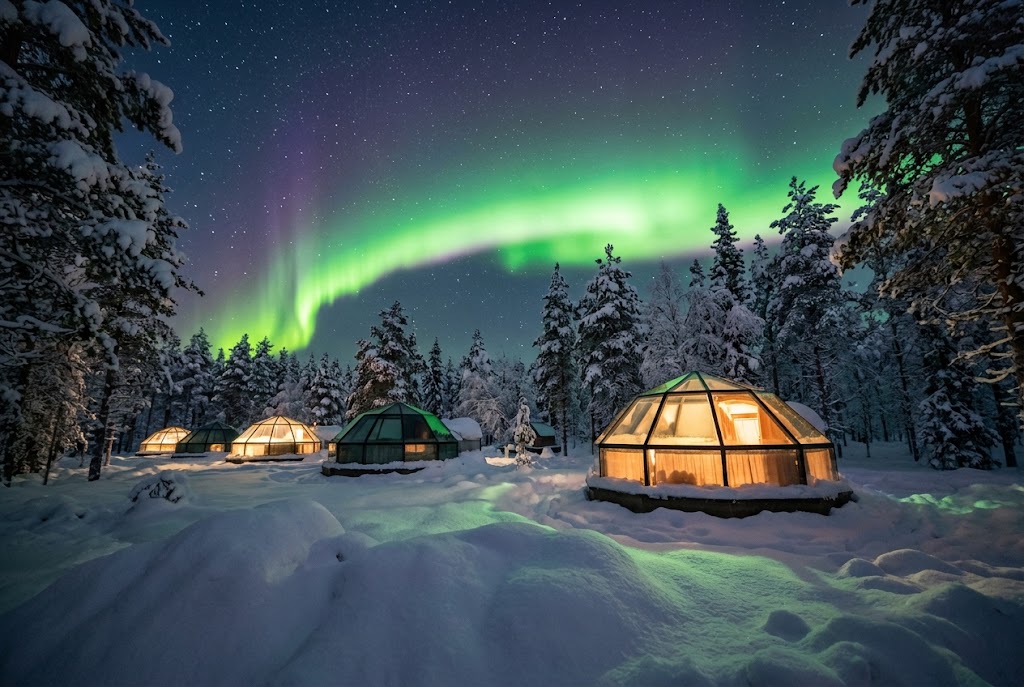
Rovaniemi and Finnish Lapland, Finland
Rovaniemi is the aurora trip with the most to do in daylight. It sits on the Arctic Circle in the snowy forests of Lapland, and its inland climate gives it clearer nights than the Norwegian coast. However, it needs about five nights, and December prices are the highest on this list.
The experience in specific terms
Base yourself in a forest cabin or hotel just outside town, and book one night in a glass igloo so you can watch the sky from bed. By day, take a husky safari through the pine forest, meet a reindeer herder, and learn how the aurora works at the Arktikum science museum. Then cross the Arctic Circle line at Santa Claus Village, which is fun even without children, and walk across the frozen Kemijoki River at dusk. The Local Language Helper gives you the Finnish basics, and a simple “kiitos” goes a long way in a small village.
Entry reality. US citizens can visit Finland and the rest of the Schengen area visa-free for up to 90 days in 180. Since the EU’s Entry/Exit System started, your face and fingerprints are recorded at the border on your first entry, so allow extra time. ETIAS is not expected before 2027.
Real cost range
Budget about $2,450 per person for five nights from late January to March, with a flight through Helsinki at about $1,050. One glass igloo night adds about $350 per person. Each night costs about $280 per person: about $95 for your share of a room, $65 for food, and $120 for an average aurora or husky outing. In December, however, the Christmas crowds push the same trip to about $3,550.
Sky report · Rovaniemi
- Sep
- Oct
- Nov
- Dec
- Jan
- Feb
- Mar
- Apr
Timing verdict: February to mid-March
The aurora season in Lapland runs from about late August to early April. November is often grey, with little snow and many cloudy nights. December is magical, but it is also the most expensive month, with Christmas trips filling every igloo. So the sweet spot is February to mid-March 2027, with deep snow, clearer skies, and long blue twilight hours for the husky trails.
Operator tip
Book the glass igloo for one night in the middle of your trip, not the first or the last. That way, you can watch the forecast and move it by a night if clouds are coming, which many resorts allow when you book flexible rates early. The other nights, stay in a normal cabin and use the savings on an aurora tour that drives to wherever the sky is clear.
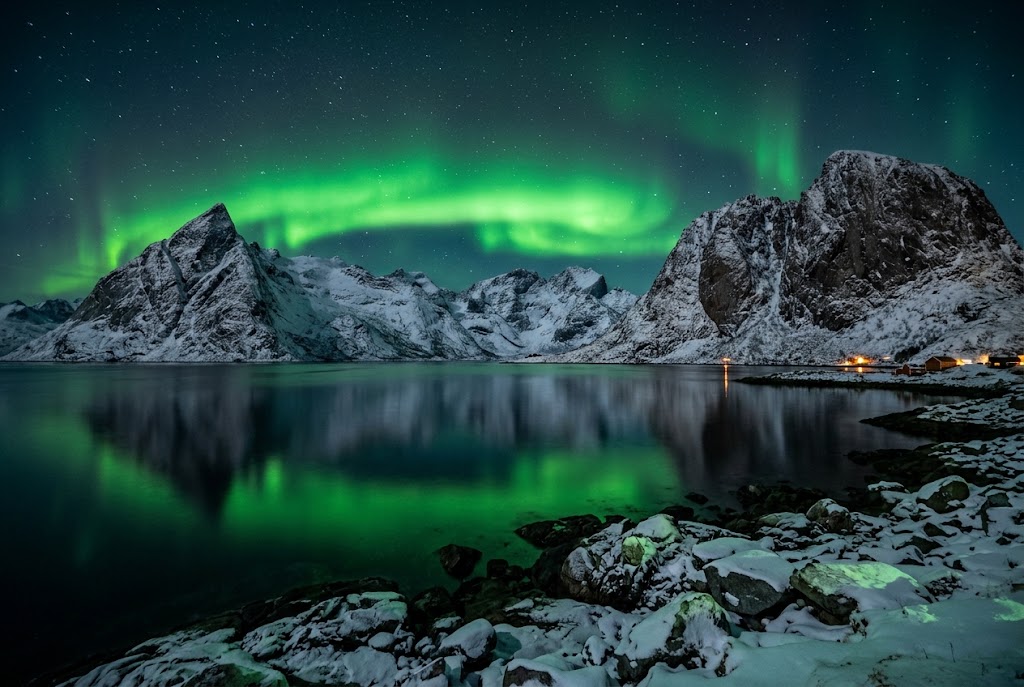
Tromsø and the Lyngen Alps, Norway
Tromsø has the most dramatic aurora backdrop in the world: snowy peaks dropping straight into the fjords. It is also the warmest place on this list, because the Gulf Stream keeps the coast mild. However, that same sea brings the clouds, so it needs about six nights and a good chase tour.
The experience in specific terms
Stay in the compact city center, and spend your nights on small-group minibus chases that drive out to clear gaps, sometimes as far as the Finnish border. By day, ride the Fjellheisen cable car above the city, visit the Arctic Cathedral, take a dog-sled run in the Lyngen Alps, and spend an evening in a Sámi reindeer camp. From about November to January, you can also join a boat trip to watch orcas and humpback whales feeding in the northern fjords. Tromsø is famously expensive, so check the Wobbly Pop Index before you plan a night out; a beer can cost more than your lunch.
Entry reality. Norway is in the Schengen area, so the same 90-day visa-free rule and Entry/Exit System registration apply. Flights connect through Oslo, and you may have time to see the city; the Layover Maximizer tells you if it is worth leaving the airport.
Real cost range
Budget about $3,080 per person for six nights, with a flight through Oslo at about $1,100. Each night costs about $330 per person: about $120 for your share of a room, $90 for food, and an average of $120 for chase tours, which cost about $180 each when you book one on most nights. As a result, Tromsø is the most expensive way to buy a 9-in-10 chance, although no other place matches its scenery.
Sky report · Tromsø
- Sep
- Oct
- Nov
- Dec
- Jan
- Feb
- Mar
- Apr
Timing verdict: late September to October, or February to March
The aurora season runs from about mid-September to early April. From about late November to mid-January, the polar night means the sun does not rise at all, which is atmospheric but also cloudier and stormier. In contrast, late September and October bring dark nights over unfrozen fjords and lower prices. Similarly, February and March 2027 bring snow, clearer spells and the return of daylight for the dog-sled trails.
Operator tip
Book your first chase for your first or second night, never your last. If the sky stays quiet, you still have time to go again, and many operators offer a discount on a second tour. Pick a small minibus group that is willing to drive to Finland when the coast is cloudy, and carry your passport in case the guide crosses the border.
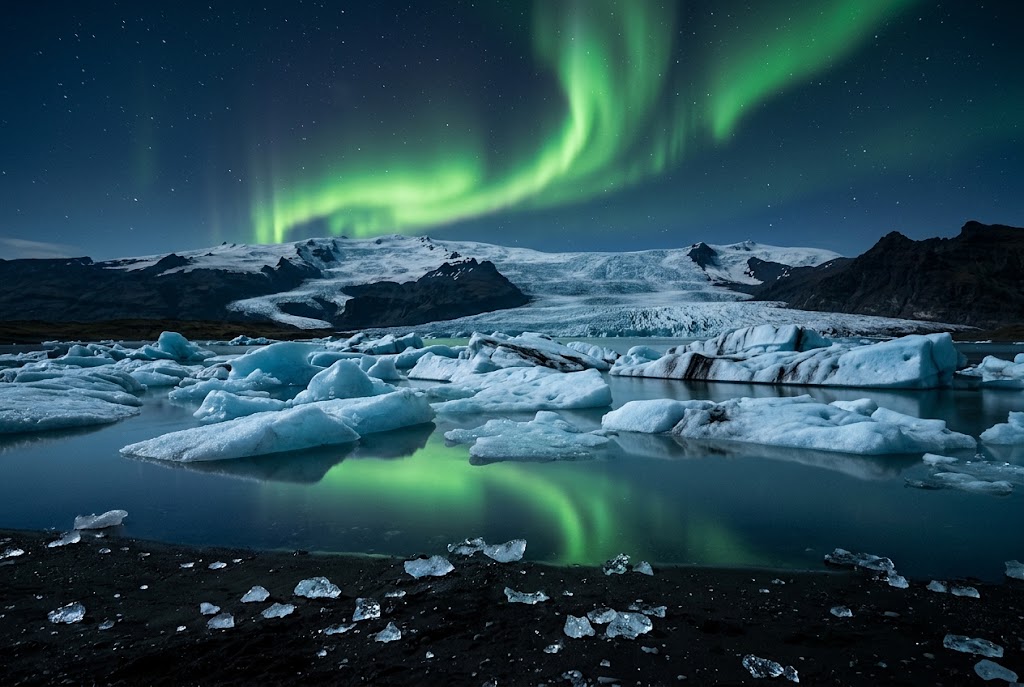
Reykjavík and the South Coast, Iceland
Finally, Iceland has the cheapest and shortest flight from the US East Coast, at about five to six hours, and the most variety in one trip. However, Atlantic storms bring the most clouds on this list. So Iceland rewards travelers who stay longer, rent a car and chase the gaps.
The experience in specific terms
Start with two nights in Reykjavík, with a soak in a geothermal lagoon and the old harbor at dusk. Then drive the south coast: the waterfalls of Seljalandsfoss and Skógafoss, the black sand at Vík, and finally the icebergs of the Jökulsárlón glacier lagoon, where the aurora reflects in the water. Away from Reykjavík, almost every country hotel is dark enough to watch from the parking lot. Each evening, check the Icelandic Met Office cloud forecast and drive toward the clear patches. Our guide to big nature adventure destinations has more ideas if you want to add ice caves or glacier hikes.
Entry reality. Iceland is in the Schengen area, so the 90-day visa-free rule and Entry/Exit System registration apply. In winter, many highland roads are closed, so stay on the Ring Road and check road conditions every morning.
Real cost range
Budget about $2,370 per person for seven nights, with a nonstop round trip at about $550. Each night costs about $260 per person: about $110 for your share of a room, $45 for your share of a rental car, $85 for food and $20 for extras. Because the flight is so cheap, the extra nights cost less than they would anywhere else on this list, and Icelandair’s stopover program lets you add Iceland to a Europe trip at no extra airfare.
Sky report · Iceland
- Sep
- Oct
- Nov
- Dec
- Jan
- Feb
- Mar
- Apr
Timing verdict: late September to October, or late February to March
The season runs from about September to early April. December and January have the most darkness, but also the strongest storms and the shortest days for driving, with only about four to five hours of daylight. In contrast, the weeks around the September and March equinoxes often bring more geomagnetic activity, milder roads and longer days. That makes late September to October 2026, or late February to March 2027, the best balance.
Operator tip
Keep the route loose. Book hotels with free cancellation along the south coast, then decide each afternoon where to sleep, based on the cloud map. A clear gap is often only an hour’s drive away, and a flexible plan turns Iceland’s 35% odds into far better ones. Moreover, it keeps you off icy roads when a storm is coming.
Which is the best place to see the northern lights for the money?
Here are the best places to see the northern lights in 2026 side by side. Every price is per person, sharing a room, with a round-trip flight from the US, for the number of nights that gives about a 9-in-10 chance of at least one good show.
| Place | Latitude | Clear-sky odds | Cost per night | Nights for 9 in 10 | Trip cost | Best months |
|---|---|---|---|---|---|---|
| Yellowknife, Canada | 62.5°N | 65% | $310 | 3 | $1,830 | Late Feb–Mar; Sep |
| Fairbanks, Alaska | 64.8°N | 55% | $240 | 4 | $1,610 | Late Feb–Mar; Sep |
| Rovaniemi, Finland | 66.5°N | 45% | $280 | 5 | $2,450 | Feb–mid Mar |
| Tromsø, Norway | 69.6°N | 40% | $330 | 6 | $3,080 | Late Sep–Oct; Feb–Mar |
| Iceland | 64.1°N | 35% | $260 | 7 | $2,370 | Late Sep–Oct; late Feb–Mar |
Don’t buy the famous name. Buy clear nights, and buy enough of them.
How do you plan a northern lights trip that actually works?
- Choose the month before the place. Late February to March is the best bet almost everywhere, and late September to October works well in Norway and Iceland. Our month-by-month 2026 travel calendar shows what else is at its best in those weeks.
- Book enough nights. Use the odds tool above. As a rule, plan at least three nights in Yellowknife, four in Fairbanks, five in Lapland, six in Tromsø and seven in Iceland.
- Avoid the full moon if you can. A bright moon washes out faint displays, although strong ones still shine through. The darkest weeks of the season fall around the new moons of about December 9, January 8, February 6 and March 8.
- Watch two forecasts, not one. The aurora forecast, such as NOAA’s Space Weather Prediction Center or the University of Alaska’s Geophysical Institute, tells you how active the sky will be. The local cloud forecast tells you whether you will see it. Clouds matter more, every time.
- Check the whole plan before you pay. Run it through the Regret-Free Trip Audit, and add up the real cost with our guide to why cheap destinations aren’t cheap. Then book the scarce part first: the viewing site, the igloo or the chase tour.
Quick answer
The best places to see the northern lights in 2026 are Yellowknife, Canada (about 65% clear nights, 3 nights for a 9-in-10 chance, about $1,830 per person with flights), Fairbanks, Alaska (55%, 4 nights, about $1,610), Rovaniemi, Finland (45%, 5 nights, about $2,450), Tromsø, Norway (40% with a chase tour, 6 nights, about $3,080) and Iceland (35% with a car, 7 nights, about $2,370). For most travelers, late February to March 2027 is the best time to go.Try Journo Insider — keep the gifts no matter what
Say “maybe” and claim your gifts →Frequently asked questions about the northern lights in 2026
What are the best places to see the northern lights in 2026?
The best places to see the northern lights in 2026 are Yellowknife in Canada, Fairbanks in Alaska, Rovaniemi in Finland, Tromsø in Norway and the south coast of Iceland. Yellowknife has the best odds of clear skies, Fairbanks is the best value for Americans, and Tromsø has the most dramatic scenery.
How many nights do you need to see the northern lights?
For about a 9-in-10 chance of at least one good show, plan three nights in Yellowknife, four in Fairbanks, five in Finnish Lapland, six in Tromsø and seven in Iceland. The difference comes from clouds, not from the aurora itself, which appears on most dark, clear nights under the auroral oval.
What is the best month to see the northern lights?
For most places, late February to March is the best month, because the nights are still long, the skies are often clearer and prices drop after the holidays. In Norway and Iceland, late September to October is also excellent, and the weeks around the equinoxes often bring more geomagnetic activity.
What is the cheapest place to see the northern lights from the US?
Fairbanks, Alaska, is the cheapest place to get a high chance of seeing the northern lights from the US. Four nights cost about $1,610 per person with flights, and you need no passport. Iceland has the cheapest flight, but it usually needs about seven nights because of clouds.
Is Tromsø or Iceland better for the northern lights?
Tromsø has slightly better odds, about 40% clear nights with a chase tour compared with about 35% in Iceland with a car, and more dramatic mountains. Iceland, however, is cheaper overall, with a much cheaper flight from the US and more to see by day. Both work best in late September to October or February to March.
Will the northern lights still be strong in winter 2026-27?
Yes. The Sun entered its solar maximum period in 2024, and the years just after the peak often bring some of the strongest geomagnetic storms of the cycle. Even in a quieter year, the aurora appears on most clear, dark nights in places such as Yellowknife, Fairbanks and Tromsø.
In the end, the northern lights are not luck. Pick one of the best places to see the northern lights in 2026, go in the clearest month, book enough nights, and the sky will almost always keep its side of the deal.